
Tax Haven Guide 2025: Strategies, Risks, and Opportunities
In an era of increasing global scrutiny, the concept of a tax haven sparks both intrigue and debate. These financial centers channel up to half of the world’s international banking assets, making them a focal point for opportunity and controversy in 2025.
This comprehensive guide cuts through the complexity, offering clarity on the evolving world of tax havens. Readers will discover the definition and history of tax havens, explore key jurisdictions shaping 2025, examine recent legal and regulatory shifts, and uncover strategic uses, risks, and future trends.
With mounting regulatory pressure and high-profile crackdowns, understanding how to leverage these jurisdictions ethically has never been more crucial. Stay informed to navigate this changing landscape with confidence and insight.
Understanding Tax Havens: Definitions and Evolution
Tax havens are complex financial jurisdictions that play a pivotal role in the global economy. The term "tax haven" is often debated, but most experts agree on a few defining features. These include offering low or zero tax rates for non-residents, streamlined company incorporation, and a culture of financial secrecy.
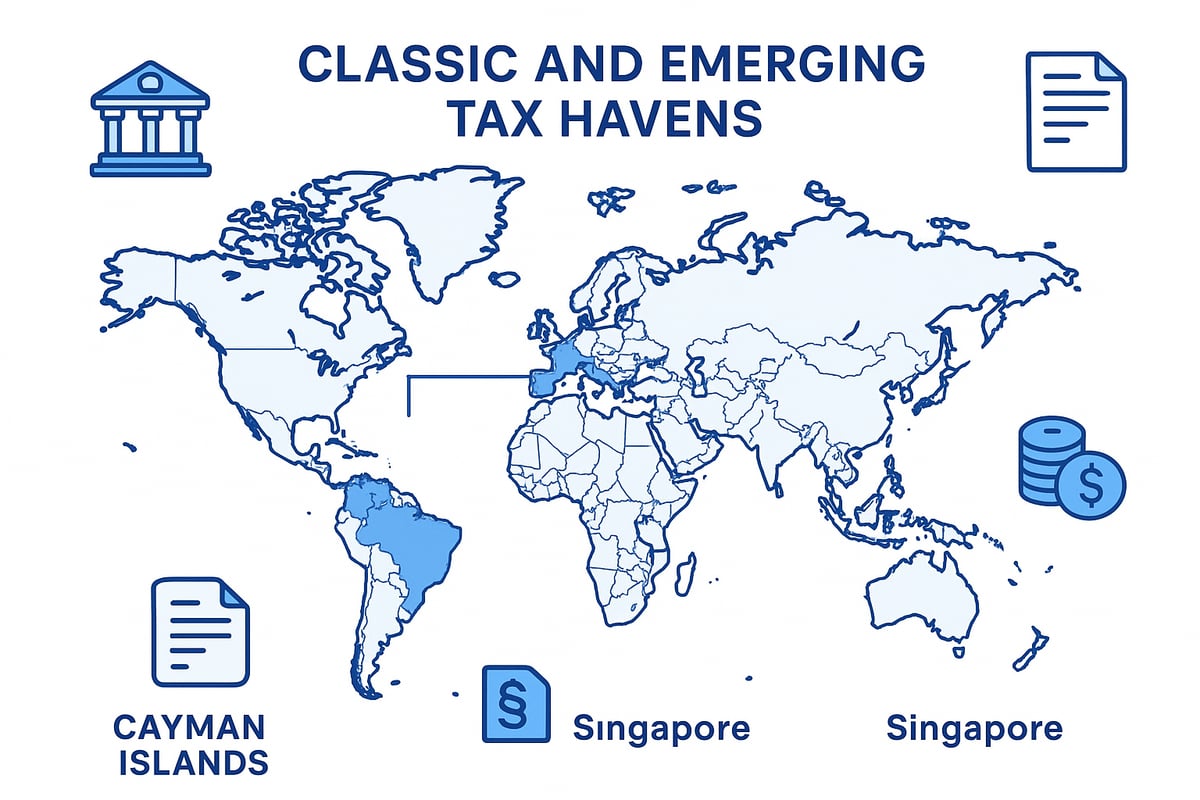
Classic examples of a tax haven are Switzerland, the Cayman Islands, and Delaware in the United States. Each of these locations provides distinct advantages for companies or individuals seeking privacy and tax efficiency. In fact, the European Commission identified over 200 preferential tax regimes in the late 1990s, highlighting the widespread use of the tax haven model.
What is a Tax Haven?
A tax haven is typically defined as a country or territory that offers favorable tax treatment to foreign individuals or businesses. The exact definition of a tax haven can be contested, as some regions dispute the label due to negative connotations.
Key features of a tax haven include:
- Low or zero tax rates for non-resident entities
- Simple and fast company registration processes
- High levels of financial confidentiality and banking secrecy
For example, Switzerland is renowned for its banking secrecy laws, while the Cayman Islands and Delaware are popular for easy incorporation and minimal reporting requirements. In the late 1990s, the European Commission identified more than 200 regimes operating as a tax haven, underlining the scale of this phenomenon.
Historical Development of Tax Havens
The tax haven concept has deep historical roots. Its origins trace back to the late 19th century, when US states like New Jersey and Delaware introduced laws to attract out-of-state companies. Around the same time, Swiss cantons began offering privacy protections, laying the groundwork for modern financial secrecy.
British legal precedents played a critical role by allowing "virtual residency" and non-resident corporations to benefit from favorable tax rules. A landmark moment came in 1929, when a British court ruling enabled companies owned by foreigners to avoid local taxes. The Swiss Banking Law of 1934 further cemented Switzerland's reputation as a tax haven by making it a criminal offense to disclose client information without consent.
The Modern Tax Haven Landscape
Over the past century, the tax haven landscape has expanded dramatically. Key growth phases include the post-World War I era, a major surge in the 1970s, and further evolution following the OECD and EU crackdowns since 1998.
Today, it is estimated that up to a third of global foreign direct investment flows through tax haven jurisdictions. These locations can be grouped by their historical and legal ties: UK and former British Empire territories, European centers like Benelux and Switzerland, and newer entrants in South America and Africa. The tax haven has become an integral part of the international financial system.
Why Tax Havens Matter in 2025
In 2025, tax haven jurisdictions remain at the center of debates over globalization, digital assets, and cross-border business. The legal and ethical implications of using a tax haven are increasingly scrutinized, especially as governments seek to curb tax avoidance and evasion.
The financial impact is enormous. According to the State of Tax Justice 2024 report, global tax avoidance and evasion through tax haven structures is estimated to cost the world between $800 billion and $1 trillion annually. This staggering figure highlights why the tax haven continues to shape policy discussions and corporate strategies.
Key Tax Haven Jurisdictions in 2025
Choosing the right tax haven jurisdiction in 2025 is more complex than ever. Rapid regulatory changes and shifting reputations mean individuals and businesses must evaluate each option carefully. Below, we explore the current landscape, from classic destinations to emerging contenders, and provide insights into the factors shaping decision-making this year.
Classic Tax Havens: Stability and Reputation
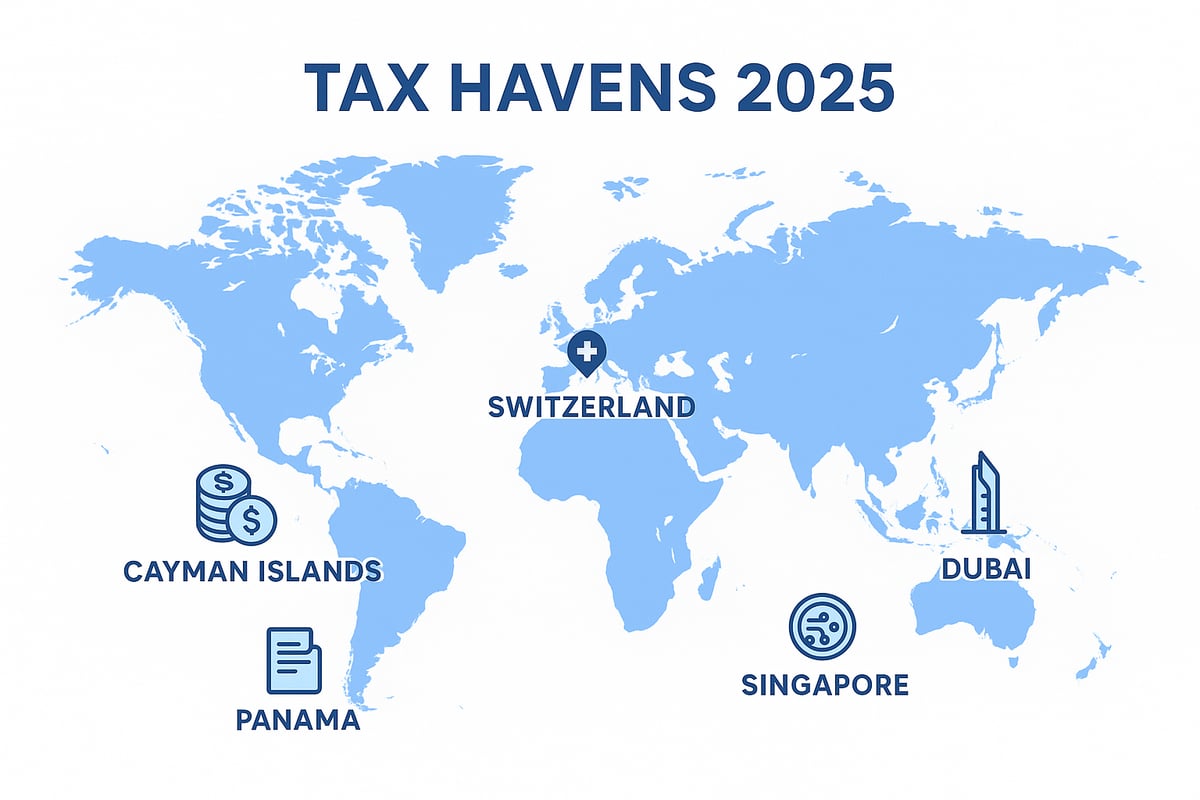
Classic tax haven jurisdictions like Switzerland, the Cayman Islands, Bermuda, and Luxembourg continue to attract global clients in 2025. These territories are renowned for their robust legal systems and longstanding traditions of financial privacy. Switzerland, for example, has evolved its bank secrecy laws, balancing compliance with international standards while retaining client trust.
The Cayman Islands remain a preferred tax haven for hedge funds and private equity due to flexible corporate structures and a zero direct tax policy. Meanwhile, Luxembourg offers sophisticated regulatory frameworks for investment vehicles, making it a center for cross-border finance. Choosing a classic tax haven brings stability, but also increased scrutiny.
Emerging and Transitional Havens
A new wave of tax haven jurisdictions is gaining prominence, offering innovation and flexibility. Dubai, Singapore, Panama, and Mauritius stand out for their forward-thinking regulations and digital asset frameworks. Singapore, in particular, has positioned itself as a fintech hub by creating clear guidelines for crypto businesses and digital banks.
Panama and Mauritius have modernized their incorporation processes, making them attractive for startups and investment funds. Dubai’s free zones cater to global entrepreneurs seeking favorable tax haven conditions. These emerging tax haven jurisdictions compete by embracing technology and adapting to evolving business needs.
Onshore vs. Offshore: The Blurring Lines
The distinction between onshore and offshore tax haven jurisdictions is less clear in 2025. "Mid-shore" destinations like Ireland, the UK, and Delaware offer preferential regimes within major economies. For example, Delaware provides zero tax on certain non-resident income, making it a strategic tax haven for international businesses.
Ireland’s low corporate tax rates and business-friendly environment attract tech giants and IP structures. The United Kingdom, despite regulatory tightening, still hosts non-dom regimes valued by global investors. This blurring of lines means the tax haven landscape now includes both traditional offshore islands and sophisticated onshore centers.
Regulatory Scorecard: Transparency and Compliance
Transparency is a defining factor for any tax haven in 2025. International bodies like the OECD and EU maintain “white,” “grey,” and “black” lists to classify jurisdictions by compliance. The Channel Islands, for instance, have implemented new reporting standards to remain competitive. Automatic information exchange frameworks like CRS and FATCA are now the norm.
For the latest updates on compliant and non-cooperative tax haven jurisdictions, consult the EU list of non-cooperative tax jurisdictions, which reflects ongoing changes and regulatory shifts. Staying informed is essential for anyone considering a tax haven strategy.
Choosing a Jurisdiction: Factors to Consider
When selecting a tax haven jurisdiction, several factors demand attention. Tax rates, legal protections, and political stability are crucial. Reputation risk can impact long-term planning, especially for those in finance, crypto, or intellectual property sectors.
Tech companies often choose Ireland for IP structuring, while asset managers may prefer Luxembourg or the Cayman Islands. Consider sector-specific incentives, regulatory compliance, and the ability to adapt to future reforms. A strategic approach to tax haven selection maximizes benefits while minimizing exposure to risk.
Legal, Regulatory, and Compliance Changes in 2025
The tax haven landscape in 2025 is defined by rapid legal and regulatory transformation. Policymakers worldwide are tightening the rules and increasing scrutiny. Understanding these changes is essential for anyone leveraging a tax haven strategy.

Global Crackdowns and Policy Shifts
International authorities continue to reshape the tax haven environment. The OECD, EU, and G20 have ramped up initiatives targeting harmful tax competition. In 2025, new minimum tax rates and stricter reporting requirements are in effect. The impact of BEPS 2.0 is significant, as more countries align with global standards to limit profit shifting.
For a deeper understanding of these evolving strategies, consult the OECD Tax Administration 2025 report, which details critical reforms and compliance practices. These efforts aim to reduce the misuse of tax haven jurisdictions and promote fairer global taxation.
Evolving Secrecy Laws and Information Exchange
Transparency has become the new normal for any tax haven. The shift away from traditional secrecy is driven by initiatives like the Common Reporting Standard (CRS) and the Foreign Account Tax Compliance Act (FATCA). Beneficial ownership registers are now standard, making it harder to hide assets.
Switzerland, long known for its banking secrecy, has gradually relaxed its policies, responding to international pressure. Automatic information exchange agreements mean that data flows more freely between countries, reducing the appeal of opaque tax haven structures.
Local Legislation: Jurisdictional Changes
Popular tax haven jurisdictions are adapting to the global push for transparency. Recent reforms in the Cayman Islands and Panama have strengthened anti-money laundering (AML) and know-your-customer (KYC) regulations. These changes address concerns raised by the international community after leaks and blacklisting events.
Panama, in particular, has overhauled its legal framework to restore credibility and comply with global standards. Enhanced due diligence and stricter oversight are now part of the tax haven operational landscape, impacting both new and existing structures.
Tax Residency and Substance Requirements
The definition of a tax haven is shifting, with authorities demanding real economic substance. Economic substance rules now require businesses to demonstrate genuine activities, not just paper operations. This includes relocating headquarters, hiring local staff, and proving value creation within the jurisdiction.
The British Virgin Islands and Cayman Islands have implemented strict substance regulations. Companies seeking tax haven benefits must adapt by investing in actual operations, not just legal entities, to remain compliant and avoid penalties.
Enforcement and Penalties
Enforcement of tax haven regulations has intensified since 2020. Tax authorities cooperate more closely, sharing information and conducting joint investigations. High-profile cases and legal precedents highlight the risks of non-compliance.
The number of prosecutions and fines related to offshore tax haven evasion has increased, reflecting a zero-tolerance approach. As rules evolve, the cost of non-compliance rises, underscoring the importance of up-to-date advice and diligent adherence to new standards.
Strategies for Leveraging Tax Havens in 2025
Effectively leveraging a tax haven in 2025 requires more than simply seeking lower tax rates. Strategic planning, robust compliance, and ethical considerations are essential as global standards evolve. In this section, we explore the most impactful strategies individuals and businesses can use to navigate today’s complex tax haven landscape.
International Tax Planning: Structures and Tools
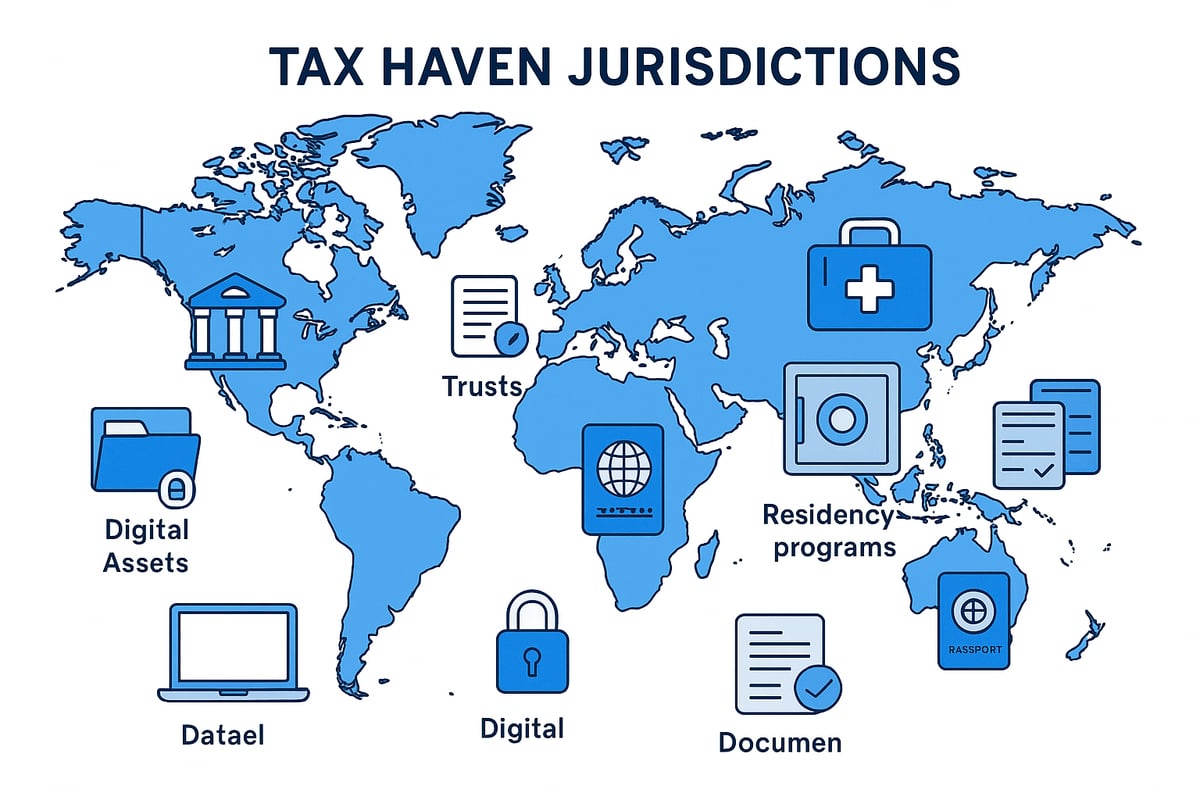
Building a robust international tax plan often starts with the right structures. Common vehicles in a tax haven include holding companies, trusts, foundations, and hybrid entities. These structures enable efficient cross-border investment, estate planning, and corporate flexibility.
Layering jurisdictions is a common approach, where assets or operations are routed through multiple tax haven entities for additional benefits. For example, a multinational may use a Luxembourg holding company to manage global subsidiaries, taking advantage of favorable treaties and local laws.
Understanding shareholder definitions and rights is crucial when establishing these structures, as ownership and control mechanisms directly impact compliance and tax outcomes. The right tax haven structure can optimize tax efficiency while balancing legal and regulatory requirements.
Asset Protection and Wealth Management
A tax haven is often chosen for its ability to shield assets from political risk, litigation, or expropriation. Asset protection structures—such as offshore trusts or private foundations—offer confidentiality, succession planning, and diversification.
Key benefits of asset protection in a tax haven include:
- Segregation of personal and business assets
- Legal insulation from creditors or claimants
- Tailored inheritance and estate solutions
However, transparency requirements are increasing. Clients must weigh the advantages of confidentiality against the need for regulatory compliance. In 2025, effective asset management in a tax haven means balancing privacy with adherence to international reporting standards.
Corporate Structuring and Intellectual Property
For corporations, a tax haven can provide significant advantages in intellectual property (IP) management. IP box regimes, favorable royalty taxation, and advanced transfer pricing rules attract tech and pharmaceutical firms.
Many companies route patents, trademarks, or software rights through jurisdictions like Ireland or the Netherlands, leveraging local incentives. The tax haven environment enables efficient royalty flows and global IP management, supporting innovation and competitiveness.
When structuring IP in a tax haven, it is vital to demonstrate economic substance and comply with anti-avoidance rules. Proper documentation and operational presence are now standard requirements, reducing purely artificial arrangements.
Digital Assets and Crypto-Friendly Havens
As digital assets and blockchain technology reshape finance, certain tax haven jurisdictions are leading the way with clear regulations and innovation hubs. Singapore and Switzerland, for example, have established robust frameworks for digital asset funds, decentralized autonomous organizations (DAOs), and crypto exchanges.
A tax haven that is crypto-friendly offers:
- Regulatory sandboxes for fintech experimentation
- Tax clarity for digital asset gains and transactions
- Legal structures for token issuance and custody
Choosing a digital asset-friendly tax haven can provide both flexibility and legal certainty, but participants must stay informed about evolving compliance obligations and international cooperation on crypto taxation.
Relocation, Citizenship, and Residency by Investment
Many tax haven jurisdictions offer relocation incentives, such as golden visa or citizenship-by-investment programs. These pathways not only provide residency or a second passport but may also unlock favorable tax treatment for individuals and families.
For example, Portugal’s Non-Habitual Resident regime attracts remote workers and entrepreneurs seeking a competitive tax haven with lifestyle benefits. Key considerations when relocating include:
- Tax residency rules and global reporting
- Minimum physical presence requirements
- Impacts on family and business interests
Careful planning ensures that relocation to a tax haven aligns with personal and professional objectives, while remaining compliant with home country regulations.
Ethical and Sustainable Tax Planning
In 2025, ethical and sustainable tax planning in a tax haven is paramount. Regulatory bodies, investors, and the public increasingly scrutinize aggressive tax strategies. Companies are expected to integrate ESG (Environmental, Social, Governance) principles into their tax haven operations.
Transparent reporting, responsible tax contributions, and alignment with global standards help protect reputation and stakeholder trust. Businesses using a tax haven should regularly review compliance frameworks and prioritize sustainable practices over short-term gains.
Ultimately, the most effective tax haven strategies balance opportunity with responsibility, ensuring long-term benefits in a rapidly changing environment.
Risks and Challenges of Using Tax Havens
Navigating the world of tax haven jurisdictions is not without significant risks and challenges. While the potential benefits can be substantial, individuals and businesses must remain vigilant. Understanding the legal, regulatory, reputational, economic, and financial implications is critical for anyone considering a tax haven strategy.
Legal Risks: Evasion vs. Avoidance
The line between legal tax avoidance and illegal tax evasion is thin and often debated. Using a tax haven for legitimate planning is legal if all local and international laws are followed. However, crossing into evasion can lead to harsh penalties, audits, and criminal charges. Recent years have seen a surge in prosecutions following leaks like the Panama Papers and Paradise Papers, which exposed unethical practices. Understanding the differences is crucial, and referencing a finance terms glossary can clarify essential concepts for those new to tax haven terminology.
- Legal tax avoidance: using laws to minimize tax
- Tax evasion: hiding income or falsifying information
- Consequences: fines, asset seizures, criminal records
Regulatory and Reporting Risks
The global regulatory landscape for tax haven users is more complex than ever. New reporting obligations such as CRS and FATCA require automatic sharing of financial information. Over 100 countries now participate in these frameworks, increasing the risk of retroactive disclosures. Regulatory changes can happen quickly, and what is legal today may not be tomorrow. This ever-changing environment means tax haven users must stay updated and prepared to adapt to new rules or face unexpected liabilities.
- Mandatory disclosure of beneficial ownership
- Risk of tax haven structures being invalidated
- Increased scrutiny from tax authorities
Reputation and Brand Risks
Association with a tax haven can damage a company’s or individual’s public image. Media investigations and stakeholder scrutiny have led to significant backlash against multinationals using offshore structures. Case studies abound of high-profile brands facing boycotts or shareholder action for perceived unethical behavior. Even legal use of a tax haven can trigger negative publicity, affecting trust and long-term business prospects.
- Negative press coverage and social media campaigns
- Loss of customer and investor confidence
- Impact on partnerships and future opportunities
Economic and Political Risks
Economic and political instability in tax haven jurisdictions presents another layer of risk. Sudden policy reversals, sanctions, or even coups can disrupt business operations and threaten assets. For example, after international scandals, some jurisdictions have faced blacklisting, leading to asset freezes or loss of banking access. Political risk is particularly acute in emerging or smaller tax haven markets, where governance may be less robust.
- Exposure to currency fluctuations and market shocks
- Risk of government intervention or expropriation
- Unpredictable regulatory environments
Cost-Benefit Analysis: When Is It Worth It?
Using a tax haven comes with significant costs. Legal fees, compliance expenses, and administrative complexity can quickly add up, especially as transparency rules tighten. The benefits of tax savings must be weighed against these outlays, as well as the risk of diminishing returns. According to the global cost of tax avoidance chart, worldwide losses from tax avoidance are estimated in the hundreds of billions annually. This underscores the need for a careful, strategic approach to tax haven planning.
- Ongoing compliance and reporting costs
- Risk of increased scrutiny reducing long-term savings
- Administrative burdens may outweigh benefits
The Future of Tax Havens: Trends and Opportunities
The tax haven landscape is undergoing rapid transformation as technology, regulation, and market demands reshape global finance. Staying ahead in this environment requires a clear understanding of the latest trends and opportunities.
The Digitalization of Offshore Finance
Digitalization is revolutionizing the tax haven sector. Jurisdictions are embracing blockchain, digital assets, and decentralized finance to attract new types of investors and businesses. Switzerland, for example, has launched regulatory sandboxes that allow crypto projects to innovate within a structured framework.
As financial institutions expand their digital offerings, assessing risk-weighted assets in banking becomes crucial for maintaining stability and compliance in a tax haven environment. Digital assets, cross-border payments, and fintech platforms are creating fresh opportunities for both individuals and corporations seeking efficiency and privacy.
Shifting Global Attitudes and Policy Directions
Global attitudes toward tax haven use are evolving rapidly. Policymakers, investors, and the public are demanding greater transparency, ethical conduct, and responsible tax strategies. The OECD continues its push to harmonize international tax rules, focusing on ending practices that erode tax bases and fuel inequality.
The concentration of financial services in a few dominant tax haven hubs reflects an oligopoly in global finance, raising questions about competition and regulatory oversight. As calls for tax justice and ESG-aligned policies increase, jurisdictions must adapt or risk losing their appeal to reputable businesses.
New Opportunities: Niche and Specialized Havens
Not all tax haven jurisdictions follow the same path. Some are carving out specialized niches, targeting industries like shipping, insurance, technology, or gaming. Malta, for example, has positioned itself as a leader in blockchain and online gaming regulation.
Microstates and city-states are experimenting with targeted incentives, flexible legal frameworks, and sector-specific tax breaks. For investors and companies, choosing a tax haven now often means aligning with jurisdictions that offer deep expertise and tailored solutions for their industry.
Adapting Strategies for 2025 and Beyond
Success in the tax haven world depends on agility and ongoing compliance. Regulatory shifts, technological advances, and public scrutiny require strategies that are both innovative and sustainable. Staying informed about the latest trends, seeking expert advice, and prioritizing transparency are now essential.
As the future unfolds, the most effective tax haven strategies will balance opportunity with responsibility, ensuring long-term benefits for individuals and organizations alike.
As we’ve explored in this guide, navigating tax havens in 2025 means understanding both the historic patterns and the fast-evolving landscape of global finance. If you’re eager to see how past market events have shaped today’s opportunities and risks—or want to spot emerging trends before they hit the headlines—you’ll appreciate what we’re building at Historic Financial News. Our platform is designed to give you interactive, AI-powered insights that put financial history at your fingertips. Want to help shape this unique resource and gain early access? Join Our Beta