
7 Stock Split Facts Every Investor Should Know in 2026
Have you noticed the surge in stock split announcements lighting up financial headlines in 2026? It seems like every week, another major company joins the trend, fueling curiosity among both new and experienced investors. With this growing buzz, understanding the true impact and purpose of a stock split has never been more important.
Whether you are just beginning your investment journey or refining an established portfolio, knowing the facts behind stock splits can help you make smarter decisions. This article uncovers the seven essential facts every investor should know about stock splits in 2026.
We will break down what stock splits are, how they affect your holdings, the psychology driving market reactions, and the steps you can take to navigate them confidently.
Understanding Stock Splits: The Basics
A stock split is a common event in the financial markets, yet many investors still find it confusing. Understanding the mechanics and reasons behind a stock split is essential for anyone looking to navigate the market with confidence. Let us break down the key elements, types, and misconceptions that surround the stock split.
What Is a Stock Split?
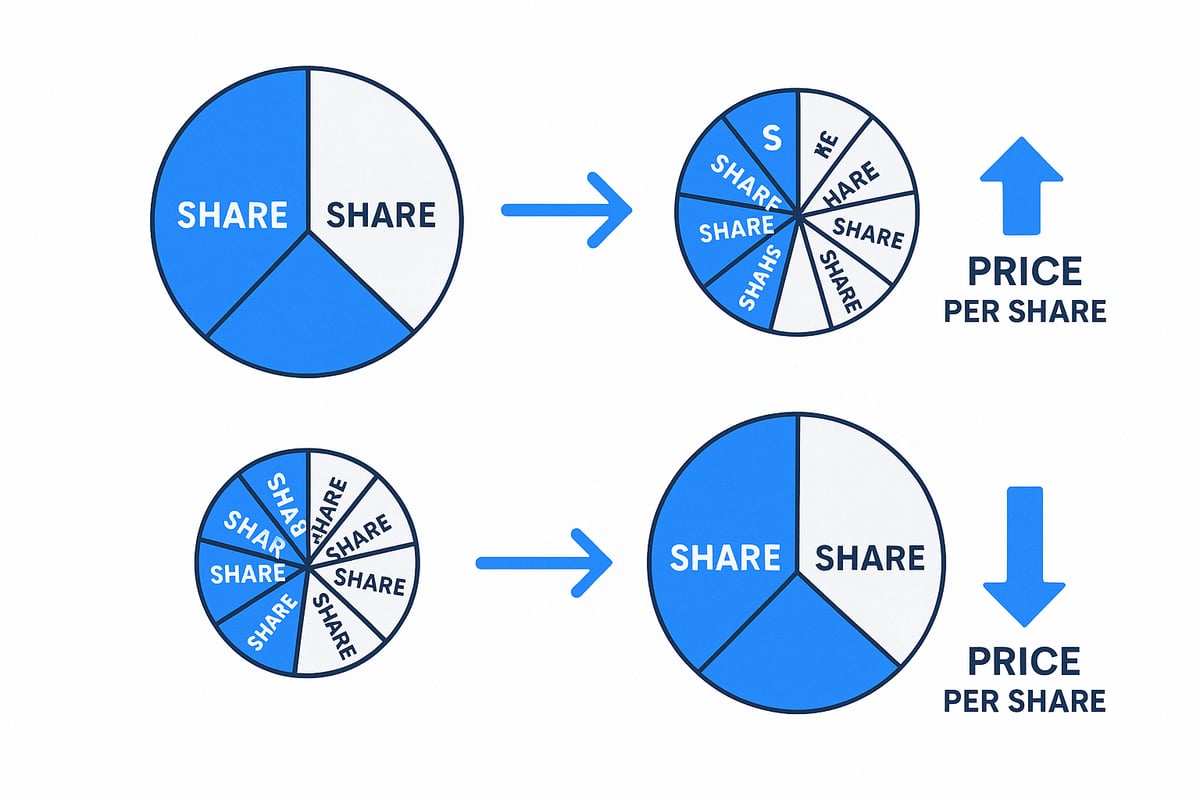
A stock split is a corporate action where a company increases its number of outstanding shares by dividing each existing share. For example, in a 2-for-1 stock split, every shareholder receives an extra share for each one they own, and the share price adjusts accordingly. If you owned one share priced at $100, after a 2-for-1 split, you would hold two shares at $50 each, keeping your total investment value unchanged.
The mechanics of a stock split do not affect your ownership percentage or the company’s market capitalization. Recent high-profile stock splits, such as those by Apple and Tesla, have brought renewed attention to this practice. Companies can also perform reverse splits, which reduce the number of shares and increase the price per share, often for regulatory reasons.
Why Companies Choose to Split Their Stock
Companies typically implement a stock split to make their shares more affordable for retail investors. As share prices climb, a lower per-share price can remove psychological barriers and attract a wider pool of buyers. Increased liquidity is another benefit, as more investors are able to trade the stock easily.
Stock splits are especially common among high-growth companies. If you are interested in why growth-oriented firms are frequent splitters, see Growth Stocks and Splits for more details. By splitting their stock, these companies can signal confidence in their future and generate excitement in the market.
Types of Stock Splits: Forward vs. Reverse
There are two main types of stock split: forward and reverse. A forward stock split increases the number of shares and lowers the price per share, as seen in a 3-for-2 or 2-for-1 split. Companies often use this approach after a period of strong share price growth, aiming to improve access for everyday investors.
A reverse stock split does the opposite. It reduces the number of shares while increasing the price per share. Firms may pursue a reverse stock split to avoid delisting from an exchange if their share price falls too low. For example, some small-cap companies have used reverse splits to maintain compliance with exchange requirements. Regulatory bodies typically require public notification before any stock split takes place.
Common Misconceptions About Stock Splits
Many investors mistakenly believe that a stock split increases the value of their holdings. In reality, while the number of shares changes, the overall value does not. The fundamentals of the business, such as revenue and earnings, remain the same after a split.
Another common misunderstanding is that a stock split is always a bullish signal. While splits can create short-term excitement, they do not guarantee better long-term performance. The company’s market capitalization stays the same, and your ownership share is unaffected. Reliable resources from organizations like FINRA and the SEC emphasize that understanding the true impact of a stock split is vital to making sound investment decisions.
7 Stock Split Facts Every Investor Should Know in 2026
If you are considering investing in companies planning a stock split, knowing the facts is essential. The landscape in 2026 is dynamic, and understanding these seven key points will help you make informed decisions and avoid common pitfalls with stock splits.

1. Stock Splits Don’t Increase Your Investment’s Real Value
Many investors believe a stock split makes them richer, but this is a misconception. When a company announces a 2-for-1 stock split, you receive twice as many shares, but each share is worth half as much. For example, if you owned 50 shares at $200 each before the split, after the split you would own 100 shares at $100 each. Your total investment value remains $10,000 both before and after the stock split.
The mechanics of a stock split ensure that the company’s overall market capitalization and your ownership percentage stay exactly the same. Regulatory bodies like FINRA emphasize that a stock split is simply a change in share structure, not a gain in wealth.
Psychologically, seeing more shares in your account can feel like a windfall, but it is important to look past the numbers. The real impact is neutral unless the stock split triggers other market reactions. Always remember, the stock split itself does not alter the company’s fundamentals or your stake in the business.
2. Stock Splits Can Boost Liquidity and Trading Volume
One of the main reasons companies initiate a stock split is to increase the stock’s liquidity. After a stock split, the lower per-share price makes it easier for more investors, especially retail participants, to buy in. This typically leads to higher trading volumes, as more shares are available at an accessible price point.
Data from recent stock splits in 2025 and 2026 show a noticeable uptick in trading activity following the split. More liquidity can benefit investors by creating tighter bid-ask spreads and making it easier to enter or exit positions.
For day traders and short-term investors, a stock split can create new opportunities due to the increased trading volume. However, while liquidity improves, the underlying value of your holdings remains unchanged. The stock split simply makes the shares more accessible and marketable.
3. Splits Often Follow Strong Share Price Growth
Companies usually implement a stock split after a significant rally in share price. When a stock becomes "expensive" in dollar terms, management may opt for a stock split to keep shares within reach for average investors. This is why you often see a stock split announced by companies like Netflix or Nvidia after years of strong performance.
A stock split can be interpreted as a sign of management’s confidence in the company’s future prospects. Wall Street analysts often view the timing of a stock split as a signal that the company expects continued growth. However, historical trends show that not every stock split leads to further gains.
As an investor, it is important to focus on why the stock split is happening. Is it a response to genuine growth, or just an attempt to attract attention? Reviewing the company’s fundamentals before and after a stock split helps you make a better decision.
4. Splits Have No Long-Term Impact on Company Fundamentals
A key fact about a stock split is that it does not change the business’s underlying fundamentals. Earnings, revenue, and future growth prospects are unaffected by the split. Studies have shown there is no direct correlation between a stock split and sustained long-term performance.
Short-term price moves can occur after a stock split due to increased trading activity or renewed investor interest. However, these moves are typically temporary and do not reflect changes in the company’s actual value. For example, companies that split their stock in the past often saw a brief rally, but their long-term returns depended on business performance.
Experts from FINRA and analysts at The Motley Fool agree that investors should not rely on a stock split as a reason to buy or sell a stock. Instead, focus on the company’s core metrics and industry outlook.
5. Reverse Stock Splits Are Usually a Red Flag
A reverse stock split is the opposite of a traditional stock split. In this scenario, a company reduces the number of outstanding shares and increases the share price. Companies often use a reverse stock split to avoid delisting from major exchanges if their share price has fallen below the required minimum.
Reverse stock splits are most common among struggling firms or penny stocks. FINRA warns that a reverse stock split can be a signal of financial distress. Historical examples show that companies conducting reverse splits often continue to decline in value.
Investors should approach reverse stock splits with caution. If you notice a company announcing frequent reverse splits, it is a sign to dig deeper into its financial health and prospects. Always research the reasons behind a reverse stock split before making any investment decisions.
6. Stock Splits Can Influence Market Psychology
A stock split often changes how investors view a company, sometimes fueling increased demand and market excitement. The perception of "cheaper" shares can attract new buyers, even though the overall value remains the same. This psychological effect can lead to short-term rallies and higher volatility as media coverage and social media buzz intensify.
Research in behavioral finance has shown that a stock split can amplify FOMO—fear of missing out—leading to rapid buying and momentum trading. For more details on how stock splits affect investor sentiment, see Stock Splits and Market Sentiment: A Behavioral Finance Perspective.
While these effects can present opportunities, they also introduce risks. The excitement around a stock split can fade quickly, and prices may return to previous levels if fundamentals do not support the move. As an investor, staying grounded in facts is the best way to avoid being swept up by market psychology.
7. How to Navigate Stock Splits as an Investor in 2026
Navigating a stock split in 2026 requires a disciplined approach. First, review the company’s fundamentals before acting on a stock split announcement. Avoid making emotional decisions or chasing stocks solely because of a pending split.
Monitor liquidity and trading volumes, as these can change significantly after a stock split. Keep an eye on company announcements and SEC filings to stay informed about key dates and changes affecting your holdings.
It is wise to avoid speculative trading based only on a stock split, as short-term gains can be unpredictable. Use tools and resources to track stock split news, but always prioritize your long-term investment strategy over temporary hype. Remember, a well-informed investor is less likely to be caught off guard by market swings.
The Mechanics and Timeline of a Stock Split
Understanding the mechanics and timeline of a stock split is essential for every investor in 2026. The process involves several key steps, dates, and operational adjustments that can affect your portfolio and trading activity. Let's break down what to expect at each stage and how these changes impact your investments.
Announcement to Execution: What to Expect
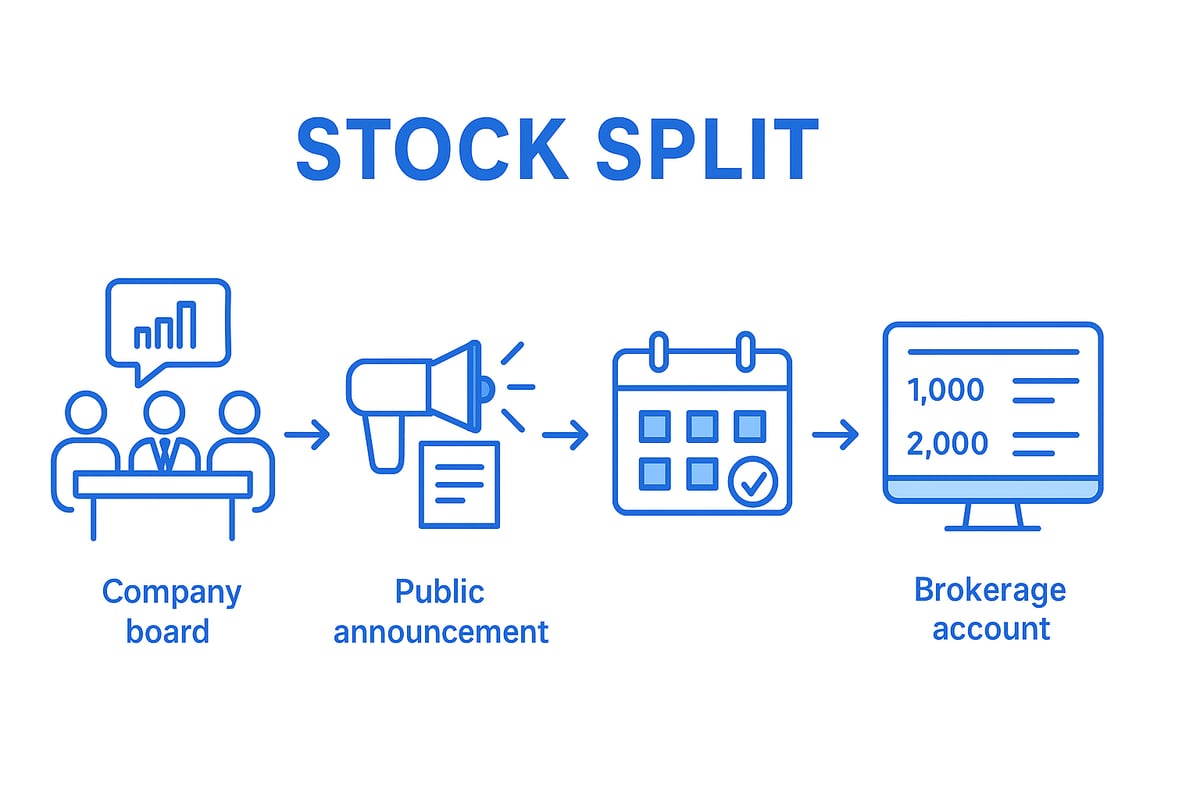
The stock split process starts with the company's board of directors approving the split. After approval, the company issues a public announcement, detailing the split ratio and key dates. This information is shared with shareholders and the market, complying with both SEC and FINRA reporting requirements.
Once the announcement is made, the company sets a record date, which determines who is eligible to receive additional shares. The actual split execution usually follows within a few weeks. During this period, investors can track updates through official filings and brokerage communications. The stock split typically becomes effective on the ex-date, when trading reflects the new share count and adjusted price.
Key Dates and Terms Investors Should Know
When a stock split is announced, investors need to pay close attention to certain terms. The "record date" refers to the cutoff day for determining which shareholders are entitled to the split shares. The "ex-date" is the first day the stock trades at the new split-adjusted price, and the "payment date" is when new shares are credited to accounts.
For example, if the record date is June 10, only those holding the stock on that date receive the split shares. The ex-date may fall a day or two later, marking the start of trading at the new share price. These dates are critical for anyone aiming to benefit from a stock split, as they determine eligibility and trading logistics.
Impact on Dividends, Options, and Indexes
A stock split affects more than just the share count. Dividend payments per share are adjusted so that total income remains unchanged. For instance, if a company pays a $2 dividend per share and implements a 2-for-1 stock split, the new dividend becomes $1 per share, but investors hold twice as many shares.
Options contracts are also adjusted automatically. The strike price and number of contracts are recalculated to reflect the new share structure, ensuring no loss or gain in value. Additionally, stock splits can influence index composition and weighting, as major splits may prompt index providers to rebalance holdings for accurate representation.
How Brokerages Handle Stock Splits
Brokerages play a critical role in processing a stock split. They update account balances, recalculate cost basis, and ensure new shares are properly credited. Occasionally, there may be short delays or errors during this transition. Investors should always check their statements after a split to confirm accuracy.
Operational challenges, especially with reverse splits, can lead to complexities with fractional shares and liquidity. For more details on these issues, see Reverse Stock Splits and Fractional Share Round-Ups, which highlights important considerations for investors and brokers alike. Staying vigilant and informed helps ensure a smooth experience during any stock split event.
Historical Trends and Notable Stock Splits
The history of the stock split reveals valuable patterns for investors. By looking at recent stock split events, their performance, and sector trends, investors can gain perspective to make informed decisions. Let us examine the most significant stock split moments, their aftermath, and the lessons they offer.
Major Stock Splits in Recent Years
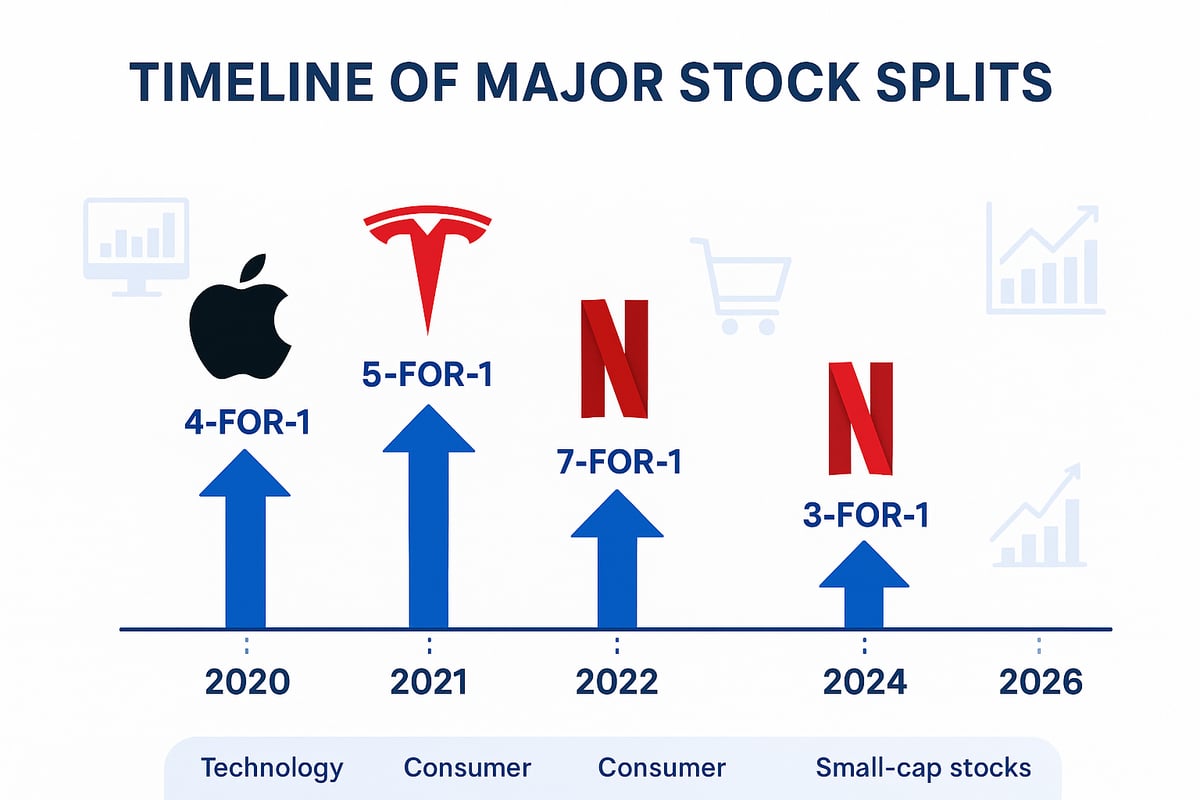
From 2020 to 2026, the stock split has made headlines with high-profile companies taking action. Apple’s 4-for-1 split in 2020 and Tesla’s 5-for-1 split shortly after both attracted widespread attention. Netflix followed with a notable split, as did Nvidia and Alphabet.
These moves are not limited to tech giants. Consumer brands like Shopify and retail leaders have also executed splits to make their shares more accessible. The frequency and scale of these events have increased as share prices soared. Investors often see a flurry of trading activity surrounding the announcement and execution of a stock split, which can temporarily boost market interest.
| Year | Company | Split Ratio |
|---|---|---|
| 2020 | Apple | 4-for-1 |
| 2020 | Tesla | 5-for-1 |
| 2022 | Alphabet | 20-for-1 |
| 2025 | Netflix | 3-for-1 |
Performance Analysis: Do Splits Predict Future Gains?
Many investors wonder if a stock split signals future outperformance. Academic research shows that while stocks may see a short-term price bump due to increased attention and perceived affordability, the long-term effects are mixed.
A look at historical returns after a stock split reveals that gains are often short-lived. Some companies experience volatility as traders capitalize on momentum, but fundamentals remain unchanged. Over time, the stock split itself does not guarantee superior returns. Investors should focus on company performance instead of assuming that a split is a bullish indicator.
Sector and Market Trends in Stock Splits
The stock split trend is most pronounced in technology, consumer discretionary, and select healthcare sectors. Tech companies, driven by rapid growth and soaring share prices, are frequent users of splits. Retail and consumer brands also turn to the stock split to appeal to a wider investor base.
Macroeconomic factors like market rallies, low interest rates, and increased retail participation have contributed to more split activity in recent years. Research, such as the Impact of Clientele Changes on Stock Splits, highlights how splits can attract new, sometimes less sophisticated, investors, influencing liquidity and trading patterns. Historical cycles show that split popularity tends to rise during bullish markets and periods of strong sector performance.
Lessons from the Past: What Investors Can Learn
History teaches that the stock split is not a shortcut to wealth. Investors often get caught up in the excitement, mistaking splits for signals of future growth. However, past cycles demonstrate that fundamentals, not share structure changes, drive long-term value.
It is important to use historical context when evaluating a stock split. Look for patterns, but remain cautious of hype. Successful investors analyze the reasons behind a split, company health, and sector trends before making decisions. The stock split, while newsworthy, should be one factor among many in a sound investment strategy.
Risks and Considerations Before Acting on a Stock Split
Taking action around a stock split can seem straightforward, but there are several risks and considerations every investor should weigh. By understanding these pitfalls, tax realities, portfolio impacts, and warning signs, you can avoid common mistakes and make more informed decisions.
Potential Pitfalls and Common Mistakes
One of the most common mistakes investors make is jumping into a stock split purely because of excitement or hype. Some traders believe that a split alone guarantees future gains, but this is not the case. The fundamentals of the company remain the same, and focusing only on the adjusted share price can be misleading.
It is crucial to review key metrics like the Price-to-Earnings Ratio Impact after a stock split. Overtrading and chasing momentum may result in unnecessary transaction costs or losses. Always keep your investment objectives and risk tolerance in mind, and avoid ignoring company fundamentals during the process.
Tax Implications of Stock Splits
A stock split is typically a non-taxable event, meaning you will not owe taxes simply because your shares have been split. Your overall cost basis is adjusted to reflect the new share count and price, keeping your total investment value unchanged.
However, if you sell shares after a stock split, you may trigger capital gains taxes based on your adjusted cost basis. For complex situations, such as partial sales or inherited accounts, it is wise to consult a tax professional. Stay informed about any unique tax rules that could apply to your specific situation.
How Stock Splits Affect Portfolio Strategy
After a stock split, you might notice a change in your portfolio’s allocation, especially if the split increases your holdings in one company. It is important to review your diversification and rebalance if necessary to maintain your desired risk profile.
Long-term investors should focus on the underlying business rather than the excitement of the stock split. Short-term traders may be tempted by increased volatility, but this can also lead to higher risk. Always align your strategy with your financial goals and avoid impulsive decisions based on split news alone.
Red Flags: When to Be Wary of Stock Splits
Not all stock splits are positive signals. Frequent splits or reverse splits, especially by companies with declining performance, can be warning signs. Reverse splits are often used by struggling firms to boost share price and avoid delisting.
This is particularly common among Small-Cap Stocks Explained, which may face stricter listing requirements. Be skeptical of split announcements from companies with weak fundamentals or negative news. Conduct thorough research before making any investment moves based on split activity.
As you’ve just discovered, understanding stock splits isn’t just about the numbers—it’s about seeing the bigger picture and learning from history. Whether you’re navigating your first split or looking to refine your strategy for 2026, having the right context can make all the difference. That’s exactly what we’re building at Historic Financial News: a platform where you can explore market events, spot patterns, and deepen your investing wisdom through interactive tools and historical insights. If you’re ready to help shape the future of financial learning, Join Our Beta and be part of our journey.