
Secondary Market Guide: Insights and Strategies for 2025
Imagine unlocking a new realm of investment opportunities and liquidity in 2025’s rapidly changing financial world. The secondary market is at the heart of this transformation, opening doors for investors, companies, and stakeholders to access value beyond the primary market.
This comprehensive guide will demystify the secondary market, equipping you with expert knowledge and actionable strategies. You will gain insights to navigate, participate in, and optimize your outcomes in these evolving markets.
Explore the fundamentals, key players, emerging trends, regulatory shifts, and advanced tactics that define the secondary market in 2025. Get ready to apply these insights and stay ahead in a dynamic financial landscape.
Understanding the Secondary Market: Fundamentals and Key Concepts
The secondary market plays a vital role in today’s financial ecosystem, providing a platform where existing securities change hands between investors. This section breaks down what the secondary market is, how it operates, its main functions, the types of markets available, and the key participants involved.

What is the Secondary Market?
The secondary market is a marketplace where previously issued securities, such as stocks and bonds, are bought and sold among investors. Unlike the primary market, where companies first issue new securities to raise capital, the secondary market enables the resale of these assets. For an overview of how initial offerings differ from later trades, see Understanding the primary market.
There are two main types: public secondary markets, like the New York Stock Exchange, and private secondary markets, which focus on private company shares traded through specialized platforms. For example, trading Apple shares on the NYSE is a public secondary market activity, while selling pre-IPO shares via a private platform is private secondary market activity. The secondary market is crucial for liquidity and price discovery, and its trading volume often surpasses that of the primary market. This efficiency helps allocate capital where it is most needed.
Main Functions of the Secondary Market
The secondary market delivers several essential functions for investors and companies. First, it provides liquidity, allowing investors and employees to convert assets into cash when needed. Active trading in the secondary market also drives price discovery, revealing a security’s fair value.
Portfolio diversification becomes easier because investors can access a range of assets and manage risk more effectively. The secondary market indirectly supports capital formation by making primary issuance more attractive to new investors. For example, early-stage employees can monetize their equity through secondary sales. By reducing information asymmetry, the secondary market promotes market efficiency and underpins a healthy financial ecosystem.
Types of Secondary Markets
The secondary market is diverse, spanning several asset classes. Public equity markets, such as NYSE and NASDAQ, are the most familiar. Bond and fixed income securities also have robust secondary markets. Private secondary markets have grown rapidly, enabling trades in pre-IPO shares and private equity interests.
Alternative assets, including real estate, collectibles, and digital assets, are increasingly traded in the secondary market as well. For example, Nasdaq Private Market facilitates private share exchanges, and recent years have seen a surge in private secondary market platforms since 2020. This expansion means the secondary market now goes far beyond traditional stocks and bonds, offering new opportunities for investors.
Key Participants and Their Roles
Several groups drive activity in the secondary market. Sellers include employees with vested equity, early investors, and venture capitalists looking to realize gains. Buyers are often institutional investors, accredited individuals, and specialized funds seeking new opportunities.
Companies play a key role in approving and facilitating secondary market transactions, while intermediaries such as platforms, brokers, and legal advisors help manage deals. For instance, an employee might exercise stock options and sell them through a tender offer, with intermediaries guiding the process. Every participant in the secondary market has unique incentives and constraints, making it vital to understand each role for successful transactions.
The Evolving Secondary Market Landscape in 2025
The secondary market is entering a new era in 2025. Rapid innovation, evolving regulations, and shifting investor priorities are reshaping how securities are traded beyond their initial issuance. Understanding these changes is crucial for anyone looking to participate or optimize outcomes in this dynamic environment.

Major Trends Shaping the Market
Several major trends are defining the secondary market in 2025. Activity in private share trading is reaching record highs, driven by both institutional and individual investors seeking access to previously illiquid opportunities. The expansion of digital trading platforms and fintech solutions is making transactions faster and more transparent.
Democratization is a key theme, with non-institutional investors gaining greater access to private secondary market deals. For example, pre-IPO share transactions are surging on platforms like SecondMarket®. According to the 2025 Secondary Market Report, deal volumes have reached unprecedented levels, reflecting growing confidence in the market's evolution.
Market Drivers and Influencing Factors
The secondary market is influenced by a complex set of drivers. Macroeconomic factors such as interest rates, inflation, and overall economic growth play a central role. Investor demand for liquidity and diversification has been rising, pushing more capital into secondary market transactions.
Regulatory changes have made it easier for participants to trade privately held shares. For instance, higher interest rates in 2025 have prompted more investors to seek exits through the secondary market. Data from recent years shows a clear correlation between economic cycles and trading volumes, underlining the need to monitor these trends closely.
Regulatory and Legal Developments
Regulatory and legal frameworks for the secondary market are evolving rapidly. New SEC rules are affecting how private share transfers are conducted, with enhanced requirements for disclosure and transparency. These updates aim to reduce risks and increase confidence among participants.
Cross-border trading is also becoming more common, as regulators work toward international harmonization. Changes in rules, such as those affecting restricted securities, have increased compliance costs for private companies. Staying informed about the latest regulatory developments is essential for effective risk management in the secondary market.
Technological Innovations and Marketplaces
Technology is transforming the secondary market. Blockchain-based platforms are enabling secure, transparent transactions, while AI-powered analytics support better pricing and due diligence. Many marketplaces now offer integrated settlement and transfer solutions, streamlining the entire process.
Automated matching engines are reducing transaction times, making the secondary market more efficient. Adoption rates for digital trading platforms are climbing, with participants benefiting from improved access and reduced friction. These technological advancements are making the secondary market more accessible and efficient than ever before.
Challenges and Risks in 2025
Despite its growth, the secondary market faces significant challenges. Liquidity is often lower than in public markets, making it harder to buy or sell assets quickly. Valuation uncertainty and limited price discovery remain issues, especially for private assets.
Information asymmetry can put some participants at a disadvantage, and regulatory hurdles may delay or block transactions. Failed deals, often due to lack of company approval, highlight the importance of understanding all requirements. In 2025, risk mitigation strategies are more important than ever for anyone active in the secondary market.
How the Secondary Market Works: Step-by-Step Guide for 2025
Navigating the secondary market in 2025 requires a clear understanding of each stage in the transaction process. By breaking down each step, investors and sellers can maximize efficiency, reduce risks, and achieve their liquidity goals. Below, we outline a practical, step-by-step approach to participating in the secondary market.
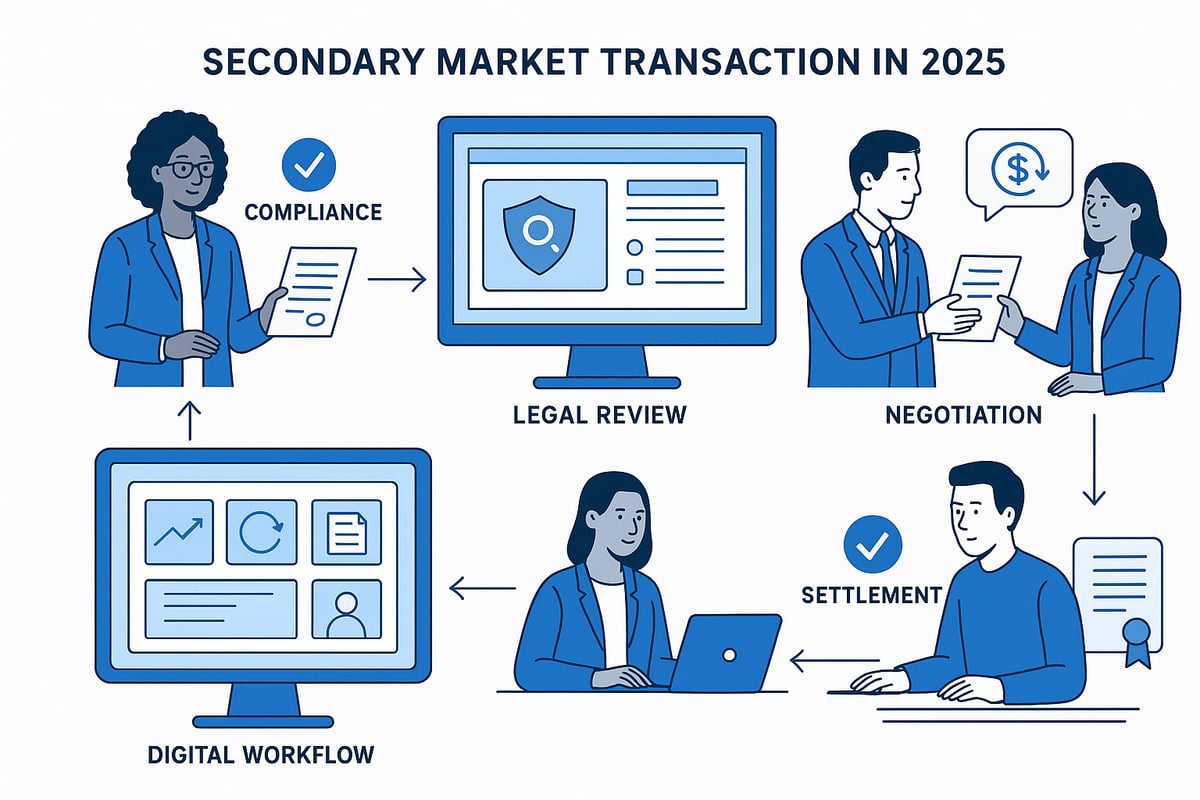
Step 1: Identifying Eligible Securities and Stakeholders
The first step in any secondary market transaction is to determine which securities can be traded. Review the company’s bylaws and shareholder agreements to confirm transferability. Not every asset is eligible for the secondary market due to restrictions like lock-up periods or right-of-first-refusal clauses.
Identify all relevant stakeholders early. These typically include sellers (such as employees with vested RSUs), buyers (institutional or accredited investors), the company itself, and intermediaries. Understanding the eligibility and roles up front ensures a smoother secondary market experience for everyone involved.
Step 2: Selecting the Right Platform or Marketplace
Choosing the right platform is crucial in the secondary market. Evaluate public exchanges, private trading platforms, and broker networks. Consider factors like reputation, transaction fees, compliance support, and user experience.
Platforms specializing in private shares, such as those highlighted in the FY2024 Secondary Market Overview, have seen significant growth and innovation. Your choice of marketplace directly affects the speed, transparency, and success rate of your secondary market transaction.
Step 3: Preparing for the Transaction
Preparation is key to a successful secondary market deal. Gather all required documentation, including proof of ownership and identity verification for regulatory compliance (KYC/AML). Conduct thorough due diligence—use AI-powered analytics to assess asset value, review legal agreements, and vet counterparties.
Well-prepared participants in the secondary market minimize transaction risks and avoid costly delays. This stage is where careful planning pays off, ensuring that all parties are ready for negotiation and execution.
Step 4: Negotiating and Structuring the Deal
Negotiation in the secondary market involves setting the terms: price, quantity, timing, and any special conditions. Some deals are structured as tender offers with set prices, while others rely on direct negotiation between buyers and sellers.
Address company approval and any right-of-first-refusal provisions at this stage. The way a deal is structured can influence tax outcomes and settlement logistics. A well-negotiated secondary market transaction balances the interests of all parties and maximizes value.
Step 5: Executing and Settling the Trade
Execution in the secondary market requires obtaining final company approvals and completing all legal documentation. Platforms now offer integrated solutions for instructions, payment, and ownership transfer, reducing settlement times.
A seamless settlement process lowers counterparty risk and increases confidence in the secondary market. Digital marketplaces continue to innovate by automating workflows, making execution faster and more secure for both buyers and sellers.
Step 6: Post-Transaction Considerations
After closing a secondary market deal, update company records and cap tables promptly. Address tax obligations for both buyers and sellers, as secondary market transactions can have different implications based on jurisdiction and asset type.
Ongoing compliance and timely reporting are essential. Monitoring your portfolio after a secondary market transaction helps ensure long-term success and prepares you for future opportunities in this dynamic space.
Key Strategies for Success in the Secondary Market
To excel in the secondary market, investors and stakeholders need a toolkit of proven strategies. The right approach can unlock opportunities, manage risks, and maximize returns in a dynamic environment. Let us break down five essential strategies for navigating the secondary market in 2025.

Building a Diversified Portfolio
A diversified portfolio is fundamental when operating in the secondary market. By allocating across public equities, private shares, and alternative assets, you reduce concentrated risk and open doors to unique opportunities.
For example, investors may use the secondary market to gain exposure to private AI companies otherwise unavailable on public exchanges. This approach not only enhances potential returns but also mitigates volatility. Consider including asset types such as:
- Public company shares
- Pre-IPO private shares
- Real estate and digital assets
Diversification in the secondary market empowers you to weather market shifts and capitalize on innovation.
Timing and Market Entry
Effective timing is crucial in the secondary market. Monitoring macroeconomic indicators like interest rates, inflation, and public market cycles can inform your entry and exit decisions.
Historical patterns show that secondary market activity often surges during IPO slowdowns, as investors seek liquidity or reallocate portfolios. Tools to assist with timing include:
- Tracking IPO windows and market sentiment
- Analyzing deal volume trends
- Reviewing economic forecasts
Strategic entry points in the secondary market can improve access to liquidity and better pricing.
Due Diligence and Valuation Techniques
Thorough due diligence is vital for success in the secondary market. Accurate valuation requires leveraging multiple data sources, AI-powered analytics, and market intelligence.
Assess the fundamentals of target companies, their financials, and sector growth prospects. For up-to-date insights on trends and pricing benchmarks, refer to comprehensive resources like the Lazard 2024 Secondary Market Report.
Key steps in due diligence include:
- Verifying asset ownership and transferability
- Reviewing company financial statements
- Comparing valuations across recent transactions
Informed decisions in the secondary market reduce the risk of overpaying or missing hidden challenges.
Navigating Company Approval and Legal Hurdles
Understanding company policies and legal requirements is essential in the secondary market. Many private firms have specific rules for transferring shares, including right-of-first-refusal or board approval processes.
Work closely with legal advisors to ensure compliance with company bylaws and regulatory standards. Common legal hurdles include:
- Share transfer restrictions
- Approval timelines and documentation
- Compliance with securities regulations
Proactive engagement with companies streamlines secondary market transactions and minimizes delays.
Risk Management and Exit Planning
A robust risk management and exit plan is key to long-term success in the secondary market. Before investing, define clear objectives and determine acceptable risk levels.
Consider methods to hedge against illiquidity or market downturns, such as:
- Staggering secondary market sales over time
- Utilizing options or other protective instruments
- Monitoring ongoing performance and regulatory changes
Planning your exit strategy in advance ensures you can respond quickly to market shifts and safeguard your investment in the secondary market.
The Role of Secondary Markets in Portfolio and Wealth Management
Navigating the secondary market is increasingly vital for investors, companies, and wealth managers seeking flexibility and opportunity in today’s dynamic financial environment. As private and public assets are exchanged, participants unlock new avenues for liquidity, diversification, and strategic portfolio management.
Liquidity Solutions for Employees and Early Investors
The secondary market provides a crucial liquidity pathway for employees and early investors who hold equity in private companies. Instead of waiting for an IPO or acquisition, these stakeholders can monetize their shares, often via structured liquidity programs or tender offers.
By leveraging the Guide to shareholders, participants gain clarity on rights and obligations during these transactions. This process not only satisfies personal financial goals but also improves employee retention and morale.
As more companies facilitate secondary sales, the market’s role in supporting individual wealth management grows, providing flexibility that was previously unavailable.
Strategic Use by Institutional Investors and Funds
Institutional investors and funds increasingly turn to the secondary market to rebalance portfolios, access late-stage private companies, and manage risk. Hedge funds, venture capital, and private equity firms use these trades to enter or exit positions without depending on public market events.
Recent data, such as the Private Markets Secondaries Surge in H1 2025, highlights a record increase in deal volume, underscoring the market’s growing importance. Institutions can strategically acquire stakes in high-growth startups, positioning themselves ahead of public offerings.
This proactive approach enables greater alpha generation and diversification, reinforcing the secondary market’s significance in institutional wealth strategies.
Impact on Company Valuation and Capital Structure
Secondary market transactions play a pivotal role in price discovery and shaping company valuations. When private shares change hands, the resulting prices often serve as benchmarks for future fundraising rounds and investor sentiment.
| Impact Area | Description |
|---|---|
| Valuation | Sets reference price for new capital |
| Capital Structure | Alters ownership distribution |
| Perception | Attracts new primary investors |
| Fundraising | Influences negotiation leverage |
A vibrant secondary market can elevate a company’s perceived value, making it more attractive to both existing and prospective investors. This dynamic influences strategic decisions and the overall capital structure.
Wealth Management Considerations and Tax Implications
Incorporating secondary market assets into wealth management plans introduces unique tax considerations and estate planning opportunities. Individuals and entities must assess the tax treatment of gains from secondary sales, which may differ based on jurisdiction and holding period.
Structuring transactions thoughtfully can optimize after-tax outcomes and facilitate generational wealth transfer. Seeking professional advice ensures compliance with evolving regulations and maximizes the benefits of secondary market participation.
Ultimately, integrating secondary market strategies empowers stakeholders to manage liquidity, risk, and long-term financial objectives effectively.
Future Outlook: What’s Next for Secondary Markets Beyond 2025?
The secondary market is rapidly evolving, and the years beyond 2025 promise even greater transformation. As investor appetite grows and technology advances, the landscape is set for new opportunities and challenges. Let us explore the most critical trends shaping the future of the secondary market, and how you can stay ahead.
Continued Expansion of Private and Alternative Asset Markets
The secondary market is expanding rapidly into private equity, venture capital, and real assets. Investors are increasingly seeking exposure to non-traditional asset classes, from late-stage startups to digital collectibles. By 2030, analysts expect the secondary market for private assets to more than double in size.
This growth is fueled by demand for yield and diversification. As traditional public markets become saturated, investors turn to the secondary market for access to high-growth companies before they go public. New asset classes, such as tokenized real estate and digital assets, are also gaining traction.
For participants, this expansion means more choices and the chance to participate in sectors previously out of reach. Understanding how the secondary market enables price discovery, as explained in the Efficient market hypothesis basics, is crucial for making informed investment decisions.
Regulatory Evolution and Globalization
Globalization is reshaping the secondary market. As cross-border trading becomes standard, regulators are working to harmonize rules across major markets. In the next several years, expect to see new securities laws and international agreements that make it easier for investors to trade assets globally.
For example, the convergence of EU and US regulations is likely to streamline transactions, reducing friction and opening new markets. However, with these changes come added complexities around compliance, reporting, and taxation.
Staying informed on evolving regulations is essential for anyone active in the secondary market. Companies, investors, and intermediaries must adapt quickly to shifting requirements. Those who understand the global regulatory landscape will be better positioned to capture emerging opportunities.
Technological Disruption and Platform Consolidation
Technology continues to disrupt the secondary market, making transactions more transparent, efficient, and secure. Blockchain, artificial intelligence, and automation are driving down costs and accelerating deal execution. Digital platforms are integrating settlement, compliance, and analytics tools, creating seamless end-to-end experiences.
Platform consolidation is also underway. As the market matures, expect leading secondary market platforms to merge, offering greater liquidity and standardized processes. This trend benefits both buyers and sellers, as larger networks facilitate better price discovery and reduce counterparty risk.
Efficiency gains from technology not only streamline operations but also enhance market transparency. This is a key factor supporting a more robust secondary market ecosystem.
Strategies for Staying Ahead in a Dynamic Market
Success in the future secondary market will require agility, continuous learning, and strategic networking. Investors and companies should prioritize the following:
- Embrace new data analytics platforms for real-time market intelligence.
- Build relationships with key intermediaries and market participants.
- Participate in emerging platforms early to gain a competitive edge.
- Stay updated on regulatory and technological changes.
Those who adapt quickly and leverage innovative tools will thrive in the evolving secondary market. In an environment where information moves fast, being proactive and informed is the best way to secure long-term success.
As you explore the evolving landscape of secondary markets in 2025, it’s clear that understanding market history and recognizing emerging trends can give you a real edge. Imagine harnessing interactive charts, AI-powered insights, and original news coverage—all designed to help you spot opportunities, avoid pitfalls, and make smarter decisions. If you’re ready to deepen your knowledge and shape your own strategies, now’s the perfect time to get involved. Join our community and help us build a platform that brings financial history to life—your perspective matters. Join our beta and help us bring history to life