
The Essential Preferred Stock Guide for Investors 2025
The financial landscape in 2025 presents both fresh opportunities and complex challenges for those considering preferred stock as part of their investment strategy. With shifting markets and evolving regulations, understanding preferred stock has never been more essential. This guide equips investors with the latest insights, from defining preferred stock and assessing its unique benefits and risks, to evaluating shares and navigating current market trends. Whether you are new to preferred stock or seeking to refine your approach, let this resource help you make informed, confident decisions for the year ahead.
Understanding Preferred Stock: Basics and Key Features
Preferred stock is a unique financial instrument that blends elements of both stocks and bonds, making it a versatile choice for income-seeking investors in 2025. Understanding its core features, different types, position in the capital structure, and the pros and cons is essential before adding it to your portfolio.
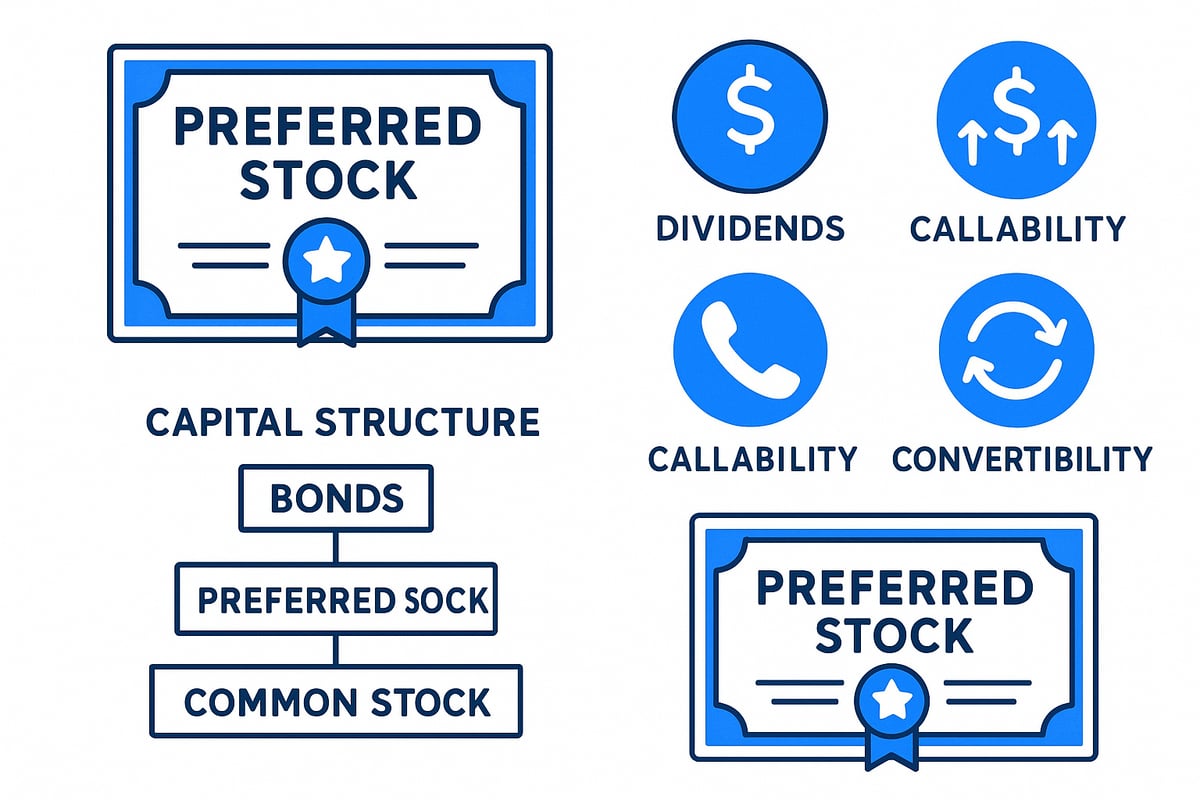
Definition and Core Characteristics
Preferred stock represents ownership in a corporation, but it stands apart from common stock and bonds. Holders of preferred stock receive dividends before common shareholders and often enjoy fixed income features. Unlike common stock, preferred stock typically does not grant voting rights.
Key characteristics include:
- Dividend Priority: Preferred stockholders have priority claim on dividends, which are often fixed and paid regularly.
- Fixed Income Features: Many preferred stocks pay set dividends, similar to interest from bonds.
- Callability: Some preferred shares can be redeemed by the issuer at a predetermined price after a certain date.
- Convertibility: Certain preferred stocks can be converted into a specified number of common shares.
- Par Value: The par value is crucial for calculating dividends and redemption amounts. For a deeper look at how par value impacts preferred stock, see Understanding dividend priority and par value.
For example, major banks like JPMorgan and utilities such as Duke Energy frequently issue preferred stock as part of their capital structure.
Types of Preferred Stock
There are several types of preferred stock, each with unique features that cater to different investor needs.
- Cumulative Preferred: Unpaid dividends accumulate and must be paid before common shareholders receive dividends.
- Non-cumulative Preferred: Missed dividends do not accumulate.
- Participating Preferred: Offers the chance for additional dividends if the company performs well.
- Non-participating Preferred: Limits dividends to the stated rate, regardless of company earnings.
- Convertible Preferred: Can be exchanged for common shares, providing potential upside.
- Non-convertible Preferred: Cannot be converted into common stock.
- Perpetual Preferred: Has no maturity date.
- Term Preferred: Expires on a set date and returns the par value to investors.
For instance, banks often issue cumulative preferred stock, while tech companies may opt for convertible preferreds to attract different investor profiles.
How Preferred Stock Fits in the Capital Structure
Preferred stock occupies a middle ground in a company's capital structure. In the event of bankruptcy or liquidation, preferred stockholders have a higher claim on assets than common shareholders but rank below bondholders.
Here’s a simplified hierarchy:
| Rank | Security Type | Claim Priority |
|---|---|---|
| 1 | Senior Bonds | Highest |
| 2 | Subordinated Bonds | High |
| 3 | Preferred Stock | Moderate |
| 4 | Common Stock | Lowest |
This position means preferred stock carries more risk than bonds but less than common stock. The expected returns reflect this balance, offering higher yields than bonds but with less price appreciation potential than common shares.
Advantages and Disadvantages
Investing in preferred stock comes with both strengths and weaknesses.
Advantages:
- Provides steady income through reliable dividends.
- Offers a higher claim on assets and earnings than common stock.
- Tends to be less volatile than common shares.
Disadvantages:
- Limited price appreciation compared to common stock.
- Sensitive to interest rate changes, which can impact prices.
- Call risk, as issuers may redeem the shares early, affecting returns.
On average, preferred stock dividend yields have historically ranged from 4% to 6%, often surpassing those of common stock. For income-focused investors or those seeking lower volatility, preferred stock can be a valuable portfolio component, while growth-focused investors may find the limited upside less appealing.
Evaluating Preferred Stocks: What Investors Need to Know
Evaluating preferred stock requires a structured approach. Investors must analyze financial metrics, understand unique risks, compare alternatives, navigate tax considerations, and use reliable sources. This section breaks down each step so you can make informed investment decisions in 2025.

Key Metrics for Analysis
When analyzing a preferred stock, focus on several core metrics. Dividend yield tells you the income relative to price, while the dividend coverage ratio shows if the issuer can sustain payments. Credit ratings from agencies like Moody’s or S&P reflect the issuer’s financial strength.
Key features, such as call dates and call price, determine if and when the issuer can redeem the stock. Yield-to-call is crucial for callable issues, as it measures your expected return if the stock is called early. For example, consider a preferred stock from a major bank: if it pays a 6% dividend, has a 1.5x coverage ratio, and an investment-grade rating, it may offer stability and attractive income. Always check these metrics before investing.
Risks Specific to Preferred Stock
Preferred stock carries distinct risks. Interest rate risk is significant, as rising rates can lower prices. Credit and default risk matter, especially if the issuer’s financial health weakens. Call risk occurs when issuers redeem shares early, often when interest rates fall, forcing reinvestment at lower yields.
Other important risks include regulatory changes and tax law shifts, which can impact returns. Historical market events, like the 2008 financial crisis, showed how some preferred stock prices dropped sharply due to increased credit concerns. Always assess these risks in the context of your overall portfolio.
Comparing Preferred Stocks to Other Income Investments
Preferred stock sits between bonds and common stock in risk and reward. Compared to bonds, preferred stock typically offers higher yields but less principal protection and lower liquidity. Bonds provide fixed payments and priority in bankruptcy, while preferred stock offers steady income but can be more sensitive to market shifts.
A quick comparison:
| Investment | Typical Yield | Price Stability | Liquidity | Upside Potential |
|---|---|---|---|---|
| Preferred Stock | 5-7% | Moderate | Moderate | Limited |
| Bonds | 3-5% | High | High | Very Limited |
| Common Stock | 2-4% | Low | High | High |
Preferred stock is suitable for investors seeking higher income with moderate risk and lower volatility than common shares.
Tax Implications and Regulatory Factors
Taxation is a key factor for preferred stock investors. Many U.S. preferred stock dividends qualify as Qualified Dividend Income (QDI), taxed at lower capital gains rates. However, some issues, especially those from financial institutions, may not qualify.
International investors face different tax treatments, and recent regulatory changes can impact dividend taxation. For example, dividends in tax-advantaged accounts like IRAs are usually sheltered from immediate taxes, while in taxable accounts, QDI status can boost after-tax yield. Always verify the tax status of each preferred stock before investing.
Where to Find Reliable Information and Research
To evaluate preferred stock effectively, use trusted sources. Company filings and prospectuses provide detailed terms and financials. Financial news outlets and rating agencies offer timely updates on credit ratings and market trends.
Utilizing financial data platforms and screeners helps filter preferred stock options based on yield, rating, or sector. To avoid common research pitfalls, always cross-reference data and read the fine print. For a comprehensive overview, consider resources like the Guide to Investing in Preferred Stocks, which covers strategies, risks, and actionable insights.
The 2025 Preferred Stock Market Landscape: Trends and Opportunities
The preferred stock market in 2025 is shaped by dynamic economic forces and evolving investor preferences. Understanding current performance, interest rate impacts, sector trends, new structures, and expert perspectives is vital for making informed decisions in this asset class.

Recent Performance and Market Outlook
Preferred stock demonstrated resilience in 2023 and 2024, outperforming several fixed income benchmarks despite market volatility. According to recent data, the average total return for preferred stock hovered around 6%, compared to 3.5% for investment-grade bonds. Analysts anticipate that 2025 will bring continued opportunities, driven by stable dividends and renewed interest from yield-seeking investors.
Financials, utilities, and real estate sectors led new issuances, reflecting confidence in preferred stock as a funding tool. For a deeper dive into performance data and expert forecasts, explore this Outperformance and Opportunity in 2025 analysis.
Preferred stock is expected to remain a cornerstone for income-focused portfolios as market conditions evolve.
Interest Rate Environment and Its Impact
Interest rates are a crucial driver of preferred stock prices and yields. With the Federal Reserve signaling a cautious approach for 2025, investors are closely monitoring potential rate cuts or pauses. Preferred stock tends to be sensitive to rate movements, with prices declining as rates rise and vice versa.
To manage this environment, many investors are looking at floating-rate preferred stock, which adjusts dividends based on benchmark rates. This structure can help reduce interest rate risk and provide more stable income in uncertain conditions.
A balanced approach, incorporating both fixed and floating-rate preferred stock, allows investors to navigate interest rate fluctuations effectively.
Sector-Specific Opportunities
Certain sectors continue to offer compelling preferred stock opportunities in 2025. Financial institutions, especially banks and insurers, remain the largest issuers, providing high-yield and investment-grade options. Utilities are prized for their consistent dividends and defensive qualities, making their preferred stock attractive for conservative investors.
The real estate sector, through REIT preferred stock, offers exposure to property markets with enhanced income potential. Recent market data shows that financial and utility preferred stock outperformed broader indexes during periods of volatility.
Diversifying across sectors can help mitigate risks and capture unique benefits offered by each preferred stock issuer group.
New Issuances and Innovative Structures
Issuance trends in 2025 show a rise in innovative preferred stock structures. Floating-rate and reset preferred stock are gaining popularity, offering greater flexibility in changing rate environments. Some companies are issuing convertible preferred stock, which allows investors to convert holdings into common shares under specific conditions.
A notable example is a recent bank preferred stock featuring both call protection and a reset coupon, designed to attract investors seeking security and upside. These new structures reflect issuers’ efforts to balance investor demand for yield and protection against market shifts.
Staying informed about new preferred stock offerings ensures access to the most attractive opportunities.
Risks and Headwinds in 2025
Despite their income appeal, preferred stock faces several challenges in 2025. Credit risk remains a concern, especially for issuers in cyclical industries. Regulatory changes could also impact dividend policies or tax treatment, affecting after-tax yields.
Liquidity is another consideration, as some preferred stock issues trade infrequently. Recent years have seen a slight increase in default rates and downgrades, underscoring the importance of due diligence.
Investors should regularly review credit ratings and market developments to manage risks associated with preferred stock.
Expert Insights and Analyst Recommendations
Leading investment banks and rating agencies emphasize selectivity in the 2025 preferred stock market. Analysts recommend focusing on issuers with strong balance sheets and stable earnings. Some experts highlight the benefits of cumulative preferred stock, which ensures missed dividends are paid before common shareholders receive any distributions.
Sector preferences currently favor financials and utilities for their resilience and attractive yields. As one analyst notes, “Preferred stock offers unique advantages for investors seeking dependable income in a shifting market landscape.”
Incorporating trusted research and professional advice can enhance the success of a preferred stock strategy.
Step-by-Step Guide: How to Invest in Preferred Stock in 2025
Investing in preferred stock in 2025 requires a thoughtful, systematic approach. This step-by-step guide is designed to help you navigate the process, from setting your objectives to managing your portfolio in a changing market. Whether you are a first-time investor or looking to refine your strategy, these actionable steps will keep you on track and help you make informed decisions.

Step 1: Define Your Investment Goals and Risk Tolerance
Start by clarifying your financial objectives for preferred stock investing. Are you seeking steady income, capital preservation, or a mix of both? Assess your risk tolerance by considering how you would respond to market fluctuations or potential dividend cuts.
If your primary goal is income, preferred stock can provide regular dividends. For those with a higher risk appetite, convertible preferred shares may offer growth. Match your investment horizon and liquidity needs to the features of preferred stock to ensure the right fit for your portfolio.
Step 2: Screen and Select Preferred Stocks
Once your goals are clear, use financial screeners to narrow down the universe of preferred stock options. Filter by criteria such as dividend yield, credit rating, sector, and unique features like callability or convertibility.
Evaluate the issuer’s fundamentals, including their financial health and history of dividend payments. Reviewing past performance and analyst ratings can help you identify preferred stock that meets your standards for quality and reliability.
Step 3: Analyze Key Features and Terms
Carefully read the prospectus of any preferred stock under consideration. Pay close attention to call dates, conversion privileges, dividend payment schedules, and other critical details.
Understanding these terms will help you anticipate how the preferred stock may behave under different market conditions. For example, callable preferreds may be redeemed early, affecting your yield. Analyze how each feature influences your expected returns and risk exposure.
Step 4: Diversify Your Preferred Stock Holdings
Diversification is essential for managing risk in your preferred stock portfolio. Spread your investments across multiple sectors, issuers, and types of preferred shares. Consider building a ladder with varying call or maturity dates to smooth out income and reduce reinvestment risk.
For more advanced strategies, review insights from High-Conviction Preferred Stock Strategies 2025 to understand how professionals are navigating the evolving landscape. A well-balanced approach can help you capture opportunities while protecting against downturns.
Step 5: Execute Trades and Manage Transactions
When you are ready to invest, place orders for your selected preferred stock through a broker or online trading platform. Understand the liquidity of each issue, as some preferred shares may trade less frequently than common stocks.
Use limit orders to control your entry price, especially for less liquid preferred stock. Be mindful of transaction fees, and confirm all trade details before execution to ensure a smooth process.
Step 6: Monitor and Adjust Your Portfolio
Ongoing management is key to successful preferred stock investing. Track dividend payments, ex-dividend dates, and any changes in issuer credit ratings. Be alert to shifts in interest rates or company fundamentals that could impact the value of your preferred stock holdings.
Rebalance your portfolio as needed to maintain your target allocation, and consider taking profits or cutting losses if circumstances change. Regular reviews can help you stay aligned with your investment objectives.
Step 7: Stay Informed on Market and Regulatory Changes
The preferred stock market is influenced by evolving regulations and macroeconomic trends. Stay updated by reading analyst reports, financial news, and regulatory bulletins. Monitor changes to dividend tax laws and reporting requirements that could affect your after-tax returns.
Leverage resources such as company filings, rating agency updates, and educational platforms to continuously build your knowledge. Staying informed helps you adapt your preferred stock strategy for long-term success.
Building a Resilient Preferred Stock Portfolio: Strategies for 2025
Constructing a resilient preferred stock portfolio requires a thoughtful blend of income, risk management, growth potential, and tax awareness. With the market evolving in 2025, investors need strategies that address both the unique features and challenges of preferred stock. Let us examine practical approaches for each investment goal.
Income-Focused Strategies
For investors seeking reliable income, preferred stock can offer steady cash flow with higher yields than many traditional options. Focus on established issuers with a history of uninterrupted dividends.
Consider building a laddered portfolio, staggering call dates and maturities to maintain consistent income streams. This approach helps manage reinvestment risk and smooths out fluctuations in rates.
Sample allocation might include financials, utilities, and real estate preferreds, each chosen for their dividend track record. Regularly review issuer fundamentals to ensure income stability remains intact.
Defensive and Risk-Managed Approaches
A defensive preferred stock strategy prioritizes capital preservation and lower volatility. Select investment-grade, cumulative preferred shares that offer added protection during challenging markets.
Mitigate interest rate risk by incorporating floating-rate preferreds, which adjust payouts based on benchmark rates. Learn more about these features in our guide to Fixed income features and floating-rate.
Diversify across sectors and issuers, and monitor credit ratings closely. Defensive portfolios are designed to weather downturns while still providing attractive yields.
Growth and Total Return Strategies
Seeking capital appreciation alongside income? Growth-oriented preferred stock investors often favor convertible preferreds, which can be exchanged for common shares if the issuer’s stock price rises.
Timing purchases around ex-dividend dates may also provide tactical opportunities for enhanced returns.
For a deeper understanding of how convertibles work and their role in maximizing total return, see our Convertible bond investment basics resource. Combining growth and yield can deliver a well-rounded performance profile.
Tax-Efficient Portfolio Construction
Tax efficiency is essential for maximizing after-tax returns in a preferred stock portfolio. Prioritize issues that qualify for the lower tax rates of Qualified Dividend Income (QDI), especially in taxable accounts.
Allocate non-QDI preferreds to tax-advantaged accounts like IRAs. Consider state and local tax implications, particularly for investors in higher-tax jurisdictions.
A sample model might allocate QDI-eligible preferreds to brokerage accounts, while placing non-qualified issues in retirement accounts to minimize tax drag.
Common Mistakes to Avoid
Even seasoned investors can fall into traps when building a preferred stock portfolio. Avoid overconcentration in a single issuer or sector, as this increases exposure to company-specific risks.
Do not ignore call risk—understand the terms of each preferred stock and how early redemption could impact yield. Evaluate dividend sustainability by reviewing issuer financial health and payout ratios.
Learning from past pitfalls helps strengthen portfolio resilience and long-term returns.
Tools and Resources for Portfolio Management
Effective management of a preferred stock portfolio relies on the right tools. Use portfolio tracking software to monitor performance, income, and ex-dividend dates.
Professional advisory services can provide tailored guidance and in-depth research. Leverage educational resources to stay informed about new structures and evolving regulations.
Staying organized and proactive with these tools ensures your preferred stock strategy remains aligned with your investment objectives.
Frequently Asked Questions About Preferred Stock Investing in 2025
Navigating the world of preferred stock in 2025 means staying informed about evolving risks, tax rules, and portfolio strategies. Here, we address the most common questions investors have about preferred stock, helping you make confident, well-informed decisions.
What Are the Main Risks of Preferred Stock in 2025?
Preferred stock carries unique risks that every investor should understand. Key concerns include interest rate risk, which can cause prices to fluctuate as rates move, and credit risk, which reflects the issuer’s financial health. Liquidity risk may also arise, especially in a volatile market.
In the event of bankruptcy, preferred stockholders have a higher claim on assets than common shareholders, but they still rank below debt holders. For a deeper look at where preferred stock fits in the hierarchy, see this Capital structure and shareholder hierarchy resource.
Recent market events, such as shifts in monetary policy and sector-specific downturns, highlight the importance of monitoring issuer quality and market conditions. Always review prospectuses and keep an eye on credit ratings to help mitigate these risks.
How Are Preferred Stock Dividends Taxed?
Taxation of preferred stock dividends depends on your residency and account type. For U.S. investors, many preferred stock dividends qualify as qualified dividend income (QDI), which is taxed at lower capital gains rates. However, some issues, especially those from certain financial institutions or foreign issuers, may not be QDI-eligible.
In tax-advantaged accounts like IRAs, dividends may grow tax-deferred or tax-free, depending on the account type. International investors should review local tax treaties, as withholding rates and reporting rules can vary. Always consult a tax advisor to optimize your after-tax yield from preferred stock investments.
Can Preferred Stocks Be a Substitute for Bonds?
Preferred stock and bonds both offer steady income, but they differ in risk, structure, and capital preservation. Bonds rank higher in the capital stack, providing more security in bankruptcy, while preferred stock typically offers higher yields in exchange for increased risk and less price stability.
When comparing historical returns, preferred stock has shown more volatility than investment-grade bonds, especially during interest rate changes. For insights into the current environment and how fixed income instruments are adapting, review the 2025 Market Outlook.
Preferred stock can complement, but not fully replace, bonds for most investors. Consider your income needs and risk tolerance before making allocation decisions.
What Should New Investors Know Before Buying Preferred Stock?
If you are new to preferred stock, start by understanding its features—fixed dividends, call provisions, and priority in asset claims. Use reliable screeners and research company filings to assess credit quality and dividend sustainability.
Common misconceptions include thinking preferred stock always behaves like bonds or guarantees payments. In reality, dividends can be suspended, and prices can be volatile. Start small, diversify your holdings, and seek out educational resources to build a solid foundation for your preferred stock portfolio.
As you explore the essential strategies and insights for preferred stock investing in 2025, remember that understanding the stories behind market movements is key to making informed decisions. Our platform goes beyond numbers, offering interactive charts and AI-powered summaries that help you connect past events to today’s opportunities. Whether you’re refining your portfolio or just starting out, you can gain a deeper perspective and spot patterns that others might miss. If you’re ready to take your investing journey further, Join Our Beta and be among the first to experience a smarter, more contextual approach to financial markets.