
7 Mid-Cap Stock Picks to Watch in 2026
Interest in the mid-cap stock segment is surging as investors search for a balance between growth and stability. Recent mid-cap index returns have outpaced many expectations, drawing attention to this often-overlooked market category.
In this article, we spotlight seven mid-cap stock picks that are poised to stand out in 2026. Backed by strong financial fundamentals and industry trends, each selection offers unique potential for portfolio growth.
You will discover what defines a mid-cap stock, why this segment is so compelling, and which criteria matter most when choosing top performers. Ready to find your next investing opportunity? Dive into our expert analysis below.
What Are Mid-Cap Stocks?
Understanding what qualifies as a mid-cap stock is essential for investors looking to diversify their portfolios and balance growth with stability. This section breaks down the definition, core characteristics, performance history, and investor profiles for mid-cap stock investments.
Definition and Market Capitalization Range
A mid-cap stock refers to a company with a market capitalization typically between $2 billion and $10 billion. This range places mid-cap companies between small-cap stocks, which are generally valued below $2 billion, and large-cap stocks, which exceed $10 billion.
Popular benchmarks for this segment include the S&P MidCap 400 and the Russell Midcap Index, both designed to track the performance of leading mid-cap companies. For a detailed comparison, you can review the characteristics of small-cap stocks to see how mid-cap stock investments differ in scale and market presence.
| Category | Market Cap Range | Example Index |
|---|---|---|
| Small-Cap | Under $2 billion | S&P SmallCap 600 |
| Mid-Cap | $2B - $10B | S&P MidCap 400, Russell |
| Large-Cap | Over $10 billion | S&P 500 |
Characteristics of Mid-Cap Companies
Mid-cap stock selections often represent firms with established business models and a proven track record. These companies have typically moved past the most volatile early growth phases but still have significant room for expansion.
Their position in the market allows for both innovation and stability. Mid-cap stock opportunities can be found across a variety of sectors, including technology, healthcare, consumer products, and industrials. This diversification is a key trait, as it helps reduce risk while maintaining attractive growth potential.
Investors value mid-cap stock companies for their ability to adapt quickly to market trends without the unpredictability sometimes seen in smaller firms.
Historical Performance and Growth Potential
Historically, mid-cap stock investments have delivered impressive returns while balancing risk and reward. For example, the S&P MidCap 400 Index produced an annualized return of 10.15% from 2014 to 2024, outpacing many small-cap and even some large-cap benchmarks.
Mid-cap stock portfolios have shown resilience in various market conditions, with periods where they outperformed both small and large caps. This performance highlights their unique ability to capture growth while offering more stability than smaller peers.
Investors seeking above-average returns without excessive volatility often turn to mid-cap stock options as a core part of their strategy.
Typical Investor Profiles and Use Cases
A mid-cap stock is particularly attractive to investors who want a blend of growth and stability in their portfolios. Individual investors and institutional players alike appreciate the balance that mid-cap stock holdings provide.
These stocks are often used to diversify portfolios, reduce concentration risk, and pursue long-term capital appreciation. Mid-cap stock positions can serve as a strategic bridge between the aggressive growth of small-caps and the steady returns of large-caps.
Whether you are seeking to enhance portfolio performance or hedge against market swings, a mid-cap stock allocation can play a valuable role in achieving your investment objectives.
Why Focus on Mid-Cap Stocks in 2026?
Investors are increasingly looking to the mid-cap stock segment for its unique blend of growth and stability as we approach 2026. Understanding why these companies stand out in the current economic landscape can help you make informed portfolio decisions.
Market Trends and Economic Backdrop
The economic outlook for 2026 suggests a favorable environment for mid-cap stock performance. As global markets continue to recover from recent disruptions, mid-cap companies are poised to take advantage of sectoral shifts and renewed consumer demand. Many industries, including technology, healthcare, and manufacturing, are expected to experience robust expansion, creating new opportunities for agile mid-cap firms.
Historical data underscores this potential. According to Mid-Cap Stocks' Historical Performance, the segment has often delivered strong returns during periods of economic transition. With these trends in mind, mid-cap stock investors are well positioned for growth in 2026.
Advantages Over Small-Cap and Large-Cap Stocks
A mid-cap stock offers a compelling alternative to both small-cap and large-cap equities. Unlike small-caps, mid-cap companies usually have established revenue streams and proven business models, reducing some of the volatility associated with early-stage firms. At the same time, they often outpace large-caps in terms of growth, since they still have room to expand into new markets or product lines.
Mid-cap stocks also receive less analyst and institutional coverage compared to their larger peers. This creates under-the-radar opportunities for investors who are willing to do their homework, potentially uncovering value before the broader market catches on.
Mergers, Acquisitions, and Expansion Opportunities
One key reason to focus on the mid-cap stock space in 2026 is the frequent activity in mergers and acquisitions. Mid-cap companies are often attractive targets for larger corporations seeking innovation or market expansion. When a mid-cap stock becomes an acquisition target, investors can benefit from significant price appreciation.
Additionally, many mid-cap firms use their resources to expand into new geographies or diversify product offerings. This growth-oriented mindset, combined with a manageable size, allows them to pursue strategic moves that can drive above-average returns for shareholders over the next several years.
Risk Factors and Volatility Considerations
Investing in a mid-cap stock does come with certain risks. These companies tend to have less liquidity than large-caps, which can lead to higher price swings during volatile periods. However, they are generally more stable than small-caps, offering a balanced risk profile for investors seeking both growth and safety.
To mitigate downside risks, investors should diversify across sectors and consider using stop-loss strategies. Staying informed about market cycles and regularly reviewing your mid-cap stock holdings can further help manage volatility while capturing long-term potential.
Criteria for Selecting the Best Mid-Cap Stocks
Selecting the right mid-cap stock requires a disciplined approach grounded in both quantitative analysis and qualitative assessment. Investors should evaluate a range of factors to identify companies best positioned for growth and resilience in the coming years.
Financial Health and Growth Metrics
A key starting point when choosing a mid-cap stock is to assess its financial health. Look for companies delivering steady revenue growth, consistent earnings, and positive free cash flow. Debt levels should be manageable relative to equity and cash generation.
Common metrics include the price-to-earnings ratio (P/E), price-to-book (P/B), and EV/EBITDA. Understanding the Price-to-earnings ratio explained can help compare valuations across peers and spot undervalued opportunities.
| Metric | What It Reveals |
|---|---|
| Revenue Growth | Top-line business expansion |
| Earnings | Profitability consistency |
| Debt/Equity | Financial risk profile |
| P/E Ratio | Relative stock valuation |
Prioritize mid-cap stock candidates with a proven track record of profitable operations and room for further expansion.
Industry Positioning and Competitive Advantage
Industry dynamics play a crucial role in mid-cap stock selection. Focus on companies with strong market share, unique products or services, and defensible barriers to entry.
Assess management quality, innovation pipelines, and responsiveness to market trends. Competitive advantages may include proprietary technology, exclusive partnerships, or dominant distribution networks.
Key points to consider:
- Market leadership within a growing sector
- Brand recognition or customer loyalty
- Scalable business models that adapt over time
A mid-cap stock with a clear competitive edge often sustains above-average growth and weathers economic uncertainty better than peers.
Analyst Ratings and Institutional Ownership
Analyst sentiment and institutional participation offer additional clues to a mid-cap stock’s potential. Consensus analyst ratings, such as "Buy" or "Overweight," can signal confidence in a company’s growth outlook.
Rising institutional ownership often reflects deeper research and due diligence, adding credibility and potential liquidity to the stock. Look at target price forecasts, recent upgrades or downgrades, and the presence of notable investment firms among shareholders.
When selecting a mid-cap stock, use these insights to confirm your thesis and gauge broader market conviction.
ESG and Sustainability Factors
Environmental, social, and governance (ESG) considerations have become essential in evaluating any mid-cap stock. Companies with strong ESG profiles often attract more investment, reduce regulatory risks, and demonstrate forward-thinking management.
Evaluate:
- Environmental track record and emissions reduction
- Social impact, workplace diversity, and community engagement
- Governance quality, board independence, and transparency
As sustainable investing gains traction, mid-cap stock selections that score well on ESG metrics may enjoy a valuation premium and long-term support from a wider pool of investors.
7 Mid-Cap Stock Picks to Watch in 2026
Selecting the right mid-cap stock can be a game-changer for investors seeking both growth and stability. Our methodology focuses on financial strength, sector leadership, innovation, and alignment with 2026 market trends. Below, we break down seven standout picks, each offering a unique angle for your mid-cap stock portfolio.
Lattice Semiconductor Corporation (LSCC)
Lattice Semiconductor stands out in the mid-cap stock universe as a leader in low-power programmable chips. With a current price of $71.41 and a market cap of $9.77 billion, LSCC is capitalizing on global demand for semiconductors, especially in AI, automotive, and industrial applications.
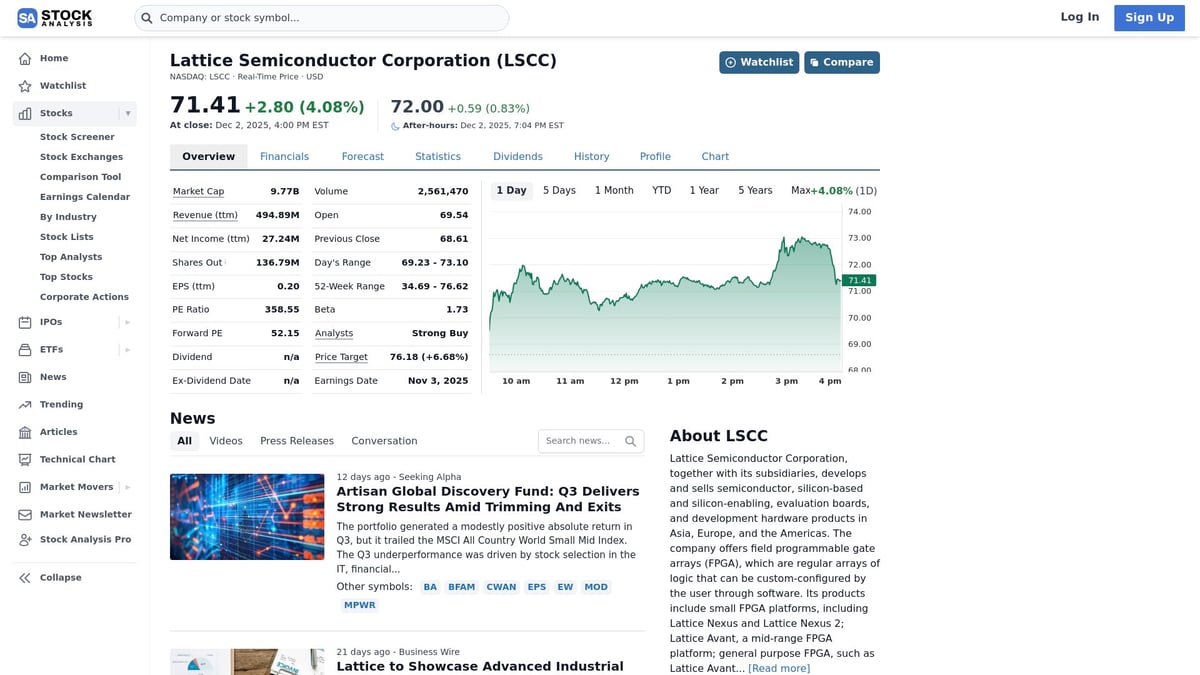
A core strength is the company’s robust revenue growth, supported by expanding product lines and high operating margins. LSCC’s focus on AI and automation aligns with major industry trends, positioning it for significant upside as mid-cap stock investors look to the future. According to Mid-Cap Stocks in AI Boom, LSCC is among the key players powering the AI infrastructure revolution.
Pros:
- Strong profit margins and cash flow
- Expanding product offerings
- High analyst ratings
Cons:
- Cyclical industry exposure
- Competition from larger semiconductor firms
For tech-focused investors, LSCC offers a compelling blend of growth and resilience within the mid-cap stock segment.
Molson Coors Beverage Company (TAP)
Molson Coors, priced at $46.50 with a $9.19 billion market cap, is an iconic mid-cap stock for those seeking defensive exposure. The company boasts a portfolio of global beverage brands and is actively expanding into premium and non-alcoholic segments.
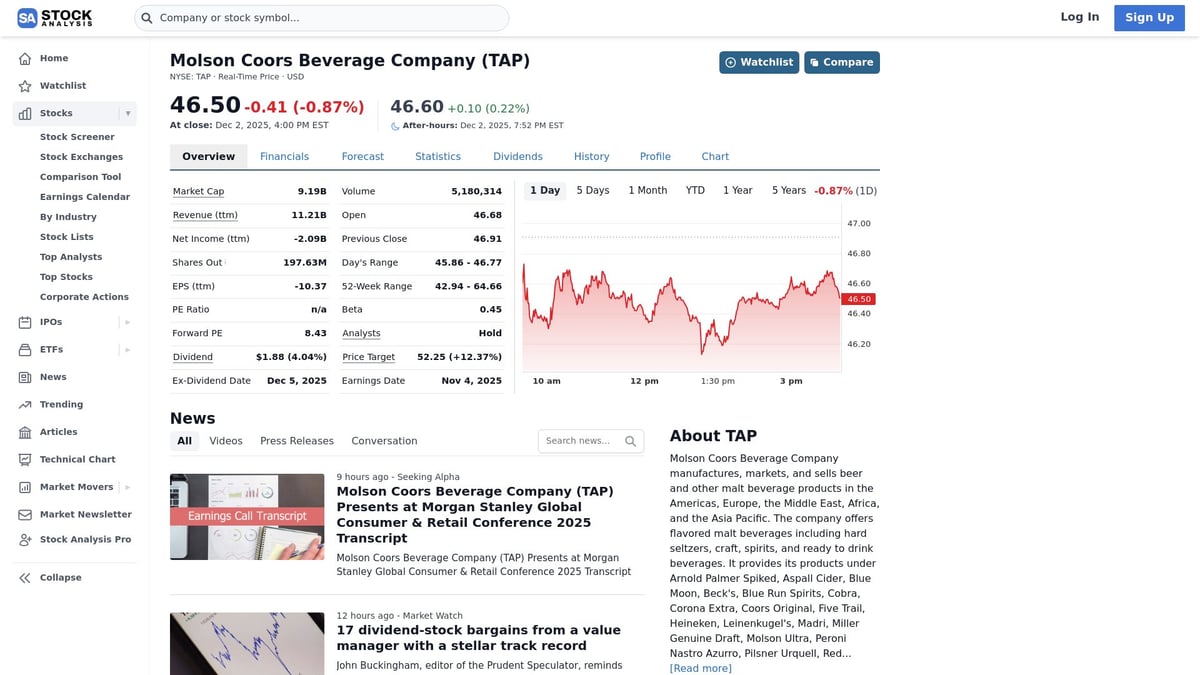
TAP’s business model appeals to mid-cap stock investors who value stability and cash flow. The company’s global distribution network and brand strength provide insulation during economic downturns. While growth in mature markets is slow, Molson Coors is finding new momentum in emerging beverage categories.
Pros:
- Recognizable, trusted brands
- Diversified product lineup
- Reliable dividend potential
Cons:
- Slower growth in core markets
- Exposure to commodity cost fluctuations
For those seeking a mid-cap stock with defensive characteristics and income potential, TAP remains a solid choice.
Duolingo, Inc. (DUOL)
Duolingo, trading at $182.61 with an $8.44 billion market cap, is redefining the EdTech landscape. As a mid-cap stock, DUOL leverages AI-driven personalized learning to capture global audiences in language education.
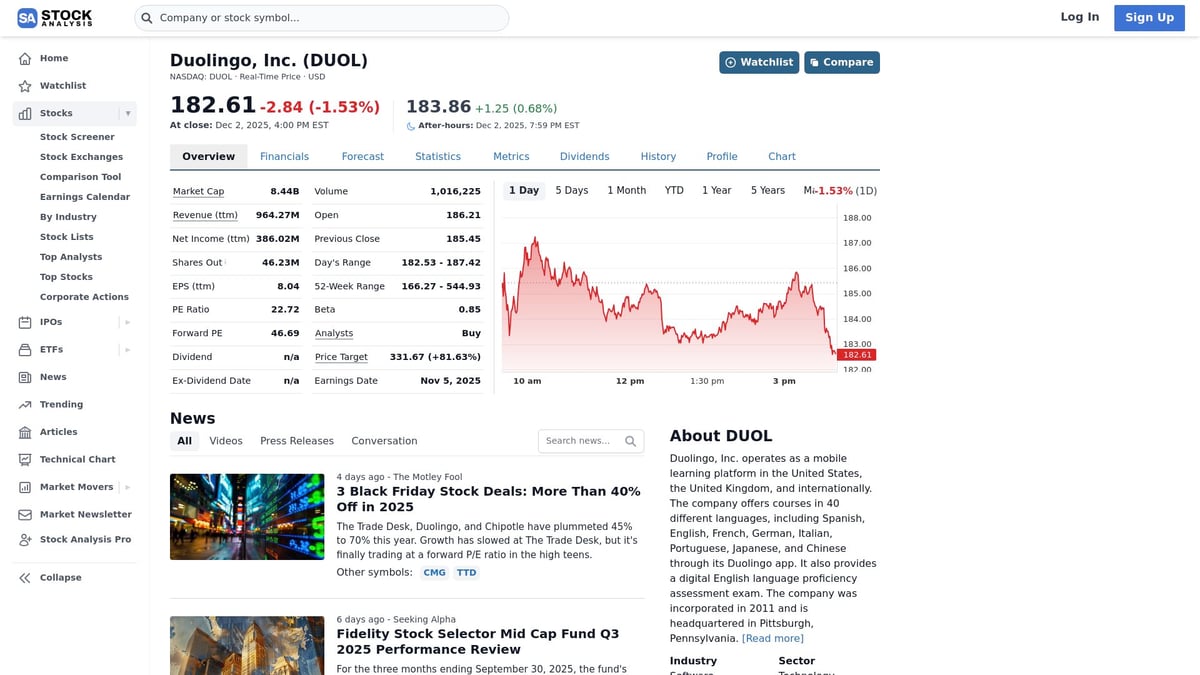
Rapid user growth and high engagement rates underscore Duolingo’s appeal to growth-oriented mid-cap stock investors. The company’s scalable platform and recurring revenue model make it a standout in digital subscriptions. However, high marketing expenses and rising competition in EdTech remain key considerations.
Pros:
- Leading brand in language learning
- Scalable, tech-forward platform
- Strong user retention
Cons:
- Substantial marketing investments
- Competitive EdTech environment
Investors seeking exposure to the intersection of technology and education will find Duolingo a compelling mid-cap stock for 2026.
Regal Rexnord Corporation (RRX)
Regal Rexnord, at $143.37 per share and a $9.52 billion market cap, is a prominent industrial mid-cap stock. The company specializes in power transmission, automation, and motion control, serving a wide range of manufacturing and infrastructure clients.
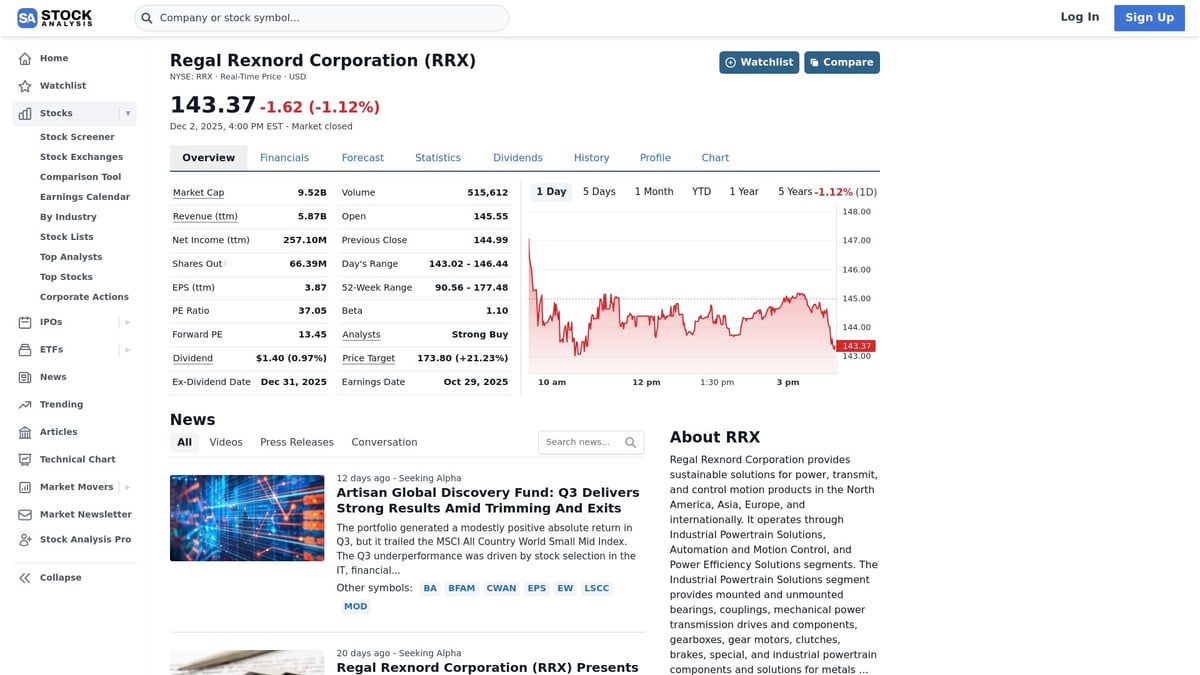
RRX benefits from trends like manufacturing automation and reshoring, making it attractive for mid-cap stock investors interested in industrial innovation. Its growth strategy includes targeted acquisitions, which have diversified its end markets and boosted free cash flow.
Pros:
- Broad industrial diversification
- Strong cash generation
- M&A-driven expansion
Cons:
- Economic cycle sensitivity
- Integration risks from acquisitions
For those looking to capitalize on the next wave of industrial transformation, Regal Rexnord is a mid-cap stock to consider.
HealthEquity, Inc. (HQY)
HealthEquity, priced at $98.88 with a market cap of $8.52 billion, is a leading mid-cap stock in healthcare fintech. The company administers health savings accounts (HSAs) and offers consumer health financial solutions.
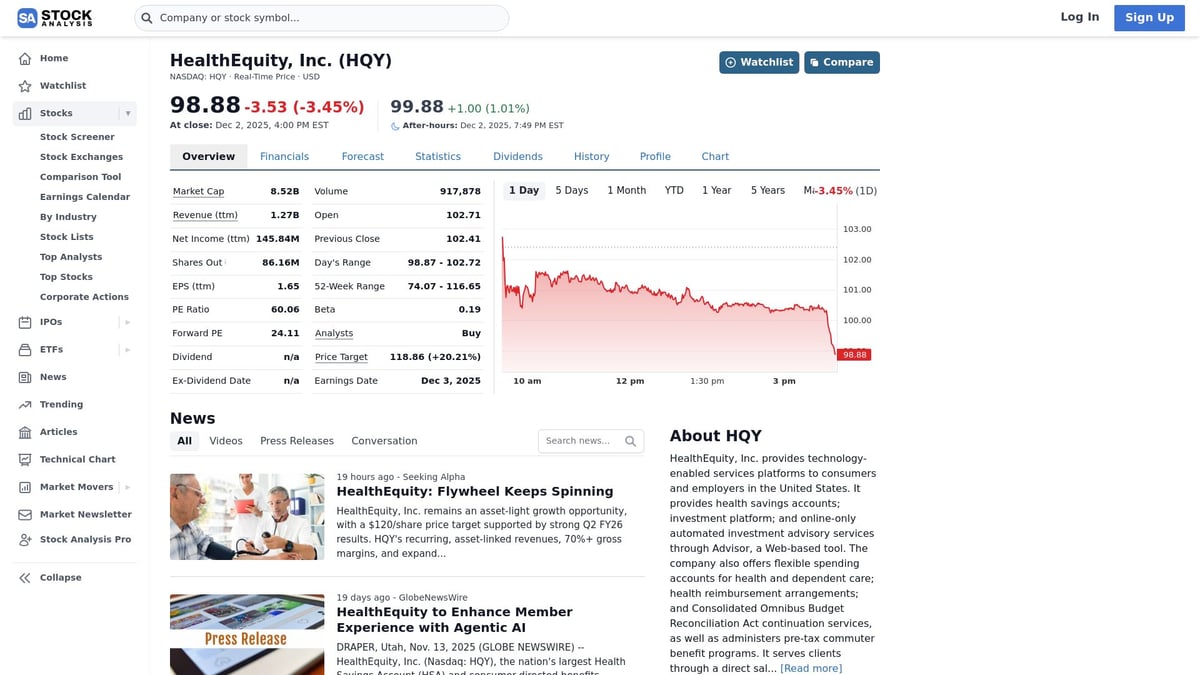
HealthEquity is benefiting from the growing adoption of HSAs and the broader trend toward healthcare consumerization. For mid-cap stock investors, HQY’s recurring revenue, expanding client base, and high retention rates are particularly attractive. However, regulatory changes and employment trends present ongoing risks.
Pros:
- Recurring, predictable revenue
- Expanding customer footprint
- High client retention
Cons:
- Regulatory uncertainty
- Sensitivity to employment fluctuations
HQY is an appealing mid-cap stock for those seeking growth within healthcare and financial technology.
Pool Corporation (POOL)
Pool Corporation, trading at $244.73 and valued at $9.12 billion, is the largest wholesale distributor of pool supplies and outdoor living products. As a mid-cap stock, POOL has benefited from post-pandemic home improvement and outdoor living trends.
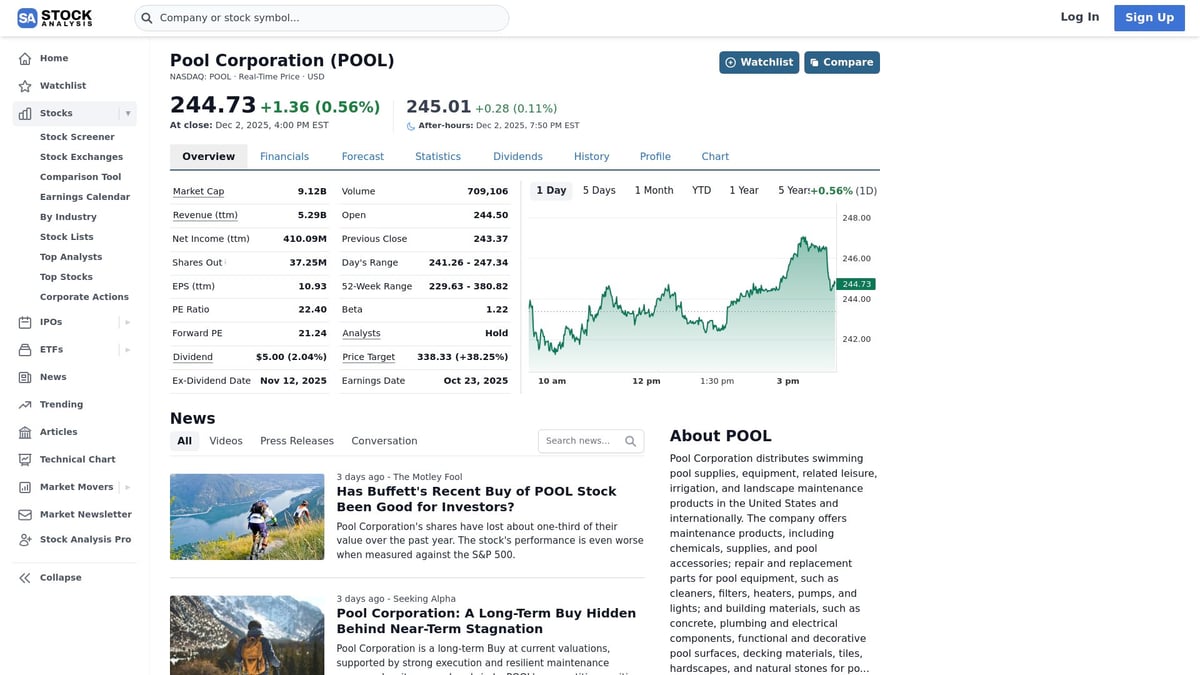
POOL’s dominant market share, strong supplier relationships, and consistent dividend growth make it a favorite among mid-cap stock investors. Weather patterns and cyclical demand are primary risk factors, yet the company’s fundamentals remain robust.
Pros:
- Market leader in pool and outdoor products
- Reliable supplier network
- Steady dividend growth
Cons:
- Weather-related demand fluctuations
- Exposure to economic cycles
For investors interested in consumer discretionary and housing-related plays, Pool Corporation is a mid-cap stock with staying power.
Doximity, Inc. (DOCS)
Doximity, with a share price of $50.56 and a $9.52 billion market cap, is a trailblazer in digital health as a mid-cap stock. The platform connects healthcare professionals through a secure network, offering telehealth and digital communication tools.
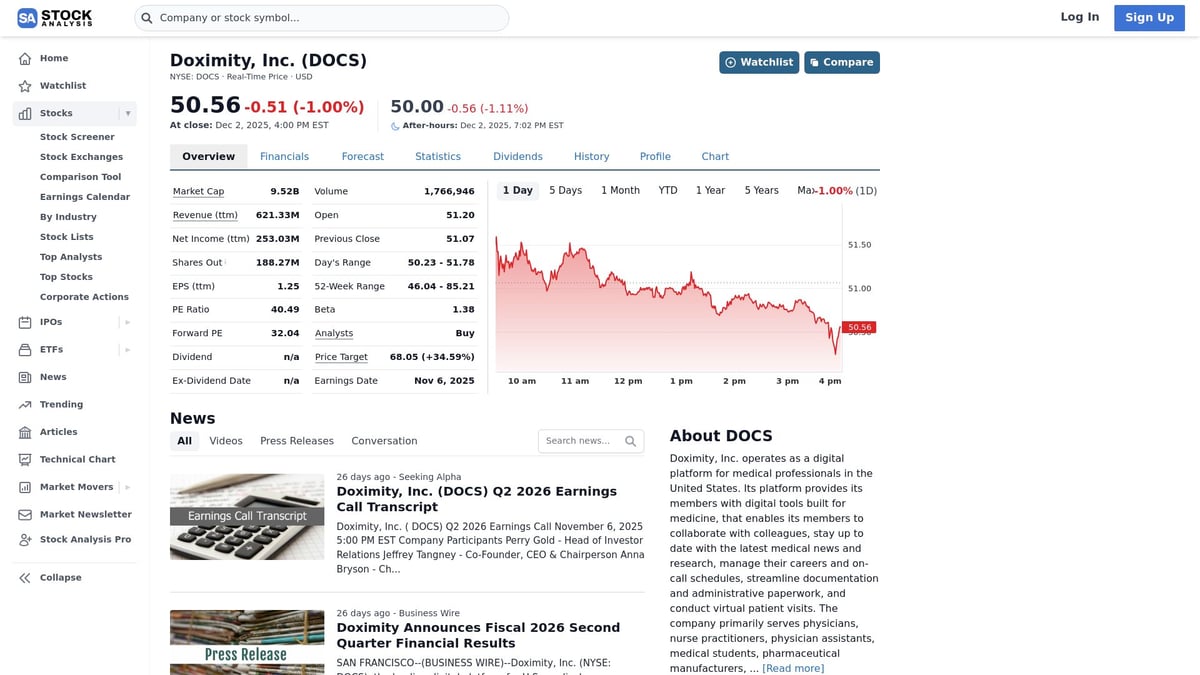
DOCS is monetizing digital transformation in healthcare, driving high user engagement and strong margins. For mid-cap stock investors, Doximity’s expanding service offerings and SaaS business model are major draws. However, reliance on healthcare advertising and regulatory shifts are important to monitor.
Pros:
- Leading digital health network
- Expanding suite of services
- High profit margins
Cons:
- Dependence on ad revenue
- Regulatory challenges
Doximity represents a prime mid-cap stock for those seeking exposure to the intersection of SaaS and healthcare innovation.
How to Invest in Mid-Cap Stocks for 2026
Investing in mid-cap stock requires a thoughtful approach to balance growth opportunities with risk management. The right investment vehicle, diversification strategy, and timing all play a critical role in achieving your financial goals with mid-cap stock. Here is how you can position yourself for success in 2026.
Direct Stock Purchases vs. ETFs/Mutual Funds
When investing in mid-cap stock, you have a choice between buying individual company shares or using pooled vehicles like ETFs and mutual funds. Direct stock purchases offer more control and the potential for higher returns if you select top performers. However, this route requires in-depth research and ongoing monitoring.
ETFs and mutual funds provide instant diversification by spreading your investment across multiple mid-cap stock holdings. This approach helps mitigate company-specific risks and is generally more convenient for investors seeking broad exposure.
If your focus is on growth, it is helpful to understand how growth stocks behave in different market cycles. ETFs tracking mid-cap stock indices can deliver solid returns with lower volatility than individual picks.
Portfolio Diversification Strategies
A key principle when investing in mid-cap stock is diversification. Experts recommend allocating between 15% and 25% of your equity portfolio to mid-cap stock, depending on your risk tolerance and investment horizon.
Diversify across sectors such as technology, healthcare, and consumer goods to reduce exposure to sector-specific downturns. Geographic diversification—investing in both domestic and international mid-cap stock—can further smooth returns and limit risk.
You can use a mix of individual stocks and ETFs to achieve a balanced exposure. Regularly review your holdings to ensure your mid-cap stock allocation aligns with your overall strategy.
Timing and Risk Management Tips
Timing your entry into mid-cap stock markets can impact your results. Many investors use dollar-cost averaging, investing equal amounts at regular intervals, to reduce the impact of short-term volatility.
Implementing stop-loss orders is a practical way to protect your capital if a mid-cap stock moves sharply against you. Monitor market cycles and economic indicators that influence mid-cap stock performance.
Continual research and flexibility are crucial. Stay informed about company developments, industry trends, and broader market shifts to make timely adjustments to your mid-cap stock holdings.
Key Trends Shaping Mid-Cap Stocks in 2026
The landscape for mid-cap stock investing is rapidly evolving as we approach 2026. Several key trends are shaping the prospects and risks for investors in this segment. Understanding these forces can help you make informed decisions and spot promising opportunities among mid-cap stock picks.
Technological Innovation and Digital Transformation
Technological advancements are propelling many mid-cap stock leaders into the spotlight. Companies that specialize in AI, cloud computing, automation, and digital health are leveraging innovation to drive accelerated growth. For example, Lattice Semiconductor and Duolingo demonstrate how mid-cap stock companies can capitalize on AI and personalized digital services.
Mid-cap stock firms often have the agility to adopt new technologies faster than larger peers, while still possessing the scale to commercialize innovation effectively. This unique positioning enables them to disrupt legacy markets and attract investor attention. As digital transformation continues to reshape industries in 2026, expect mid-cap stock selections in technology-driven sectors to maintain strong momentum.
M&A Activity and Industry Consolidation
Mergers and acquisitions are another defining trend for mid-cap stock performance. In an active M&A environment, mid-cap stock companies serve as both attractive acquisition targets and strategic acquirers. This dynamic can result in sudden valuation surges for shareholders when buyouts occur.
Recent years have seen increased consolidation across sectors such as healthcare, industrials, and technology. Mid-cap stock investors can benefit from identifying firms with unique assets, scalable platforms, or complementary businesses that make them appealing in deal-making scenarios. Monitoring M&A pipelines and historical activity is key for anticipating which mid-cap stock picks might be next in line for premium offers.
ESG and Sustainability Focus
Environmental, social, and governance (ESG) factors are gaining prominence in the mid-cap stock universe. As sustainable investing becomes mainstream, companies with strong ESG scores attract more capital and institutional interest. Investors are increasingly evaluating how mid-cap stock selections align with climate goals, diversity initiatives, and transparent governance.
For example, several recommended mid-cap stock picks are integrating ESG into core strategies, appealing to investors seeking both performance and responsibility. The focus on sustainability can also drive operational efficiencies and open up new market opportunities. As ESG expectations rise in 2026, mid-cap stock companies that lead in this area may enjoy valuation premiums and broader appeal.
Rising Interest from Institutional Investors
Institutional investors are allocating more capital to the mid-cap stock segment, recognizing its balance of growth and stability. This influx is improving liquidity, reducing bid-ask spreads, and enhancing price discovery for mid-cap stock shares. According to the 2024 Stock Market Report, institutional participation in mid-caps has been steadily increasing, supporting upward momentum.
Greater institutional involvement brings more analyst coverage and rigorous scrutiny, which can help surface high-quality mid-cap stock opportunities. However, it can also introduce new volatility as large positions shift. As institutional flows continue to shape the mid-cap stock landscape in 2026, investors should monitor fund ownership trends and research coverage to stay ahead of market moves.
As we've seen, understanding mid cap stocks means more than just reviewing numbers—it's about uncovering the stories behind their growth and resilience. If you're eager to spot the next big trends, learn from historical market movements, and see how today's mid caps could shape tomorrow's portfolios, you're in the right place. At Historic Financial News, we believe that context is just as important as data. Want to help shape a platform that brings these insights to life for investors, students, and curious minds alike Join our beta and help us bring history to life Join our beta and help us bring history to life