
Limit Order Guide: Smart Strategies for 2025 Traders
In 2025, thriving in the fast-evolving trading world demands more than just quick decisions. Mastering the limit order is essential for traders who want control, precision, and protection from unpredictable price swings.
This guide removes the mystery from limit order strategies and offers practical steps every trader can use to maximize profit and manage risk. You’ll discover core concepts, advanced tactics, real-world scenarios, and the latest market trends that shape order execution.
Ready to trade smarter, avoid common pitfalls, and gain a reliable roadmap? Let’s begin your journey to limit order success.
Understanding Limit Orders: Core Concepts Every Trader Must Know
Mastering the limit order is essential for any trader aiming to succeed in today’s dynamic markets. As the trading environment becomes increasingly complex, understanding this order type offers a foundation for smarter, more controlled transactions.
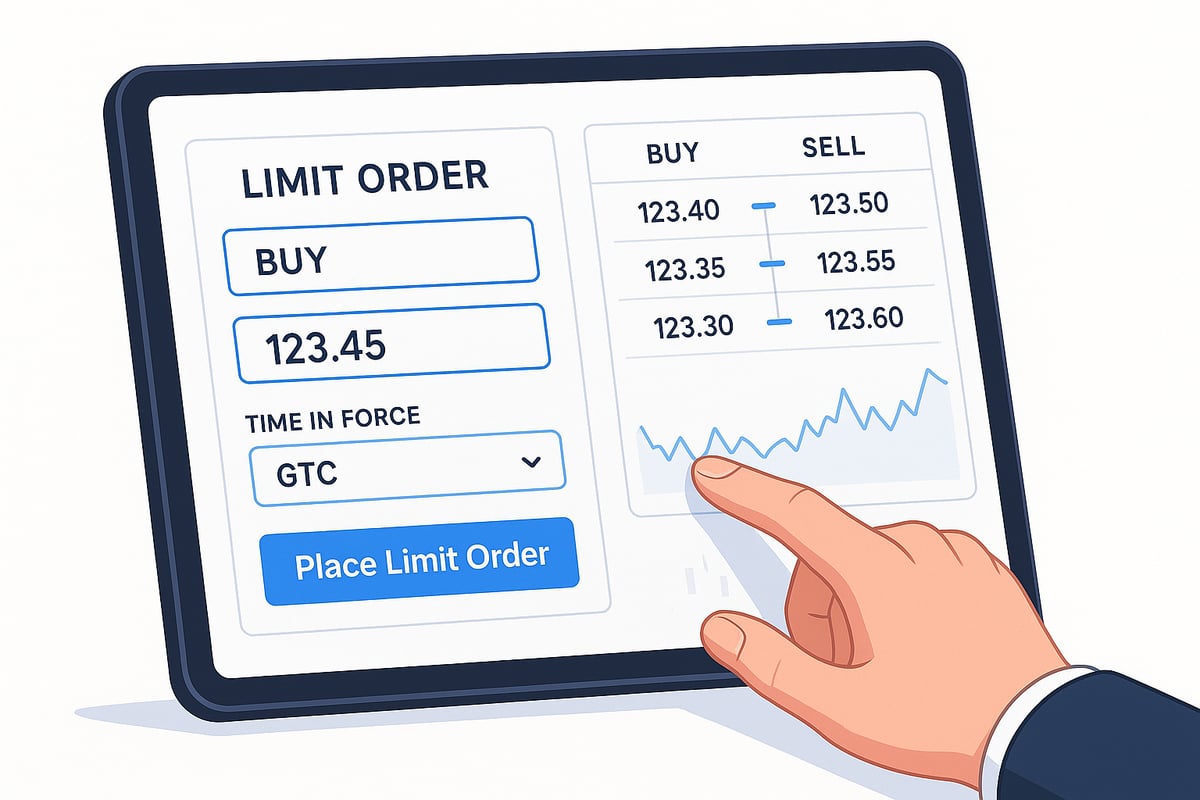
A limit order is an instruction to buy or sell a security at a specific price or better. Unlike market orders, which execute immediately at the current market price, a limit order gives you control over the price at which your trade is executed. This key difference empowers traders to avoid unfavorable fills and helps manage risk.
A limit order consists of several critical components:
- Price limit: The exact price at which you are willing to buy or sell.
- Time-in-force: Determines how long your order remains active, such as day or good-til-canceled (GTC).
- Order type: Specifies if the action is to buy or sell.
Price control is one of the strongest advantages of the limit order. By setting a target price, you ensure your trade will not execute at a worse price than intended. This is especially valuable during periods of high volatility, where prices may swing rapidly. However, the primary risk is non-execution. If the market never reaches your specified price, your trade may remain unfilled. This tradeoff between certainty of price and certainty of execution is central to all limit order decisions.
Let’s clarify how a limit order compares to other common order types. The table below offers a concise overview:
| Order Type | Execution Price | Speed | Risk of Non-Execution | Use Case |
|---|---|---|---|---|
| Market Order | Current market price | Immediate | Low | Quick entry or exit |
| Limit Order | At or better than limit price | When price is reached | Medium | Control over price, avoid slippage |
| Stop Order | Triggers at stop price, market order executes | Immediate after trigger | Low | Stop losses, breakout trades |
| Stop-Limit Order | Triggers at stop price, fills at limit price | When price is reached | High | Precise stop, avoid slippage |
To explore further, see this Difference between market and limit orders guide for a deeper dive into how these order types function.
A real-world example helps illustrate the power of the limit order. Imagine you want to buy shares of a volatile tech stock trading at $100. You believe $95 is fair value and set a limit order to buy at $95. If the price drops to $95 or lower, your order is filled. If not, your order remains open until your conditions are met or it expires. This approach protects you from overpaying during sudden price swings.
Data from industry reports shows that over 60% of retail trades in 2024 used a limit order. This preference is particularly strong during high volatility, where price gaps can lead to unfavorable executions with market orders. Traders rely on the limit order for greater control and protection.
Despite its benefits, several misconceptions surround the limit order:
- It does not guarantee execution, only price.
- Being first in the order book does not always mean you get filled first, as other factors like order size and venue matter.
- Using a limit order does not prevent all losses, especially in fast-moving markets.
Understanding these core concepts ensures you use the limit order effectively and avoid common pitfalls. By leveraging this knowledge, traders can make more informed decisions and navigate the evolving 2025 trading landscape with confidence.
The 2025 Trading Landscape: Trends Impacting Limit Order Effectiveness
In 2025, the trading environment is undergoing rapid transformation. Technology, regulations, and market structure are reshaping how traders approach the limit order. Understanding these trends is essential for anyone seeking consistent results in today's markets.

The Rise of Algorithmic Trading in 2025
Algorithmic trading continues to dominate order flow, accounting for over 80% of US equity volume. These sophisticated programs rapidly analyze market data and execute trades, often placing and canceling thousands of limit orders per second.
This surge in automation makes the Understanding the order book crucial for any trader. The order book, now more dynamic than ever, reflects real-time supply and demand, and is directly impacted by the speed and frequency of algorithmic strategies. As a result, the limit order landscape is more competitive, requiring traders to be precise with order placement and timing.
Navigating Volatility and Tighter Spreads
Market volatility has seen a notable increase since 2022. This volatility affects how quickly and reliably a limit order is filled. While periods of high price swings can create more opportunities, they also introduce the risk of orders remaining unfilled if price targets are too ambitious.
Zero-commission brokers have become the industry norm, leading to tighter bid-ask spreads. Tighter spreads mean that the price difference between buying and selling is minimal, making limit order placement even more strategic. Traders must balance the desire for price control with the need for timely execution amid shifting liquidity.
Regulatory Trends and Order Execution
Regulatory bodies, such as the SEC, have introduced new rules focused on order execution transparency. These changes require brokers to disclose more information about how limit orders are routed and filled.
Industry benchmarks reveal that average order fill times have decreased by 15% since 2022, reflecting improvements in market infrastructure and technology. However, rapid execution does not guarantee better outcomes. Traders should remain aware of potential hidden costs, such as slippage or partial fills, when placing a limit order.
| Trend | Impact on Limit Orders |
|---|---|
| Algorithmic Trading | Increased speed, competition |
| Higher Volatility | Greater fill uncertainty |
| Zero-Commission Brokers | Tighter spreads, more activity |
| Regulatory Changes | More transparency, faster fills |
Adapting to AI and Evolving Market Microstructure
AI-driven trading platforms are fundamentally changing how a limit order is placed and managed. Advanced algorithms can detect subtle shifts in order flow and adjust strategies in real time, often outpacing human reaction.
To stay competitive, traders must adapt their limit order strategies. This includes monitoring market depth, understanding order book dynamics, and leveraging new analytical tools. The key argument for 2025: Only by evolving your approach can you maximize the effectiveness of each limit order in a rapidly changing landscape.
Step-by-Step Guide: Executing Profitable Limit Orders in 2025
Mastering a limit order in 2025 requires a disciplined, methodical approach. By breaking your trading process into clear steps, you can maximize your efficiency and reduce costly mistakes. This guide walks you through each step, so you can refine your skills and improve your results.
Step 1: Analyzing Market Conditions and Setting Entry/Exit Targets
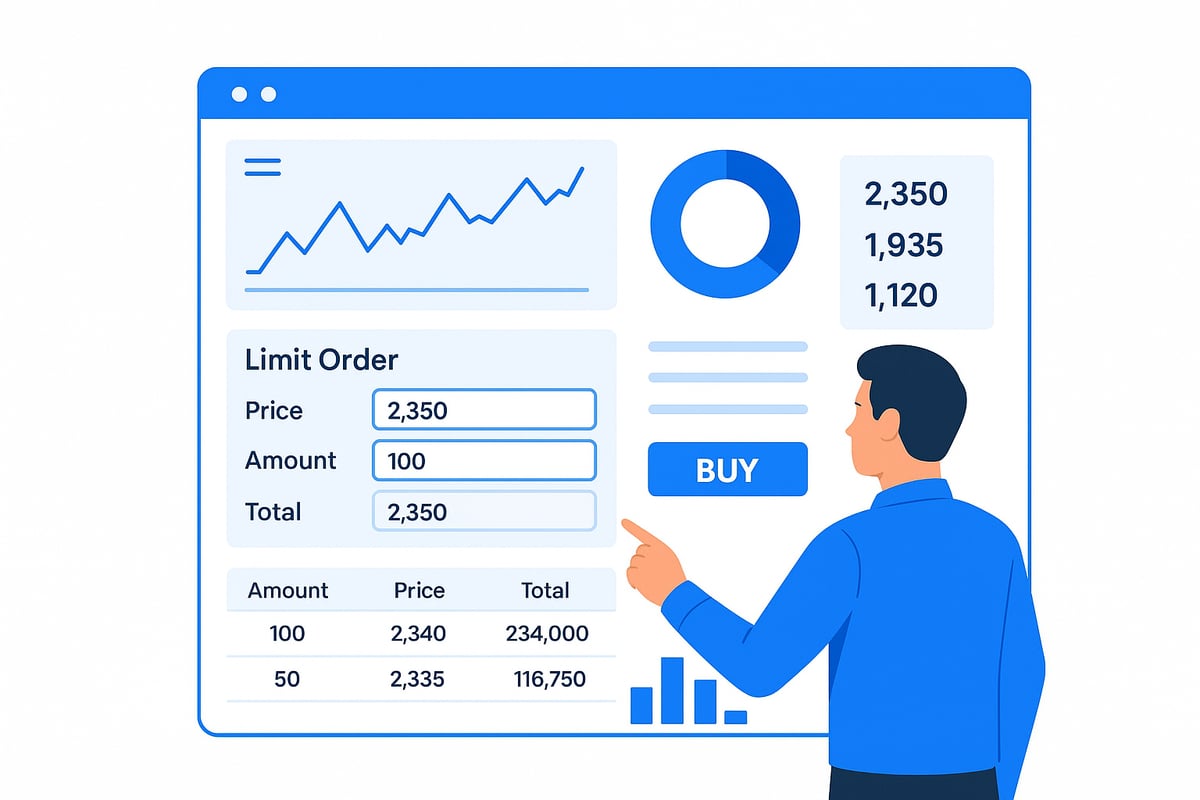
The foundation of a profitable limit order strategy is robust market analysis. Begin by studying both technical and fundamental indicators to identify optimal entry and exit points. Analyze support and resistance zones, recent price movements, and macroeconomic news.
For example, if a stock consistently bounces between $50 and $55, you might set your limit order near the support level for buying and near resistance for selling. Understanding how bid-ask spreads work is also crucial, as these spreads can affect order execution and potential profits.
A table can help you summarize your findings:
| Factor | Impact on Limit Order Placement |
|---|---|
| Support/Resistance | Guides entry/exit price targets |
| Bid-Ask Spread | Affects fill probability and cost |
| News & Events | Increases volatility, adjust targets |
Remember, 70% of successful traders use predefined strategies, highlighting the importance of planning your limit order in advance.
Step 2: Choosing the Right Limit Order Type for Your Strategy
Selecting the correct limit order type is essential for aligning with your trading goals. Consider whether a Good-Til-Canceled (GTC), Immediate-or-Cancel (IOC), or Fill-or-Kill (FOK) order best fits your approach.
For day trading, you might prefer an IOC order to ensure execution speed, while swing traders often use GTC orders to keep positions open across multiple sessions. If you need all or none of your shares filled, a FOK order is ideal.
Scenario: A day trader monitors a volatile stock and places an IOC limit order to capture a quick price move, while a swing trader sets a GTC limit order ahead of an earnings report. Matching your limit order type with your strategy improves both execution and risk management.
Step 3: Placing and Managing Limit Orders Across Platforms
Each trading platform has its own workflow for entering a limit order, but the core process is similar. Start by selecting your stock, choosing the limit order option, and specifying your price limit and quantity.
Set your time-in-force instructions to control how long the order remains active. For example, on E*TRADE or Interactive Brokers, you can easily choose between DAY or GTC settings and add advanced instructions like stop-loss or trailing options.
Regularly monitor your open limit orders. Markets can shift quickly, so adjust your price or cancel unfilled orders as conditions change. This proactive management ensures your limit order stays relevant and increases your chances of a successful trade.
Step 4: Risk Management and Order Adjustment Techniques
Risk management is a cornerstone of every successful limit order strategy. Always pair your limit order with a stop-loss to protect against adverse moves. This combination helps you cap potential losses while aiming for your price target.
For fast-moving markets, consider using trailing limit orders, which automatically adjust your price as the market moves in your favor. During events like earnings announcements, review and modify your limit order to account for increased volatility and sudden price swings.
Example: If you set a limit order to buy at $100, but earnings news sends the stock to $95, adjust your order to capture a better price or avoid a fill if the outlook has changed. Consistent order review is key to effective risk control.
Step 5: Tracking Performance and Learning from Results
After executing your limit order, it is vital to track performance and analyze outcomes. Use platform tools to review filled, partially filled, and cancelled orders. Maintain a trading journal where you document your strategies, execution details, and results.
Traders who review their limit order activity regularly see a 20% improvement in fill rates. By learning from both successes and failures, you can refine your approach and adapt to changing market conditions.
Look for patterns in your order fills and identify areas for improvement. Continuous learning is essential for staying competitive in the evolving 2025 trading environment.
Advanced Limit Order Strategies for 2025 Traders
Navigating the modern trading environment requires more than just basic order entry skills. In 2025, traders need to deploy advanced limit order tactics to stay competitive, manage risk, and capture profits in an increasingly algorithm-driven market.
Layering and Scaling with Limit Orders
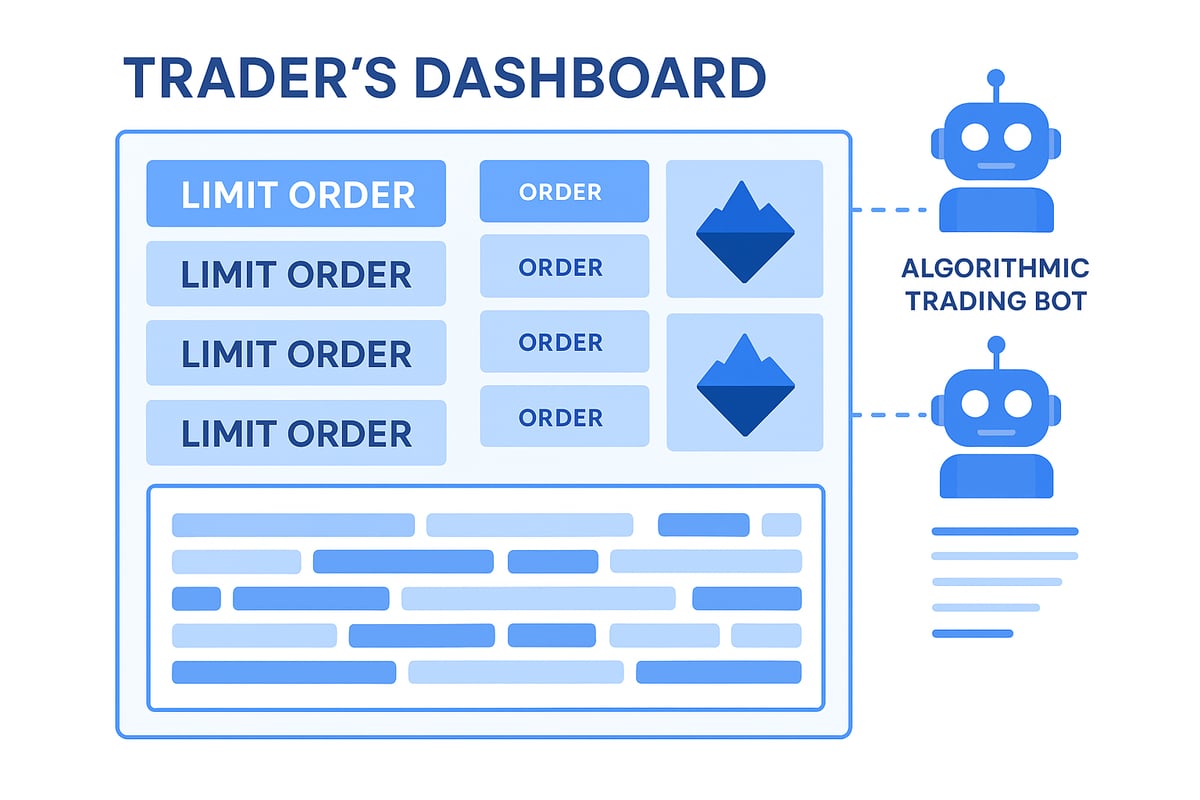
Layering involves placing multiple limit orders at different price levels to build or reduce a position gradually. This technique helps traders avoid poor fills and reduces exposure to sudden price moves.
For example, a trader might place a series of buy limit orders below the current market price, scaling into a position as the price drops. This approach works well for swing trading and volatile stocks, where price swings are common.
Scaling out with limit order placements at various profit targets also allows for risk management and partial profit-taking. By using this method, traders can adapt to shifting market sentiment without committing all capital at once.
Hidden and Iceberg Orders: Reducing Market Impact
Large trades can move the market, making stealth important for institutional and high-volume traders. Hidden and iceberg orders mask the full size of a limit order, displaying only a fraction to the public order book.
Iceberg orders are particularly effective during high liquidity events, such as earnings releases. By revealing only a small portion at a time, traders minimize the risk of adverse price movement caused by visible large orders.
Sophisticated platforms offer these advanced order types, helping traders execute sizable limit order trades without signaling intent to the broader market. For deeper insight into how orders cluster and affect order books, review Clustering Orders in Limit Order Books.
Algorithmic Order Slicing and Bid-Ask Strategies
Algorithmic trading now accounts for over 80 percent of US equity volume, according to the SEC. Algorithms can slice large limit order trades into smaller pieces, distributing them over time to minimize slippage and market impact.
Traders also use algorithms to exploit bid-ask spread fluctuations. By placing limit orders on both sides of the spread, it is possible to capture small price differences with high frequency.
In volatile markets, detecting algorithmic patterns is crucial for optimizing limit order placement. For practical techniques to spot algorithmic trading footprints, see Detecting Algorithmic Footprints in Volatile Markets.
Combining Limit Orders with Conditional Tactics
Event-driven trading requires more than just static order placement. Combining limit orders with conditional orders, such as OCO (one-cancels-the-other) or stop-limit orders, enables traders to respond dynamically to news or technical triggers.
For instance, during an earnings announcement, a trader might set a limit order to buy if the price drops to a certain level, while simultaneously placing a stop-limit order above resistance to capture a breakout. This dual approach increases flexibility and automates response to unpredictable events.
Using conditional strategies alongside a limit order framework is essential for adapting to the fast-paced 2025 market environment.
Managing Risks and Queue Priority
Advanced limit order strategies can become overly complex, increasing the risk of execution errors or missed opportunities. Managing order queue priority is vital, as orders further from the market price are less likely to fill, especially during rapid market moves.
Partial fills and slippage remain common challenges. To reduce these risks, monitor order book depth and liquidity before placing a limit order. Traders should also define clear exit rules and avoid overloading the book with excessive instructions.
Sometimes, it is necessary to switch from a limit order to a market order for guaranteed execution, especially in fast-moving markets. A balanced approach, combining discipline and adaptability, ensures that limit order tactics remain effective without unnecessary complication.
Common Pitfalls and Pro Tips: Maximizing Limit Order Success
Navigating the world of limit order trading can be highly rewarding, but even experienced traders fall into common traps. To stay competitive in 2025, you must recognize these pitfalls and apply proven strategies to enhance your execution and outcomes.
Watch Out for These Limit Order Pitfalls
Many traders set their limit order price far from the current market price, hoping for a dramatic swing. This often results in unfilled orders and missed opportunities. Understanding the concept of a price ceiling can help you avoid setting unrealistic price limits that never get executed.
Another frequent oversight is ignoring liquidity and order book depth. Thinly traded stocks may not have enough buyers or sellers at your specified price, causing your limit order to stay open indefinitely.
Slippage and partial fills pose additional challenges. Even if your price is reached, you may only get a portion of your order filled, or face execution delays, especially during high volatility or rapid market moves. According to industry analysis, limit orders are 30% less likely to fill during extreme volatility, which can frustrate even the best-laid plans.
Pro Tips for Smarter Limit Order Execution
To maximize your limit order success, consider these expert strategies:
- Use the volume-weighted average price (VWAP) as a benchmark to set realistic limit order prices.
- Monitor liquidity and the order book before placing large orders.
- Stay alert to market-moving news and adjust your orders proactively.
- Understand how AI-driven market makers impact execution, as highlighted in Adverse Selection in AI Market Making.
- Always review partial fills and adjust your strategy as needed.
Table: Pitfalls vs. Pro Tips
| Pitfall | Pro Tip |
|---|---|
| Setting price limits too far from market | Benchmark with VWAP |
| Overlooking liquidity/order book depth | Check order book before placing order |
| Ignoring slippage and partial fills | Monitor fills, adjust orders accordingly |
| Not adapting to news/events | Update limit order strategy during volatility |
Learning from Mistakes: A Real Example
Consider a trader who set a limit order to buy a volatile tech stock $10 below its current price during earnings season. The stock never dipped that low, and the trader missed a profitable run. By setting a more realistic price, based on support levels and VWAP, the outcome could have been much better.
Best Practices Checklist for 2025
- Set your limit order close to fair market value.
- Analyze liquidity and order book depth.
- Use VWAP and technical levels for price targets.
- Adjust orders during news or volatility.
- Review filled and unfilled orders regularly.
Mastering these best practices will help you avoid the most common mistakes and turn your limit order strategy into a consistent profit driver.
As we’ve explored, mastering limit orders is about more than just picking price points—it’s about understanding market dynamics, learning from the past, and making informed decisions with confidence. If you’re ready to put these smart strategies into practice and want deeper insights into how history shapes today’s trading landscape, you’re in good company. I invite you to be part of a platform that brings context to every market move, helping you spot patterns, avoid common pitfalls, and refine your approach. Let’s learn, trade, and grow together—Join Our Beta.