
7 Large-Cap Stock Picks to Watch in 2025
The landscape of large-cap stock investing is rapidly evolving, making 2025 a pivotal year for market participants. As economic cycles shift and new growth drivers emerge, large-cap stock remains a cornerstone for portfolio stability and long-term wealth creation.
This article highlights seven large-cap stock picks positioned for strong performance in 2025. We will explore key market trends, the criteria behind our selections, and provide detailed profiles of each standout company.
By the end, you will gain actionable insights to help you evaluate these opportunities and strengthen your investment strategy.
The State of Large-Cap Stocks Heading Into 2025
Large-cap stock investments remain a cornerstone for many portfolios as we approach 2025. These companies, defined by market capitalizations between $10 billion and $200 billion, offer investors a unique blend of stability, scale, and the potential for sustained growth. Their influence on overall market direction and their ability to weather economic storms make them essential in a diversified investment strategy.
Defining Large-Cap Stock and Their Portfolio Role
A large-cap stock represents a business with significant market value and operational reach. These companies are typically industry leaders, commanding global footprints and broad revenue streams. For investors, large-cap stock holdings add an element of predictability and lower volatility, serving as anchors during uncertain times.
Historical data underscores the importance of large-cap stock allocation. Over the past decade, these stocks have consistently delivered solid returns, often outperforming their small or mid-cap counterparts during periods of market turbulence. Their established business models, brand recognition, and access to capital make them less susceptible to sharp downturns.
Performance Trends and Macroeconomic Influences
Looking back at 2023 and 2024, large-cap stock performance showcased remarkable resilience amid global market volatility. While smaller companies struggled with liquidity and profitability, large-cap stock portfolios benefited from better access to funding and diversified business lines. The total market capitalization of large-cap stocks reached $35.42 trillion, with combined revenue at $16.80 trillion, according to StockAnalysis.
Key macroeconomic factors are set to shape large-cap stock prospects in 2025. Inflation rates, central bank interest policies, and the speed of global economic recovery will all influence returns. Notably, as record reverse stock splits highlight small-cap challenges, the divide between small and large-cap stock performance has widened, reinforcing the defensive advantages of established players.
Sector Rotation and Industry Trends
Sector rotation is another driving force for large-cap stock momentum. As investors move capital between industries, certain sectors emerge as favorites. In the current cycle, technology, healthcare, and energy large-cap stock leaders are attracting increased attention thanks to innovation, global demand, and strategic positioning.
Table: Large-Cap Sector Trends (2023–2025)
| Sector | Gaining Traction | Key Drivers |
|---|---|---|
| Technology | Yes | AI, cloud, automation |
| Healthcare | Yes | Biotech, medtech, aging population |
| Energy | Yes | Clean energy, geopolitics |
| Financials | Mixed | Interest rates, digital assets |
| Industrials | Yes | Supply chain, infrastructure |
| Consumer | Mixed | Shifting demand, inflation |
This shift in sector leadership reflects broader economic and demographic changes, positioning select large-cap stock picks for outsized gains.
Analyst Sentiment, Winners, and Losers
Wall Street analysts remain optimistic about the large-cap stock segment heading into 2025. Their confidence is fueled by robust earnings, strong balance sheets, and the ability of these companies to adapt to changing market dynamics. In 2023–2024, notable winners included technology giants and healthcare innovators, while companies lacking digital transformation or exposed to cyclical headwinds lagged behind.
Notable Examples:
- Tech sector outperformed, with AI and cloud leaders posting record results.
- Traditional energy large-cap stock saw renewed interest amid global supply chain shifts.
- Consumer staples lagged due to margin pressures and changing consumer behavior.
The Power of Innovation and Global Reach
What sets top large-cap stock companies apart is their commitment to innovation, resilience, and international expansion. Investment in research and development, digital transformation, and sustainable business practices ensures long-term relevance. Their global presence enables them to capture growth in emerging markets while mitigating regional risks.
As 2025 approaches, large-cap stock investors should focus on businesses that combine financial stability, sector leadership, and a forward-thinking approach. This blend of qualities positions them to navigate uncertainty and capitalize on the next wave of market opportunities.
Criteria for Selecting Top Large-Cap Stocks for 2025
Selecting the right large-cap stock for 2025 requires a thorough and disciplined approach. Investors must weigh multiple factors to ensure their choices offer both stability and growth potential. The following criteria outline how to identify large-cap stock opportunities that can outperform in the evolving market landscape.
Financial Health and Market Leadership
A strong large-cap stock typically demonstrates robust financial health. Look for consistent revenue growth, solid profitability, and a strong balance sheet. Evaluating metrics such as the price-to-earnings ratio and operating margin can offer insight into valuation and efficiency.
Market leadership is also crucial. Companies that dominate their industries often benefit from scale, pricing power, and brand loyalty. These attributes help large-cap stock selections weather downturns and capitalize on opportunities.
Innovation, Adaptability, and ESG Factors
Innovation sets apart the top large-cap stock picks. Firms investing heavily in research and development, digital transformation, or new product pipelines are better positioned for long-term growth. Adaptability to changing market trends, such as adopting AI or shifting to digital platforms, is equally important.
Environmental, social, and governance (ESG) factors are increasingly influencing investment decisions. A large-cap stock with strong ESG credentials attracts institutional interest and aligns with global sustainability goals.
Analyst Ratings, Ownership, and Resilience
Analyst ratings and institutional ownership offer valuable signals. A large-cap stock widely endorsed by analysts and held by major funds often reflects confidence in its prospects. Tracking changes in these indicators can reveal shifts in market sentiment.
Resilience is another key trait. Large-cap stock candidates should have a track record of outperforming during downturns and quickly adapting to new trends or disruptions. This historical performance can provide reassurance for investors seeking stability.
Dividends, Returns, and Example Comparison
Dividends and shareholder returns are important components of large-cap stock selection. Companies with a consistent history of dividend payments and share buybacks often appeal to income-focused investors and signal financial strength.
Comparing top picks by their dividend yield, payout ratio, and recent strategic moves can highlight leaders in delivering value. For example, a large-cap stock that increased dividends during industry headwinds demonstrates commitment to shareholders and operational excellence.
Choosing the right large-cap stock for 2025 means balancing financial metrics, market leadership, innovation, ESG priorities, analyst sentiment, and shareholder returns. This disciplined approach helps investors build resilient portfolios positioned for the coming year.
7 Large-Cap Stock Picks to Watch in 2025
Investors looking for stability and growth in 2025 should consider the unique opportunities presented by the large-cap stock universe. These industry leaders are selected for their strong fundamentals, forward-looking strategies, and ability to capture emerging trends. In this section, we spotlight seven standout large-cap stock picks, each with the potential to deliver robust performance in the coming year. For additional context on recent performance, you can explore the top-performing large-cap stocks in 2025.
Linde plc (LIN)
Linde plc stands out as a premier large-cap stock due to its global leadership in industrial gases and its commitment to innovation. With a market cap of $192.73B and a share price of $412.74, Linde serves a broad spectrum of industries, including manufacturing, healthcare, and energy.
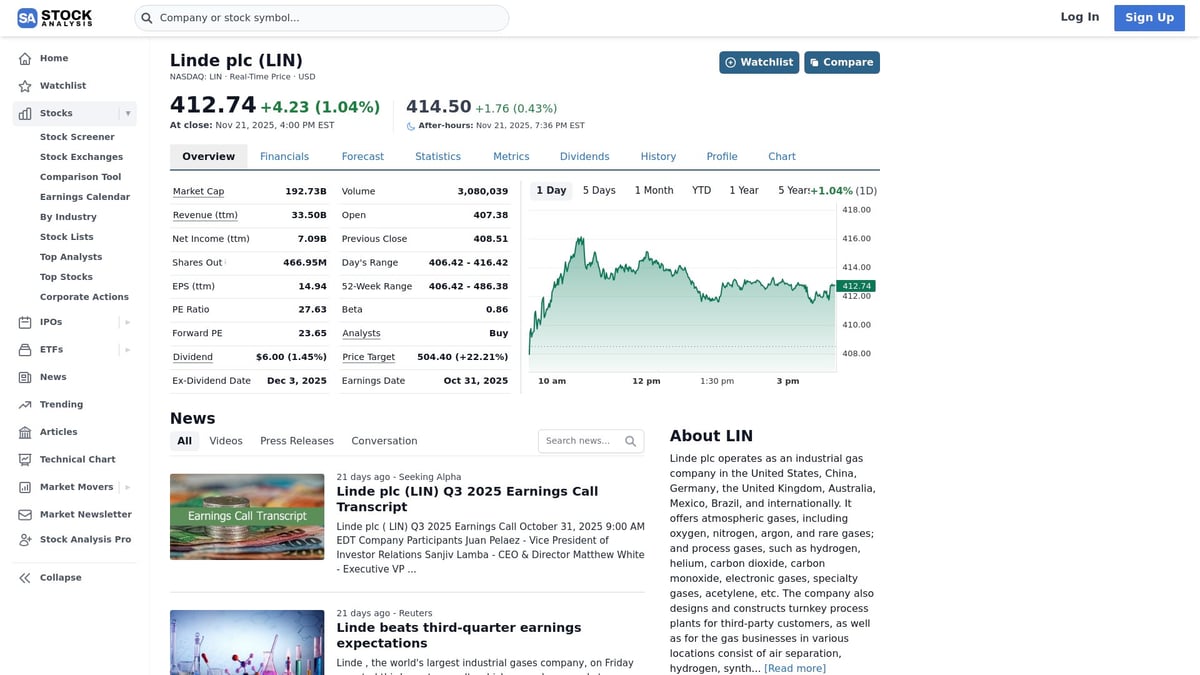
The company’s core strengths include a diversified industrial base, significant research and development investments, and a growing focus on clean energy solutions. Linde’s recent investments in hydrogen infrastructure and clean technology position it as a key player in the transition toward sustainable industrial practices.
Investors seeking stability and long-term growth find Linde appealing for its resilient cash flow and consistent dividends. The company’s exposure to the green energy sector also attracts those with ESG priorities.
Use Cases:
- Defensive holding in volatile markets
- Inflation hedge
- Green energy and ESG-focused portfolios
Pros:
- Strong operating margins and reliable shareholder returns
- Robust innovation pipeline
Cons:
- Cyclical exposure to industrial demand
- Regulatory challenges in certain regions
Linde’s global reach and ability to adapt to shifting market conditions make it a compelling large-cap stock for 2025.
Shopify Inc. (SHOP)
Shopify Inc. has transformed the e-commerce landscape and is a top contender among large-cap stock picks for 2025. With a market cap of $192.41B and a stock price of $147.80, Shopify enables businesses of all sizes to establish and scale their digital presence.
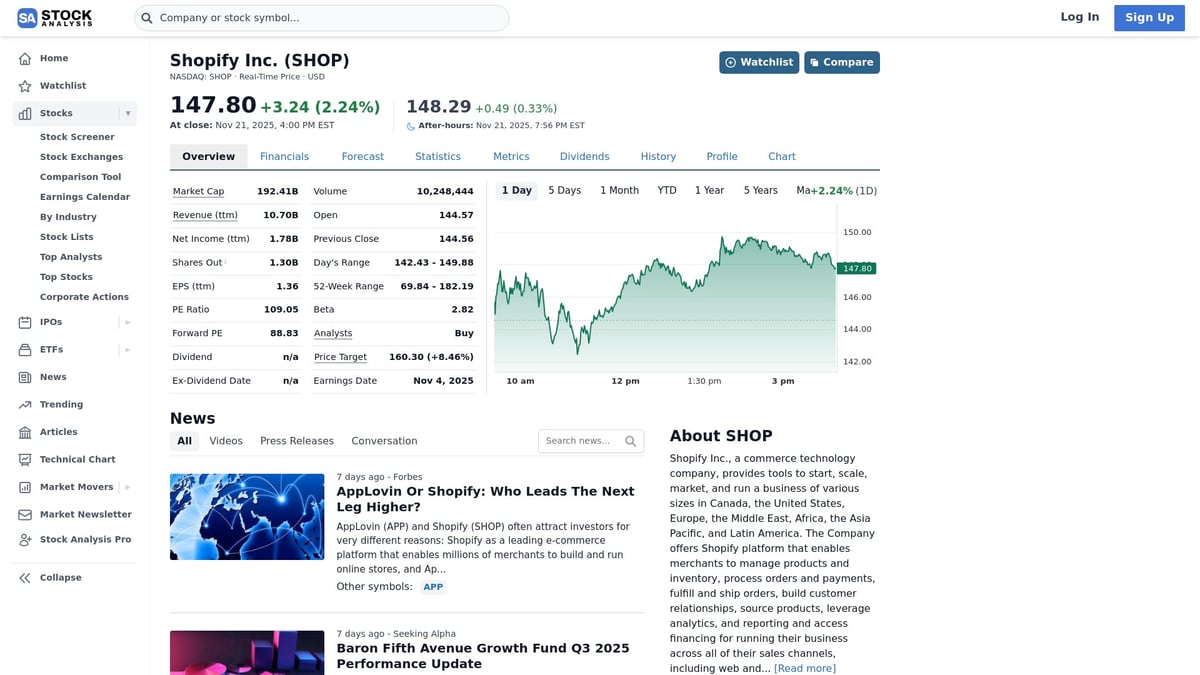
The company’s platform supports a robust merchant ecosystem, while its expanding fintech solutions offer new revenue streams. Shopify’s international expansion and focus on B2B commerce further strengthen its growth potential.
Key Benefits:
- High revenue growth rate
- Access to global e-commerce tailwinds
- Flexible, scalable business model
Target Audience:
- Growth-oriented investors
- Tech sector enthusiasts
Use Cases:
- Digital retail expansion
- Fintech integration
- SaaS portfolio diversification
Pros:
- Strong developer community
- Ongoing international growth
Cons:
- Highly competitive e-commerce environment
- Margin pressure from reinvestment
Shopify’s adaptability and forward-thinking initiatives make it a prime large-cap stock for those seeking exposure to digital commerce trends.
Amgen Inc. (AMGN)
Amgen Inc. is a cornerstone of the biotech sector and a reliable large-cap stock for healthcare-focused investors. With a market cap of $181.76B and a stock price of $337.54, Amgen’s portfolio includes leading treatments in oncology, nephrology, and biosimilars.
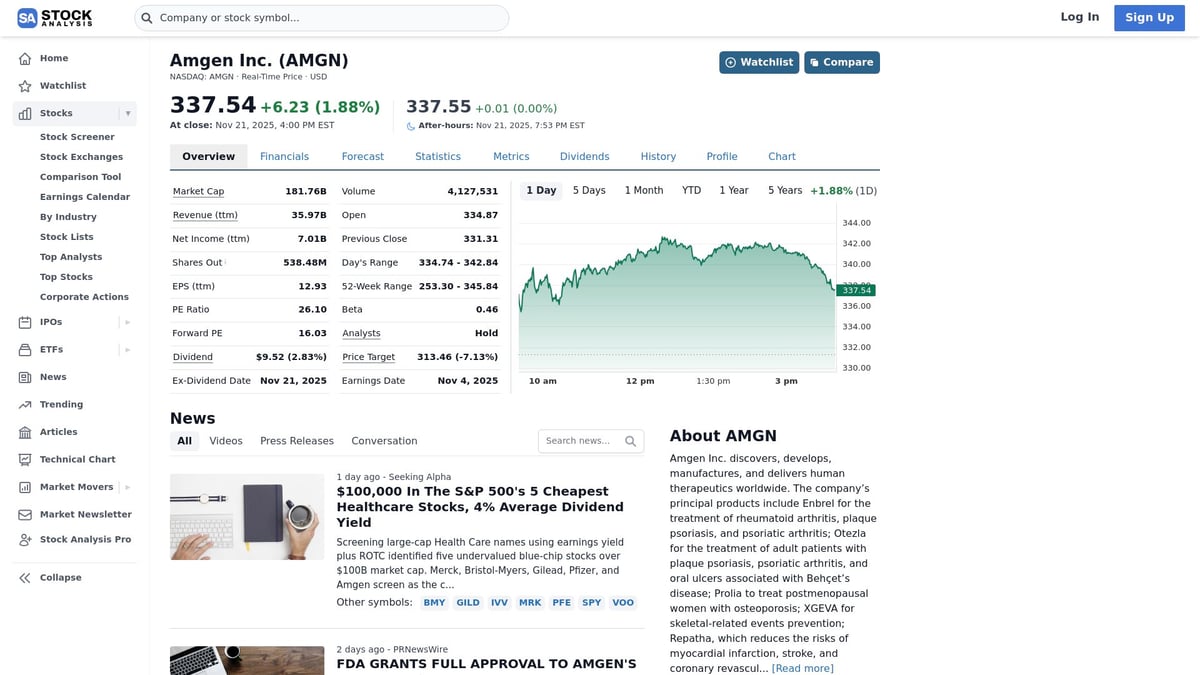
The company’s strength lies in its robust drug pipeline and commitment to research and development. Recent FDA approvals and biosimilar launches highlight Amgen’s ability to innovate and adapt to changing healthcare needs.
Benefits:
- Defensive play within the healthcare sector
- Recurring revenue from blockbuster drugs
Target Audience:
- Investors seeking healthcare stability and innovation
Use Cases:
- Biopharma exposure
- Dividend growth strategies
- R&D-driven returns
Pros:
- High margins and strong cash flow
- Well-diversified product pipeline
Cons:
- Patent cliffs affecting revenue streams
- Regulatory and R&D risks
Amgen’s proven track record and ongoing innovation make it a strong large-cap stock for resilient portfolio growth.
Uber Technologies, Inc. (UBER)
Uber Technologies continues to redefine global mobility and stands out as a dynamic large-cap stock for 2025. With a market cap of $174.27B and a share price of $83.87, Uber’s platform spans ridesharing, food delivery, and logistics.
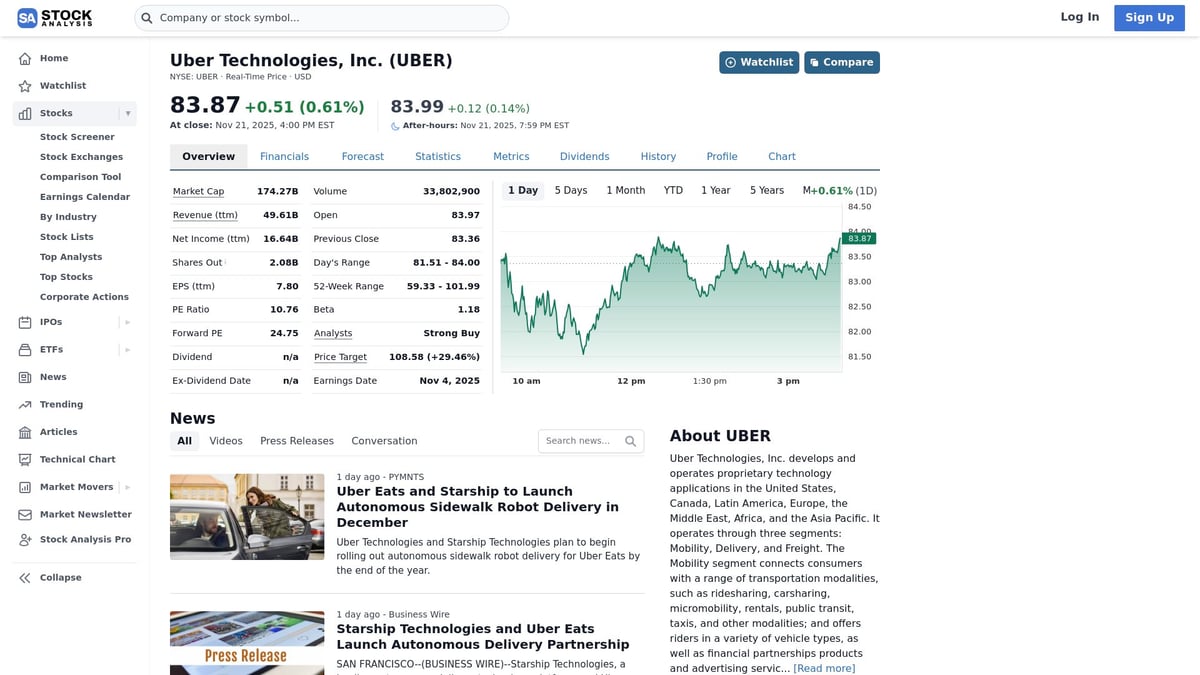
The company benefits from diversified revenue streams and powerful network effects, driving operational leverage and profitability. Uber’s expansion into new areas, such as freight and autonomous vehicles, demonstrates its commitment to innovation.
Key Benefits:
- Market leadership in urban mobility and delivery
- Expanding international footprint
Target Audience:
- Growth investors
- Tech and mobility sector followers
Use Cases:
- Exposure to the gig economy
- Last-mile delivery solutions
Pros:
- Rapid international growth
- Strong brand recognition
Cons:
- Regulatory risks in multiple markets
- Ongoing competition and profitability challenges
Uber’s strategic growth initiatives and adaptability position it as a compelling large-cap stock for investors looking to capitalize on evolving mobility trends.
BlackRock, Inc. (BLK)
BlackRock, Inc. is the world’s largest asset manager and a foundational large-cap stock for financial sector exposure. With a market cap of $165.54B and a share price of $1,014.72, BlackRock offers a broad suite of investment products, including ETFs and digital advisory platforms.
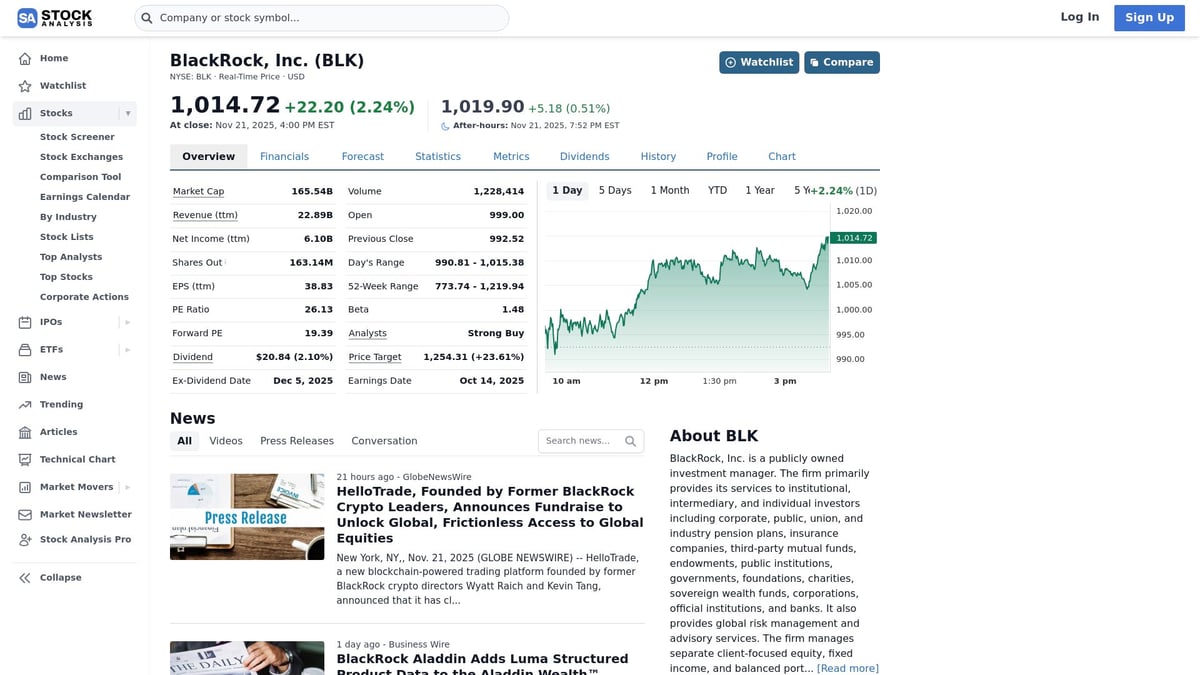
The company’s scale provides a significant competitive advantage, while its leadership in ESG products meets growing institutional demand for responsible investing. BlackRock’s fee-based revenue model ensures stability through economic cycles.
Key Features:
- Diverse investment product lineup
- Global client base
Target Audience:
- Investors seeking dividend growth
- Those interested in asset management trends
Use Cases:
- Institutional portfolio building
- ESG-focused investing
Pros:
- Strong brand and global reach
- Resilience during market fluctuations
Cons:
- Regulatory scrutiny
- Fee compression and sensitivity to market cycles
BlackRock’s innovation and industry leadership make it a must-watch large-cap stock for 2025.
Lam Research Corporation (LRCX)
Lam Research Corporation is a key player in the semiconductor equipment space and an essential large-cap stock for tech-focused investors. With a market cap of $179.17B and a stock price of $142.65, Lam enables advanced chip manufacturing for leading technology companies.
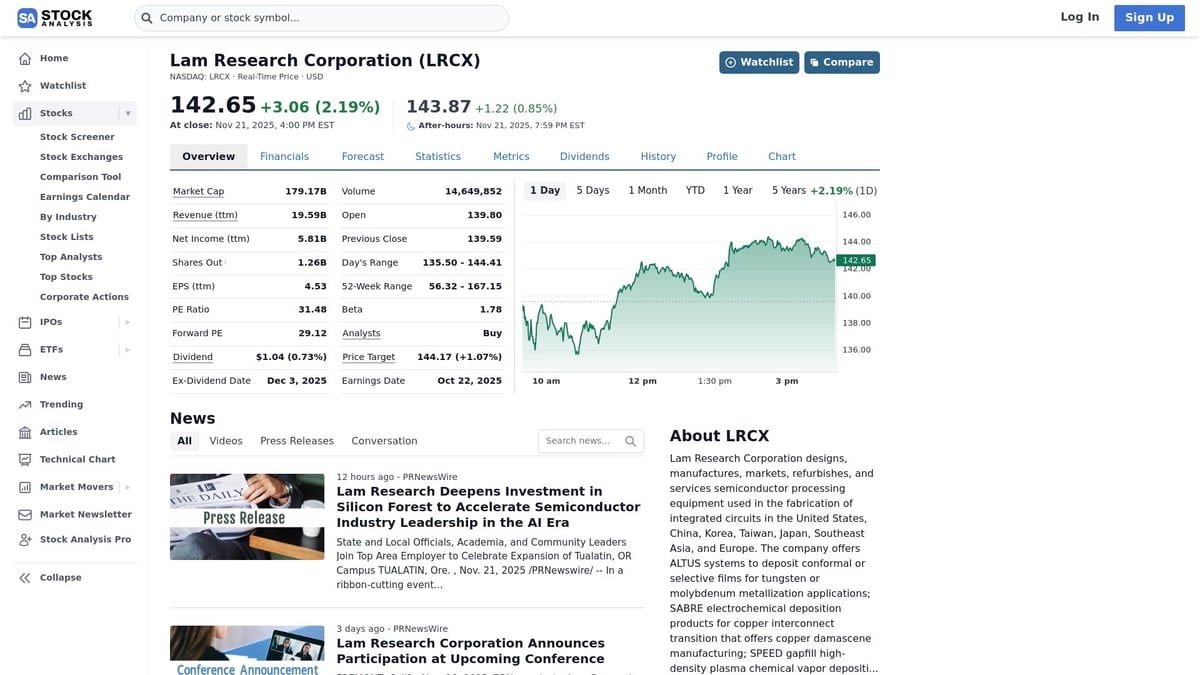
The company is well-positioned to benefit from the ongoing AI and data center boom. Partnerships with major chipmakers and expansion into new process technologies highlight Lam’s ongoing innovation.
Core Features:
- Critical supplier to global semiconductor industry
- High barriers to entry
Target Audience:
- Investors seeking semiconductor exposure
- Tech sector participants
Use Cases:
- AI infrastructure investments
- Advanced manufacturing growth
Pros:
- High operating margins
- Strong R&D focus
Cons:
- Cyclical demand patterns
- Supply chain and capital intensity risks
Lam Research’s strategic positioning and industry tailwinds underscore its value as a large-cap stock for forward-looking portfolios.
Intuitive Surgical, Inc. (ISRG)
Intuitive Surgical, Inc. is an innovation leader in robotic-assisted surgery and a top large-cap stock for medtech investors. With a market cap of $199.09B and a share price of $561.61, Intuitive Surgical’s da Vinci system is widely adopted in hospitals worldwide.
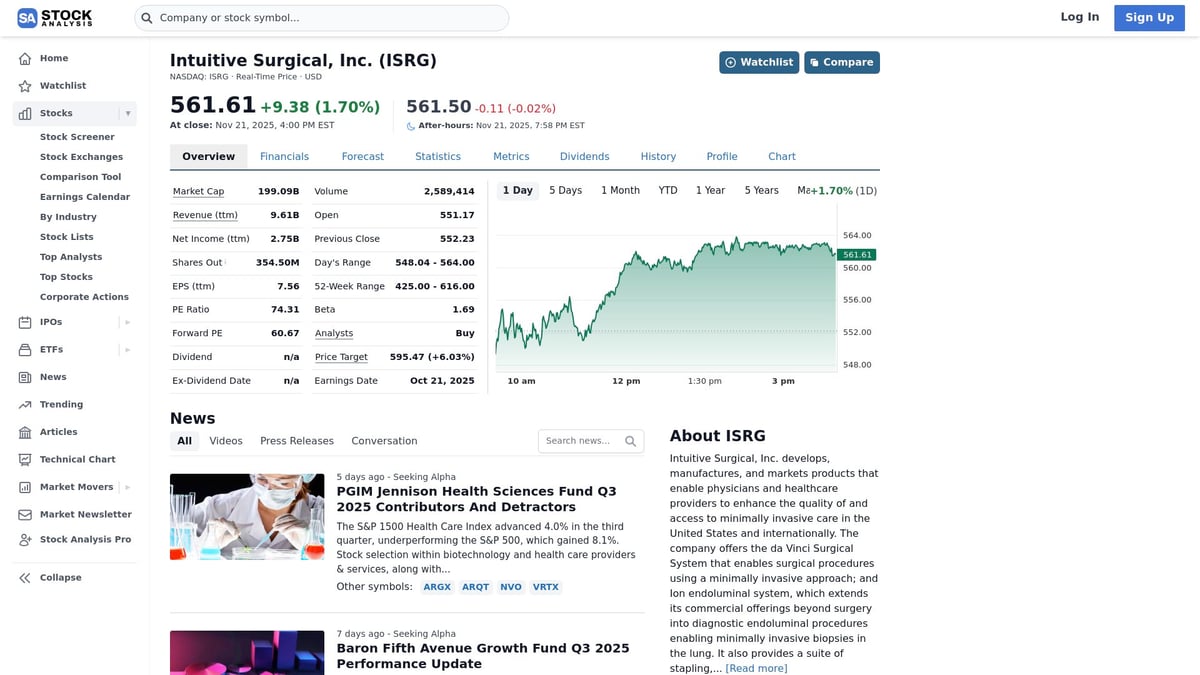
The company’s recurring revenue model, driven by instrument and service sales, supports high margins and stable growth. Expansion into new surgical specialties and international markets further enhances its outlook.
Key Features:
- Pioneer in minimally invasive surgery
- Strong intellectual property portfolio
Target Audience:
- Healthcare investors
- Technology and innovation seekers
Use Cases:
- Medtech exposure
- Recurring revenue streams
Pros:
- Market dominance and expanding addressable market
- High profitability
Cons:
- Elevated valuation
- Regulatory and reimbursement risks
Intuitive Surgical’s growth trajectory and market leadership make it a standout large-cap stock for those seeking exposure to healthcare technology.
Key Trends Shaping Large-Cap Stock Performance in 2025
The performance of large-cap stock in 2025 will be shaped by a series of powerful market trends. Understanding these forces helps investors position themselves for resilience and growth as the market evolves.
Digital Transformation and AI
Digital transformation remains a dominant catalyst for large-cap stock growth. The integration of AI, cloud computing, and automation continues to fuel operational efficiency and new revenue streams across technology and industrial sectors.
Wall Street sentiment is optimistic, with institutional investors closely watching companies leading the AI revolution. According to UBS upgrades global equities outlook amid AI optimism, analysts expect AI-driven innovation to enhance earnings potential for leading large-cap stock across the globe.
Industries such as semiconductors, software, and digital platforms are expected to benefit most, driving above-average growth within the large-cap universe.
Healthcare Innovation
Healthcare innovation is accelerating, positioning large-cap stock in this sector for robust performance. Advances in biotechnology, medical devices, and digital health are reshaping patient care and expanding addressable markets.
Large-cap stock with strong R&D pipelines and approved therapies continue to deliver defensive returns, even during periods of market uncertainty. The adoption of minimally invasive procedures, gene therapies, and biosimilars opens new growth avenues.
Investors look for companies demonstrating resilience, regulatory expertise, and the capacity to adapt quickly to changing healthcare landscapes.
ESG and Sustainability
Environmental, social, and governance (ESG) factors have become essential criteria for evaluating large-cap stock. Institutional demand for sustainable investing is driving companies to prioritize transparency, resource efficiency, and responsible business practices.
Companies leading in ESG performance are attracting more capital flows and enjoying premium valuations. Sectors such as renewable energy, industrial gases, and sustainable finance are at the forefront.
As regulations tighten and consumer preferences evolve, large-cap stock integrating ESG into their core strategies are positioned to outperform over the long term.
Economic Factors and Policy Shifts
Macroeconomic dynamics will significantly impact large-cap stock performance in 2025. Factors such as interest rates, inflation, and global monetary policy are influencing sector rotation and valuation multiples.
Recent developments, including the Dow reaches record high on Fed rate cut hopes, signal renewed investor confidence in large-cap stock amid expectations of easing monetary policy and improving trade conditions.
Mergers and acquisitions are also shaping industry landscapes, with large-cap stock using their balance sheet strength for strategic growth. Companies capable of adapting to shifting trade dynamics and regulatory environments are likely to stay ahead.
| Sector | Key Trend | Impact on Large-Cap Stock |
|---|---|---|
| Technology | AI, Cloud, Automation | Accelerated earnings growth |
| Healthcare | Biotech, Medtech | Defensive returns, innovation |
| Energy | Sustainability, ESG | Capital inflows, premium |
| Industrials | Supply Chain Shifts | Efficiency, resilience |
| Financials | Policy, M&A | Diversified returns |
In summary, large-cap stock performance in 2025 will be driven by digital innovation, healthcare advances, ESG priorities, and shifting economic conditions.
How to Invest in Large-Cap Stocks: Strategies and Considerations
Investing in a large-cap stock requires thoughtful planning and a clear understanding of your financial goals. Large-cap stocks can offer stability, consistent returns, and a strong foundation for building wealth. To maximize benefits, investors should consider a range of strategies and factors before making decisions.
Diversification and Investment Approaches
A balanced portfolio is the cornerstone of long-term investing. By spreading investments across various asset classes, including large-cap stock holdings, you can manage risk and enhance potential returns. Diversifying between large-cap, mid-cap, and small-cap equities reduces exposure to any single market segment. For a deeper understanding of how these categories differ, see this comparison of small-cap vs. large-cap stocks.
Investors can choose between active and passive strategies. Passive investors may prefer index funds or ETFs that track benchmarks like the S&P 500, providing instant large-cap stock exposure. Active investors might select individual stocks to capitalize on market trends or company-specific opportunities. Each approach has its advantages, depending on your risk tolerance and investment horizon.
Risk Management and Dividends
Managing risk is crucial when investing in any large-cap stock. Consider factors such as sector concentration, market volatility, and global economic influences. Position sizing and regular portfolio reviews help maintain alignment with your investment goals.
Dividends play a significant role in total shareholder returns, especially for large-cap stock investors seeking income or compounding growth. Reinvesting dividends can accelerate portfolio growth over time, while those needing steady income may opt to receive dividends as cash. Evaluate the reliability of a company’s dividend history and its payout ratio to ensure sustainability.
Timing, Tax, and Research Tools
Entry points matter. Employing strategies like dollar-cost averaging can reduce the impact of market fluctuations when building a large-cap stock portfolio. Monitoring valuation metrics and market trends helps identify attractive buying opportunities.
Tax considerations should not be overlooked. Understand how capital gains, qualified dividends, and tax-advantaged accounts impact your returns. This knowledge can help you retain more of your investment gains.
Research is the backbone of sound investing. Use analyst reports, financial news, and stock screeners to evaluate companies. Metrics like operating margin explained can offer valuable insights into a company’s profitability and efficiency. Reviewing historical returns of diversified large-cap portfolios can also inform your strategy and set realistic expectations.
As you reflect on these seven large cap stock picks and the trends shaping 2025, remember that understanding market history is one of the best ways to make informed decisions about the future. We believe that by exploring the stories and patterns behind stock movements, you can gain a real edge in your investing journey. If you're ready to dig deeper and see how history can help guide your next investment, I invite you to Join Our Beta and experience firsthand how our platform brings financial markets to life with context and clarity.