
Exit Strategy: Planning Your Business Departure
Every successful business owner must eventually face a fundamental truth: at some point, they will need to step away from their enterprise. Whether this departure comes through retirement, acquisition, succession, or unforeseen circumstances, having a well-defined exit strategy determines whether years of hard work translate into lasting value or dissolve into missed opportunities. Historical market analysis reveals that companies with clear exit plans not only command higher valuations but also navigate transitions with greater stability. Understanding the patterns and strategies employed by successful exits throughout financial history provides invaluable context for modern business leaders planning their own departure.
Understanding the Fundamentals of Exit Planning
An exit strategy represents far more than a simple plan to sell a business or transfer ownership. It serves as a comprehensive framework that guides business decisions from inception through final transition, ensuring every operational choice builds toward eventual value realization. Historical analysis shows that businesses treating exit planning as an ongoing strategic process rather than a last-minute scramble consistently achieve superior outcomes.
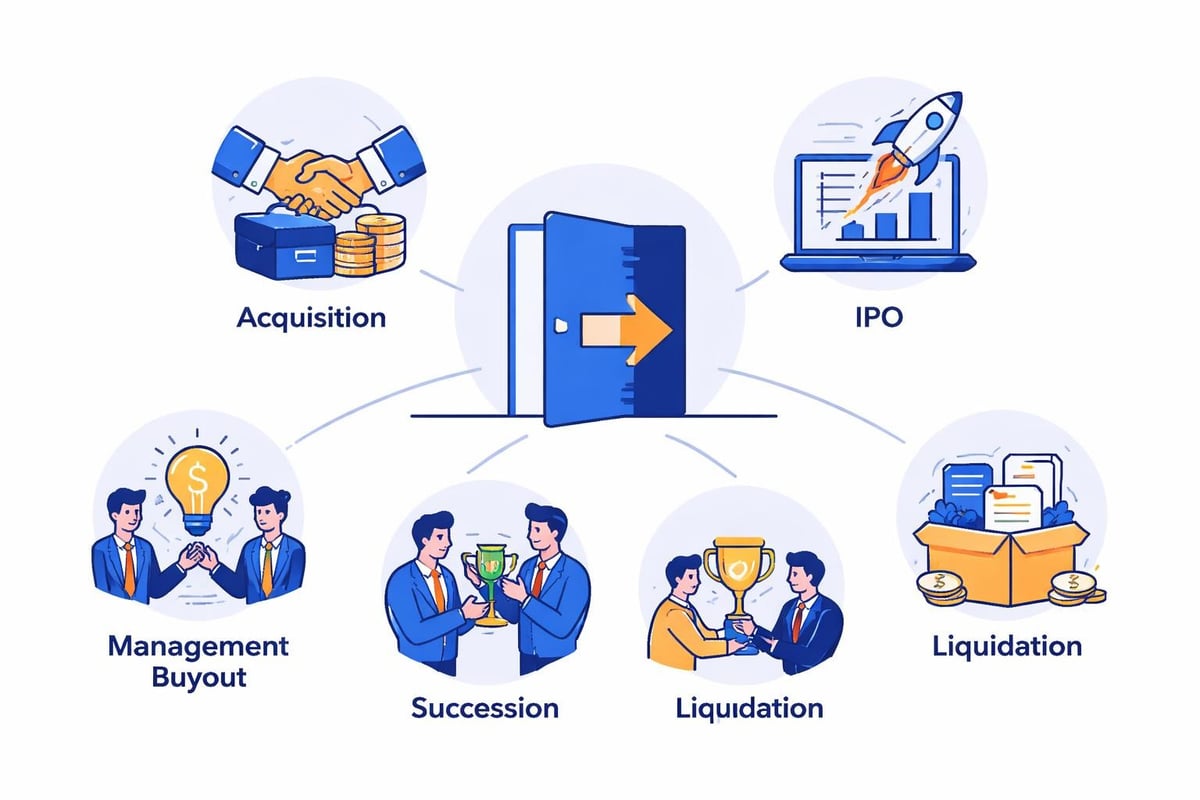
The foundation of effective exit planning rests on understanding your specific goals, timeline, and intended recipients. Some entrepreneurs aim to pass their enterprise to family members, while others seek acquisition by larger competitors or prefer taking their company public. Each path requires distinct preparation and strategic positioning.
Historical Patterns in Business Exits
Examining historical market movements reveals predictable patterns in successful business exits. During economic expansions, acquisition valuations typically increase as buyers compete for growth opportunities. Conversely, recessionary periods often favor management buyouts where internal teams acquire ownership at more favorable terms.
The dot-com era of the late 1990s provides instructive examples of both successful and failed exit strategies. Companies that prepared comprehensive documentation, maintained clean financials, and demonstrated sustainable business models commanded premium valuations. Meanwhile, businesses relying solely on growth projections without solid fundamentals often failed to complete their intended exits.
Key historical lessons include:
- Timing matters, but preparation matters more
- Market conditions influence valuation multiples
- Documentation quality directly impacts deal completion rates
- Industry-specific factors create unique opportunities and challenges
- Economic cycles affect buyer appetite and available capital
Building Your Exit Strategy Framework
Creating an effective exit strategy requires systematic planning across multiple dimensions of your business. The process begins years before your intended departure date, allowing sufficient time to address value gaps and position the company attractively.
Assessing Current Business Value
Understanding your company's current worth establishes the baseline for improvement efforts. Professional valuations consider multiple factors including revenue trends, profit margins, customer concentration, competitive positioning, and growth potential. Historical data from your cash flow statement provides essential insights into operational health and sustainability.
| Valuation Factor | Impact on Exit Value | Historical Weight |
|---|---|---|
| Revenue Growth | High | 25-30% |
| Profit Margins | Very High | 30-35% |
| Customer Diversification | Medium | 15-20% |
| Market Position | High | 20-25% |
| Operational Systems | Medium | 10-15% |
Many business owners discover significant value gaps when conducting initial assessments. Exit strategy planning integrates with overall business practices, ensuring daily operations align with eventual departure goals. This integration transforms exit planning from a distant concern into an active driver of business improvement.
Determining Your Timeline
Exit timelines vary dramatically based on individual circumstances, business complexity, and market conditions. Some exits unfold over 18-24 months, while others require five to seven years of preparation. Analyzing historical precedents within your industry reveals typical timeframes and common pitfalls.
Consider both voluntary and involuntary exit scenarios. While planning for retirement or strategic sale represents voluntary departure, both voluntary and involuntary scenarios deserve attention including illness, partnership dissolution, or market disruption. Comprehensive planning addresses multiple contingencies.
Timeline considerations include:
- Resolving operational dependencies on founder expertise
- Building management team depth and capability
- Improving financial reporting and documentation
- Addressing legal or regulatory compliance gaps
- Optimizing tax structures for transaction efficiency
- Strengthening customer relationships and contracts
Strategic Exit Pathways
Different exit strategies suit different business types, owner objectives, and market conditions. Understanding the full range of options allows you to select the approach best aligned with your goals while maintaining flexibility as circumstances evolve.
Acquisition and Sale
Strategic acquisitions represent the most common exit pathway for established businesses with strong market positions. Buyers typically include competitors seeking market share, private equity firms pursuing portfolio additions, or larger corporations expanding their capabilities. Historical analysis reveals that strategic buyers often pay premium valuations compared to financial buyers, as they can realize synergies unavailable to pure investors.
The acquisition process demands extensive preparation. Buyers conduct thorough due diligence examining financial records, customer contracts, employee agreements, intellectual property, and operational systems. Companies maintaining organized, accessible documentation throughout their lifecycle navigate this scrutiny more smoothly than those scrambling to compile materials.

Initial Public Offering
Taking a company public through an IPO creates liquidity for existing shareholders while potentially maintaining founder involvement in ongoing operations. This exit strategy suits high-growth businesses with substantial revenue, broad market appeal, and strong governance structures. Historical market data shows IPO windows open and close with market sentiment, making timing crucial.
The underwriter selection process represents a critical early decision. Investment banks guide companies through regulatory requirements, financial statement preparation, and marketing efforts to institutional investors. Historical IPO performance varies significantly by sector and economic conditions, with technology companies generally commanding higher initial valuations during expansion periods.
Family Succession and Internal Transfer
Passing businesses to family members or key employees preserves legacy while potentially minimizing transaction costs. However, succession planning presents unique challenges including family dynamics, funding mechanisms for ownership transfer, and competency development in successor generations. Estate planning intersects heavily with business succession, requiring coordination between business advisors and personal financial planners.
Historical succession examples demonstrate that early identification and development of successors yields better outcomes than last-minute appointments. Successful transitions often involve gradual responsibility transfer, mentoring relationships, and clear governance structures separating family relationships from business roles.
Maximizing Value Before Exit
Strategic value enhancement distinguishes businesses commanding premium valuations from those accepting market-rate offers. The years preceding an exit present opportunities to systematically address weaknesses, amplify strengths, and position the company attractively to potential successors or buyers.
Financial Performance Optimization
Strong financial performance forms the foundation of business value. Potential buyers or successors scrutinize revenue trends, profit margins, and cash flow generation when determining valuations. Free cash flow particularly influences buyer decisions, as it represents funds available for debt service, dividends, or reinvestment.
Financial optimization priorities:
- Reducing customer concentration risk by diversifying revenue sources
- Improving gross margins through pricing optimization or cost reduction
- Streamlining operations to enhance operational efficiency
- Documenting recurring revenue streams and contracted backlog
- Eliminating discretionary expenses that suppress reported profitability
- Resolving outstanding tax or legal issues that create liabilities
Operational Excellence
Buyers value businesses demonstrating operational maturity and limited dependence on founder involvement. Systematizing operations through documented processes, capable management teams, and robust technology infrastructure reduces perceived risk and supports higher valuations. Historical analysis of successful exits reveals consistent emphasis on operational scalability.
Creating standard operating procedures for critical business functions ensures continuity beyond founder departure. Employee development programs build organizational capability that persists through ownership transitions. Customer relationship management systems prevent revenue disruption when key personnel change.
Executing Your Exit Strategy
Transitioning from planning to execution requires careful coordination across legal, financial, operational, and personal dimensions. The execution phase tests preparation quality while demanding flexibility to address unexpected developments.
Engaging Professional Advisors
Creating an effective exit plan involves multiple specialized professionals including business brokers, investment bankers, attorneys, accountants, and financial planners. Each brings distinct expertise addressing different transaction aspects. Historical transaction data demonstrates that professionally advised exits typically achieve higher valuations and smoother transitions than owner-led processes.
Selecting advisors familiar with your industry and transaction type proves critical. Business brokers specializing in middle-market companies bring different capabilities than investment bankers serving enterprise clients. Attorney expertise in M&A transactions, tax law, and securities regulation varies significantly.
| Advisor Type | Primary Role | Engagement Timing |
|---|---|---|
| Business Valuator | Determine company worth | 2-3 years pre-exit |
| Tax Advisor | Structure tax-efficient transaction | 18-24 months pre-exit |
| M&A Attorney | Negotiate and document transaction | 6-12 months pre-exit |
| Investment Banker | Find buyers and manage process | 9-15 months pre-exit |
| Financial Planner | Manage post-exit wealth | Throughout process |
Managing the Transaction Process
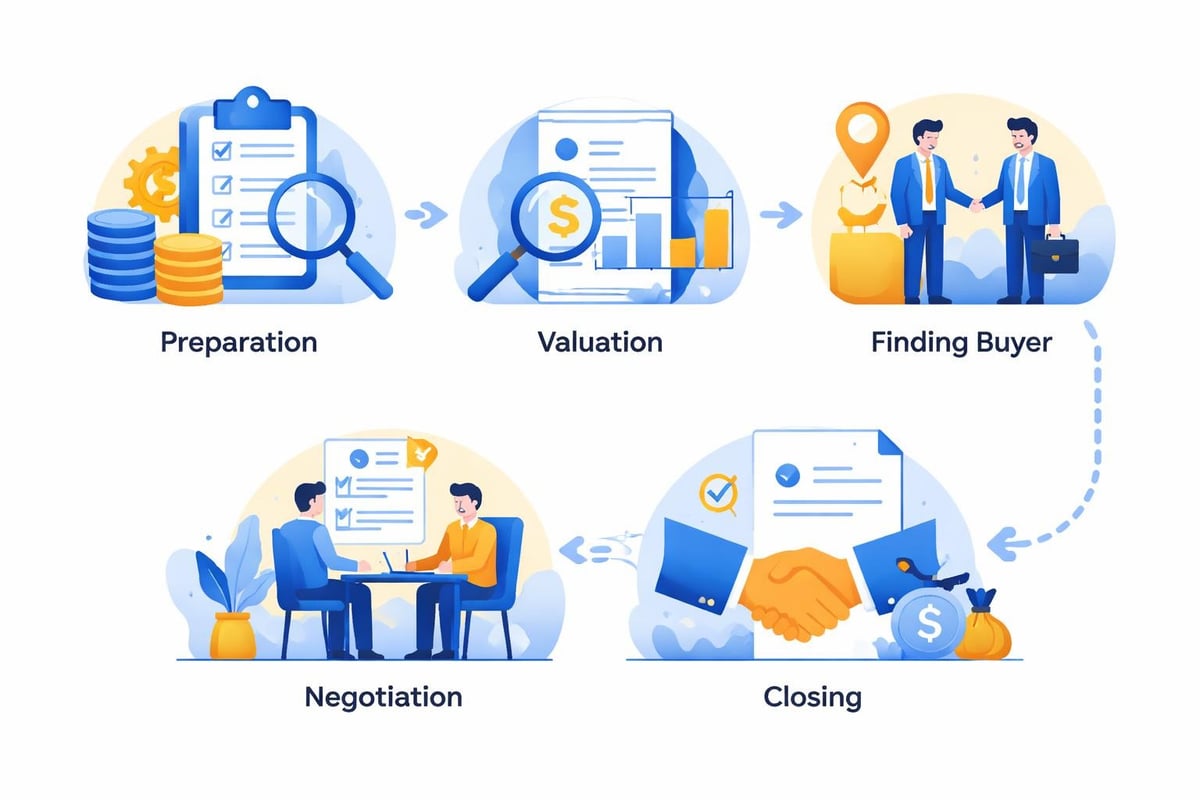
Once you engage potential buyers or successors, the transaction process follows predictable stages. Initial discussions establish basic fit and valuation ranges. Letter of intent formalizes preliminary agreement on key terms while allowing due diligence to proceed. Final negotiations address issues discovered during diligence before culminating in definitive purchase agreements.
Historical transaction data reveals that roughly 40-60% of engaged deals ultimately close. Common failure points include valuation disagreements, adverse findings during due diligence, financing complications, or changed circumstances affecting buyer or seller. Maintaining alternative options throughout negotiations reduces pressure to accept unfavorable terms.
Communication management becomes crucial during execution. Employees, customers, and suppliers may react negatively to uncertainty about ownership changes. Strategic disclosure timing balances transparency with transaction confidentiality requirements. Historical examples show that communication missteps can disrupt operations or derail deals.
Learning from Historical Exit Patterns
Studying historical business exits across different industries and economic conditions reveals valuable patterns that inform contemporary planning. The circumstances surrounding successful exits often share common characteristics, while failed transitions typically exhibit predictable warning signs.
Case Studies from Financial History
The technology sector provides particularly instructive historical examples given rapid innovation cycles and frequent ownership changes. Companies like WhatsApp, which Facebook acquired for $19 billion in 2014, demonstrated how focusing on user growth and engagement metrics attracted premium valuations despite limited revenue generation. This exit strategy emphasized building strategic value for acquirers rather than maximizing current profitability.
Conversely, many businesses during the 2008 financial crisis discovered that waiting for ideal exit conditions sometimes means missing exit opportunities entirely. Compressed valuations during economic downturns forced many owners to extend timelines significantly or accept lower proceeds. This historical lesson reinforces the importance of maintaining exit readiness rather than timing markets perfectly.
Spin-off transactions represent another historical exit mechanism where parent companies separate business units into independent entities. This approach can unlock value when combined entities trade at discounted valuations relative to separated components. Historical spin-off performance data shows that both parent companies and separated entities often outperform market averages following transactions.
Industry-Specific Considerations
Exit strategy effectiveness varies significantly across industries based on buyer availability, typical valuation multiples, regulatory requirements, and business model characteristics. Manufacturing businesses typically sell for different multiples than software companies, while professional service firms face unique challenges transferring client relationships.
Industry variation factors include:
- Asset intensity and tangible asset values
- Regulatory licensing or compliance requirements
- Customer contract transferability
- Intellectual property importance
- Labor skill requirements and availability
Historical analysis of your specific industry segment reveals typical exit multiples, common buyer profiles, and transaction structures. This context helps establish realistic expectations and identify potential acquirers or successors well before initiating formal processes.
Preparing for Life After Exit
While exit strategy planning naturally focuses on transaction mechanics and value maximization, the post-exit period demands equal attention. Many business owners struggle with identity transitions, purpose redefinition, and wealth management following successful exits. Historical accounts reveal that inadequate preparation for post-exit life diminishes satisfaction even when transactions achieve financial objectives.
Financial Planning Beyond the Transaction
Business sale proceeds often represent the majority of an owner's net worth, making post-exit financial planning critical. Diversifying concentrated wealth, managing tax obligations, funding retirement needs, and structuring charitable giving require sophisticated financial strategies. Understanding exit planning as comprehensive business strategy includes addressing personal financial transitions alongside business matters.
Working with financial advisors to model different scenarios helps quantify required exit proceeds to support desired lifestyles. This analysis sometimes reveals that earlier exits at lower valuations still achieve personal financial goals, while delayed exits primarily benefit ego rather than financial security. Historical data on post-exit wealth management shows that structured planning prevents common pitfalls including excessive risk-taking, over-concentration in single investments, or inadequate diversification.
Personal Transition Considerations
The psychological and emotional dimensions of exiting a business often surprise unprepared owners. Businesses frequently represent significant portions of founder identity, daily structure, and social networks. Successful transitions involve planning for these non-financial aspects alongside transaction mechanics.
Historical accounts from exited business owners emphasize the value of developing interests, relationships, and activities independent of business operations well before exit. Gradual responsibility reduction during succession or sale processes eases adaptation to post-exit life. Some owners maintain advisory roles or board positions to preserve connections while limiting operational involvement.
Risk Management Throughout Exit Planning
Every exit strategy contains inherent risks that careful planning can mitigate but never eliminate entirely. Understanding potential complications and developing contingency approaches strengthens exit plans against adverse developments.
Market Timing Risks
External market conditions significantly influence exit valuations and available options. Economic recessions compress valuations, reduce buyer availability, and tighten financing conditions. Industry-specific disruptions can rapidly diminish business values regardless of operational performance. Historical market cycles demonstrate that timing represents one variable owners control through preparation but cannot predict perfectly.
Building financial stability and operational resilience creates options during challenging periods. Businesses generating strong cash flow and maintaining conservative debt levels survive downturns better than leveraged operations dependent on growth. This stability allows selective timing rather than forced exits during unfavorable conditions.
Execution Risks
Transaction execution involves multiple parties with potentially misaligned interests, creating risks throughout the process. Buyers may discover issues during due diligence requiring price adjustments or deal restructuring. Financing contingencies sometimes fail despite preliminary commitments. Key employees or customers may depart upon learning of ownership changes.
Comprehensive exit planning guides outline steps to mitigate execution risks including thorough preparation, professional advisor engagement, and maintaining operational focus during transactions. Historical transaction data shows that businesses maintaining performance throughout exit processes achieve better outcomes than those experiencing disruption.
Regulatory and Legal Considerations
Exit transactions trigger various regulatory requirements depending on business type, transaction structure, and buyer characteristics. Securities laws govern public offerings and certain private placements. Antitrust regulations may restrict acquisitions by competitors. Tax laws significantly impact net proceeds through structure choices and timing decisions.
Engaging specialized legal counsel early in planning prevents costly mistakes and optimizes structure. Tender offers, for example, involve specific regulatory procedures and disclosure requirements that differ from negotiated acquisitions. Historical examples of failed transactions often trace back to inadequate legal planning or regulatory complications discovered late in processes.
Continuous Improvement Approach
The most effective exit strategies evolve continuously rather than remaining static from initial creation. Regular reassessment against changing personal goals, business performance, market conditions, and available options keeps plans current and actionable.
Annual Strategy Reviews
Scheduling annual exit strategy reviews ensures plans reflect current reality rather than outdated assumptions. These reviews should assess business value trends, personal timeline preferences, market conditions, and potential exit pathways. Adjustments made incrementally prove easier to implement than major course corrections forced by outdated plans.
Review processes benefit from professional input to challenge assumptions and introduce external perspectives. Advisors familiar with current market conditions and transaction trends provide valuable context that internal stakeholders may lack. Historical pattern analysis helps identify emerging opportunities or risks requiring strategic adjustments.
Value Acceleration Initiatives
Between review cycles, implementing focused initiatives to enhance business value maintains forward progress. These efforts might target specific weaknesses identified in valuations, develop new capabilities attractive to potential buyers, or strengthen competitive positioning. Systematic value enhancement compounds over time, significantly impacting eventual exit outcomes.
Prioritizing initiatives based on value impact relative to implementation effort ensures efficient resource allocation. Some improvements like documentation organization require modest investment but significantly reduce transaction friction. Others like geographic expansion demand substantial resources but may fundamentally transform business value and available exit options.
Understanding exit strategy fundamentals and learning from historical precedents empowers business owners to approach their eventual departures with confidence and clarity. By studying patterns from past market movements, successful exits, and cautionary tales, you can avoid common pitfalls while capitalizing on proven approaches. Historic Financial News provides the historical context and analytical tools needed to understand how businesses navigated exit decisions across different economic cycles, helping you apply these lessons to your own strategic planning and recognize patterns that could inform your future decisions.