
Guide to Common Stock: Understanding Shares in 2025
In 2025, understanding common stock is more crucial than ever for investors navigating a rapidly evolving financial landscape. Equity ownership is gaining importance as markets become more volatile and technology reshapes how people invest.
The surge in retail investing and the democratization of financial markets mean more individuals are seeking to build wealth through common stock. With so much change, having clear, actionable insights is essential to make informed decisions.
This guide will demystify common stock, explain shareholder rights, explore both risks and rewards, and provide strategies to help you succeed in 2025. Read on to master the fundamentals and gain the confidence to take control of your investment journey.
What Is Common Stock?
Understanding the fundamentals of common stock is essential for any investor looking to navigate modern markets. Common stock represents a basic form of corporate ownership, often referred to as ordinary shares in many countries. This section will clarify what common stock is, how it differs from other investment securities, and why it remains foundational in global finance.
Definition and Core Concepts
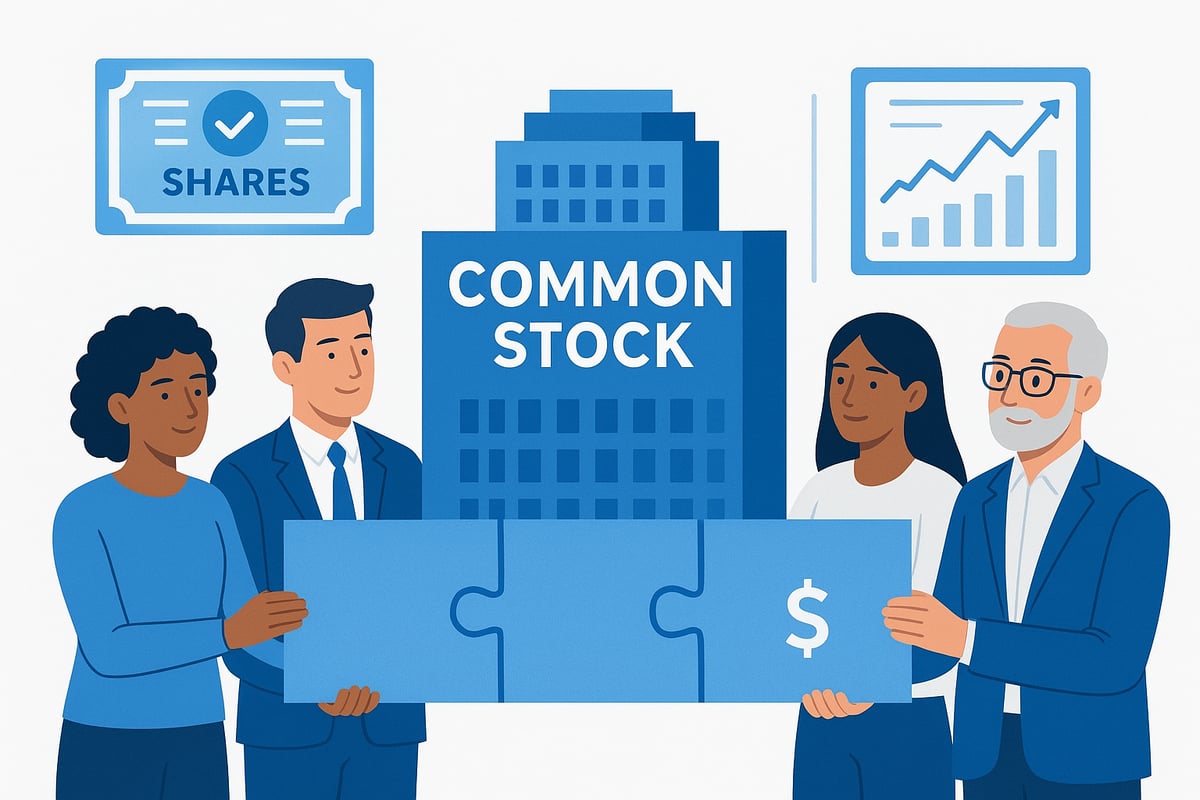
Common stock is a security that signifies ownership in a corporation. When you buy common stock, you become a partial owner, entitled to a share of the company’s profits and assets. Unlike bondholders or preferred shareholders, holders of common stock have a residual claim, meaning they receive payouts only after all obligations to creditors and preferred shareholders have been satisfied. According to Wikipedia, this places common stockholders at the end of the line in the event of liquidation.
A key distinction exists between common stock and other securities. Bonds are debt instruments with fixed returns and priority in bankruptcy, while preferred stock offers fixed dividends and higher claims than common stock but generally lacks voting rights. Common stock, in contrast, provides both potential capital appreciation and voting power, making it especially appealing for long-term investors.
Fractional ownership is a core aspect of common stock. Each share represents a tiny slice of the company, giving investors proportional rights. The concept of par value is also important, though largely symbolic today. Par value is a nominal amount assigned to shares when issued, not reflective of their actual market price. For more on this, see Understanding par value. Market value, on the other hand, is determined by supply and demand on exchanges.
Consider Apple Inc.: its common shares grant voting rights and potential dividends, while a bank’s preferred shares might offer guaranteed dividends but limited influence. This underscores that common stockholders are true owners, yet their claims are subordinate.
Types of Common Stock
Not all common stock is created equal. Companies often issue different classes of shares to balance control and capital needs. The most common distinction is between voting and non-voting shares. Voting shares empower shareholders to influence corporate decisions, such as electing the board of directors or approving mergers. Non-voting shares, while offering financial benefits, lack these powers.
Dual-class share structures have gained prominence, especially among tech giants. For example, Alphabet (Google’s parent company) issues Class A shares with voting rights and Class C shares without. Meta Platforms (Facebook) employs a similar structure, allowing founders and executives to retain majority control despite holding fewer total shares. In 2025, this trend continues, with more companies adopting dual-class setups to attract capital while preserving leadership authority.
Internationally, terminology varies. In the United States, "common stock" is the standard term, while "ordinary shares" is used in the UK and Canada. This reflects global differences in corporate governance but the underlying principles remain consistent. The type of common stock you hold directly affects your influence over the company’s future.
How Common Stock Works in Practice
Companies issue common stock primarily through initial public offerings (IPOs) and secondary offerings. An IPO marks the first sale of shares to the public, providing capital for growth and expansion. After the IPO, companies may issue additional shares to raise more funds, which can dilute existing ownership.
Ownership of common stock is now almost always recorded electronically, replacing physical stock certificates. This shift has increased efficiency and security for investors. Public exchanges like the NYSE or NASDAQ provide liquidity, allowing shares to be bought and sold quickly. Clearinghouses ensure that transactions settle smoothly, transferring ownership seamlessly between buyers and sellers.
A practical example is Tesla’s stock split in recent years. By splitting its common stock, Tesla made individual shares more affordable, boosting liquidity and attracting new investors. The process highlights how exchanges and market mechanisms work together to facilitate the trading and transfer of common stock.
Common stock remains the cornerstone of equity investing, offering both opportunities and responsibilities to shareholders in today’s dynamic markets.
Rights and Responsibilities of Common Shareholders
Common stock ownership grants investors a unique position within the corporate structure. Understanding the rights and responsibilities that come with common stock is essential for anyone aiming to build wealth or influence corporate governance in 2025.

Shareholder Rights Explained
Owning common stock means you receive several fundamental rights. The most notable is the right to vote on key matters, such as electing the board of directors or approving mergers. This is typically exercised at annual or special shareholder meetings, either in person or via proxy. For instance, Disney shareholders recently voted on changes to the company’s board structure, demonstrating how common stock can influence major decisions.
Common stockholders may also receive dividends if the company’s board declares them, but these payouts are not guaranteed. Pre-emptive rights allow existing shareholders to purchase new shares before the public, helping them maintain their ownership percentage. Another crucial right is the residual claim—if a company is liquidated, common stockholders are paid after creditors and preferred shareholders.
Transparency is also a key benefit. Shareholders have access to annual reports and must be notified of important meetings. These rights can vary by jurisdiction and company bylaws, so it is important to stay informed. For a deeper dive into these topics, visit Shareholder rights and roles for a comprehensive overview.
| Shareholder Right | Description |
|---|---|
| Voting | Elect board, approve mergers |
| Dividends | Receive payouts if declared |
| Pre-emptive | Buy new shares before others |
| Residual Claim | Last in line during liquidation |
| Information Access | Annual reports, meeting notifications |
Limitations and Risks for Shareholders
While common stock offers many advantages, it also comes with notable risks. In a bankruptcy, common stockholders are last to receive any remaining assets and often end up with nothing. Unlike preferred shares or bonds, dividends are not assured, making income unpredictable.
Dilution is another concern. If a company issues additional shares, your ownership percentage can decrease, potentially impacting your influence and returns. Shareholders usually do not have significant direct control unless they hold a large number of shares. Historical cases, such as the Lehman Brothers collapse, highlight how common stock can become worthless in financial distress.
Market data consistently shows that common stock is more volatile than bonds or preferred shares. Prices can swing sharply due to company news or broader market events. This volatility brings both opportunity and risk, so investors must approach common stock with a clear understanding of its limitations.
Shareholder Responsibilities
With the benefits of common stock come important responsibilities. Shareholders are expected to stay informed about company performance by reviewing financial statements and attending or following shareholder meetings. Participating in votes is vital, especially during decisions that may affect the company’s future.
Understanding tax implications is another key responsibility. Depending on your country, you may need to pay taxes on capital gains or dividends, so proper planning is essential. Ethical considerations have also grown in importance. Many investors now engage in ESG voting or impact investing, using their common stock to influence corporate policies on environmental, social, or governance matters.
Active shareholders can play a critical role in shaping a company’s direction. By exercising their rights and fulfilling their responsibilities, investors can help ensure that common stock remains a powerful tool for both personal and collective progress.
The Value and Performance of Common Stock in 2025
Understanding the value and performance of common stock is essential for investors looking to build wealth in 2025. The dynamics of equity markets have evolved, offering both new opportunities and challenges for shareholders.
How Common Stock Generates Value
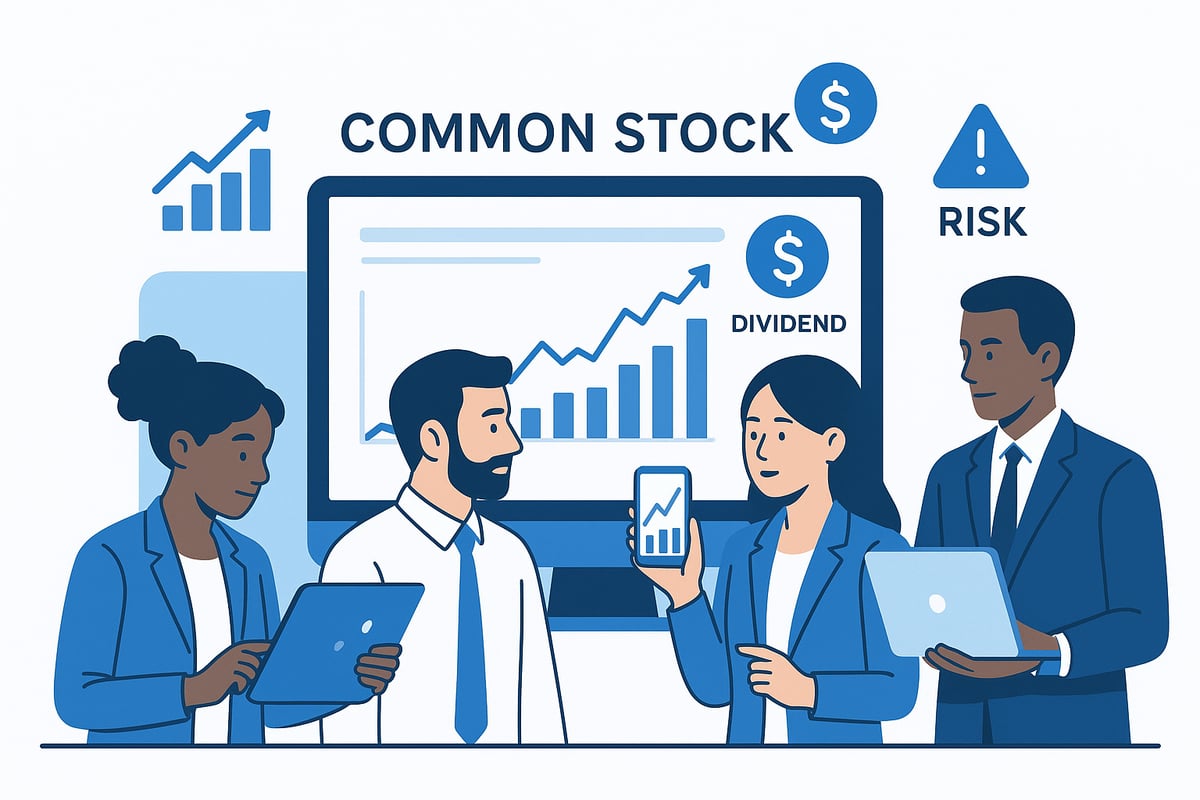
Common stock creates value for investors primarily through two channels: capital appreciation and dividend income. When you buy common stock at a low price and sell it at a higher price, you realize a profit known as capital gains. This process is a cornerstone of equity investing, especially in growth-oriented markets.
Dividends are another way common stock delivers returns. Some companies pay regular or special dividends, distributing a portion of profits directly to shareholders. While dividends are not guaranteed, they can provide a steady income stream, particularly from established firms.
Compounding plays a crucial role in enhancing returns over time. By reinvesting dividends and holding common stock for the long term, investors can benefit from the growth of both their original investment and the income it generates. For example, the S&P 500 has historically delivered an average annual return near 10 percent, demonstrating the powerful effect of compounding on common stock portfolios.
Factors Influencing Stock Price in 2025
Several factors shape the price movements of common stock in 2025. Company fundamentals, such as earnings growth, revenue trends, and debt management, remain vital in assessing stock value. Investors closely monitor quarterly reports and financial statements to gauge future prospects.
Market sentiment and macroeconomic events also drive price volatility. Inflation rates, interest policy changes, and global developments can trigger rapid shifts in common stock valuations. Technological innovation, particularly in sectors like artificial intelligence and clean energy, is disrupting traditional industries and creating new leaders.
Regulatory changes, including ESG mandates and rules on corporate disclosures, add another layer of complexity. These reforms can influence investor confidence and capital flows. To stay ahead, review resources like Stock Market Trends 2025 for timely insights and forecasts relevant to this fast-changing landscape.
Risks and Volatility
Investing in common stock comes with inherent risks. Market risk refers to the potential for price swings due to economic or political events. Business risk relates to company-specific issues, such as leadership changes or scandals, which can impact share prices.
Liquidity risk is a concern for stocks with low trading volumes, making it harder to buy or sell without affecting prices. Systemic risk, seen during financial crises like 2008 or the COVID-19 pandemic, can affect all sectors simultaneously.
Recent episodes of meme stock volatility, such as those involving GameStop and AMC, highlight how quickly sentiment can shift. Despite these risks, common stock offers higher potential rewards compared to more stable investments like bonds or preferred shares. Prudent investors manage risk through research, diversification, and a disciplined approach.
Comparing Common Stock to Other Securities
It is important to understand how common stock differs from preferred shares and bonds. Common stockholders have voting rights and the possibility of unlimited growth, but they are last in line during liquidation and receive dividends only after preferred shareholders.
In contrast, preferred stock typically offers fixed dividends and a higher claim on assets in bankruptcy, while bonds provide fixed income and creditor status. However, both preferred shares and bonds usually have lower long-term growth potential than common stock.
A quick comparison:
| Feature | Common Stock | Preferred Stock | Bonds |
|---|---|---|---|
| Growth Potential | High | Moderate | Low |
| Dividend Rate | Variable | Fixed | Fixed Coupon |
| Voting Rights | Yes | Rarely | No |
| Risk Level | High | Moderate | Low |
Balancing common stock with other assets in a diversified portfolio helps investors pursue growth while managing risk. Asset allocation remains a guiding principle for long-term success.
Investing in Common Stock: Strategies and Best Practices
Investing in common stock can seem daunting, but with a clear plan and the right strategies, you can build a resilient portfolio for 2025 and beyond. Whether you are a new or experienced investor, understanding each step will help you make informed decisions and avoid common pitfalls.

Steps to Start Investing in Common Stock
Starting your investment journey with common stock requires a structured approach. Begin by defining your investment goals. Are you looking for growth, income, or diversification? Setting clear objectives will shape your investment plan.
Next, open a brokerage account. Choose between traditional brokerages, online platforms, or robo-advisors, depending on your needs and experience level. Once your account is ready, research and select the common stock that aligns with your goals.
When placing orders, familiarize yourself with order types like market, limit, and stop-loss. These help manage price risk and execution. Once invested, monitor your portfolio and rebalance as needed to stay on track.
Key steps:
- Define your goals
- Open a brokerage account
- Research and select common stock
- Place appropriate orders
- Regularly monitor and rebalance your portfolio
By following these steps, you lay a strong foundation for successful common stock investing.
Fundamental Analysis for Stock Selection
Fundamental analysis is crucial for evaluating the true value of a common stock. Start by reviewing a company’s financial statements, including the income statement, balance sheet, and cash flow statement. Key ratios, such as price-to-earnings (P/E), earnings per share (EPS), return on equity (ROE), and debt-to-equity, help gauge profitability and risk.
Sector and industry analysis are equally important. Comparing valuation metrics across industries highlights which sectors may offer better opportunities. For example, tech stocks often trade at higher P/E ratios than utility stocks due to growth expectations.
For a detailed breakdown of a key valuation metric, review the price-to-earnings ratio basics. Using these tools, you can make more informed decisions about which common stock to buy.
Technical Analysis and Market Timing
Technical analysis focuses on price patterns, trading volume, and market trends to help you time your common stock trades. Popular indicators include moving averages, Relative Strength Index (RSI), and support and resistance levels.
By studying chart patterns, you can identify potential entry and exit points. For instance, a moving average crossover might signal a new trend, while high trading volume can confirm a breakout. Volume analysis helps determine if a price move is likely to continue.
Remember, technical analysis supplements, but does not replace, the insights gained from fundamental research. It is especially useful for short-term trading or when seeking to optimize the timing of your common stock transactions.
Diversification and Portfolio Management
Diversifying your common stock holdings can reduce risk and enhance long-term returns. Spread your investments across different sectors, regions, and company sizes. This way, poor performance in one area is offset by gains in another.
Consider using exchange-traded funds (ETFs) and mutual funds to achieve instant diversification. For example, an S&P 500 ETF gives exposure to hundreds of common stock positions, reducing the impact of individual stock volatility.
| Strategy | Description | Benefit |
|---|---|---|
| Sector Diversification | Invest in multiple industries | Reduces sector risk |
| Geographic Spread | Include international common stock | Mitigates local risk |
| Market Cap Mix | Blend large, mid, and small-cap stocks | Balances stability and growth |
Effective portfolio management involves ongoing monitoring and periodic rebalancing to maintain your desired asset allocation.
Tax Considerations and Efficient Investing
Tax efficiency is a vital aspect of common stock investing. Understand capital gains taxes, which differ for short-term and long-term holdings. In many countries, dividends may also be taxed at varying rates.
Using tax-advantaged accounts, such as IRAs, TFSAs, or ISAs, can help shield your returns from taxes. Tax-loss harvesting allows you to offset gains with losses, reducing your tax bill.
Stay informed about the tax rules in your jurisdiction, as efficient tax planning can significantly increase your net returns from common stock investments.
Common Mistakes and How to Avoid Them
Investors in common stock often make avoidable mistakes. Emotional investing, such as panic selling during downturns, can erode gains. Overtrading, or reacting to short-term market noise, also undermines performance.
Failing to research companies thoroughly, ignoring fees, and lacking a long-term strategy are common pitfalls. To avoid these, remain disciplined, focus on education, and stick to a well-defined investment plan.
By being aware of these mistakes and actively working to avoid them, you can maximize your potential for success with common stock.
Trends and Innovations Shaping Common Stock in 2025
The landscape of common stock is transforming rapidly in 2025, driven by new technologies, shifting investor demographics, and changing regulations. Investors are experiencing more opportunities and challenges than ever before. Understanding these innovations is vital to navigating the evolving world of common stock.
The Rise of Retail Investors and Democratization
Retail investors are now a major force in the common stock market. Platforms offering commission-free trades have made investing accessible to a broader audience. From 2019 to 2024, retail trading volumes doubled, reflecting increased participation by everyday individuals.
Online communities and social media have amplified the collective voice of retail investors. Meme stocks, such as GameStop and AMC, demonstrated how coordinated action can move common stock prices in ways previously unseen. Investors must stay informed, as market sentiment can shift quickly due to viral trends.
This democratization has also led to greater financial literacy and awareness. More people now understand the basics of common stock, making markets more dynamic and inclusive.
ESG and Impact Investing
Environmental, Social, and Governance (ESG) factors are reshaping how investors approach common stock. Companies with strong ESG profiles attract more capital, as investors seek both financial returns and positive societal impact.
ESG investing is no longer a niche strategy. Major funds and individual investors alike weigh these considerations when choosing common stock. For instance, Tesla’s inclusion or exclusion from ESG indices has influenced its share price and investor sentiment.
The integration of ESG criteria into investment decisions reflects broader societal trends. As a result, companies are increasingly transparent about their sustainability practices, knowing that this can directly impact their access to capital in the common stock market.
Technology and AI in Stock Analysis
Artificial intelligence is revolutionizing how investors analyze common stock. AI-powered tools now screen thousands of stocks, identifying patterns and opportunities that human analysts might miss. Robo-advisors use algorithms to tailor portfolios, manage risk, and automate rebalancing.
Algorithmic and high-frequency trading have also become dominant, with 70 percent of US equity trading driven by algorithms in 2024. These technologies bring efficiency and liquidity but can also increase volatility in common stock prices.
Investors are leveraging AI not just for analysis but also for executing trades and managing portfolios. This trend is expected to accelerate, making technology literacy a key skill for anyone investing in common stock.
Regulatory Changes and Market Structure
Regulatory bodies are responding to the evolving common stock environment with new rules on transparency, voting rights, and dual-class shares. For example, the SEC has proposed limits on dual-class share structures to protect minority shareholders and ensure fair governance.
Global harmonization of securities laws is underway, making it easier for investors to access international common stock and understand their rights. These regulatory trends aim to create a more transparent and equitable market.
Understanding these changes is essential for investors who want to navigate risks and capitalize on opportunities. For a broader view of upcoming market shifts, see the Stock Market Outlook 2025.
Globalization and Access to International Stocks
Investors in 2025 have unprecedented access to global common stock markets. Cross-border trading is easier thanks to advancements in technology and the growth of American Depositary Receipts (ADRs). Emerging markets now account for over 40 percent of global market capitalization.
Chinese tech companies, for example, are listed on US exchanges, providing exposure to high-growth sectors beyond domestic borders. This globalization increases diversification opportunities for common stock investors.
To explore more about these and other trends, visit Top Investment Trends 2025, which highlights key shifts shaping investment strategies this year.
Frequently Asked Questions About Common Stock
Navigating the world of common stock can raise many questions for both new and experienced investors. Below, we address the most frequently asked topics to help you make informed choices and understand the nuances of owning common stock.
What Are the Main Differences Between Common and Preferred Stock?
Common stock and preferred stock represent two distinct forms of equity ownership in companies. Common stockholders have voting rights, allowing them to influence decisions like board elections and mergers. Preferred shareholders, in contrast, usually do not vote but receive fixed dividends and have priority in liquidation events.
A quick comparison:
| Feature | Common Stock | Preferred Stock |
|---|---|---|
| Voting Rights | Yes | Rarely |
| Dividend Priority | After preferred | Before common |
| Liquidation Priority | Last | Before common |
If you want to explore how growth stocks differ from other types of shares, you can visit Types of growth stock for more insights.
Can You Lose All Your Money Investing in Common Stock?
Yes, there is a real risk of losing your entire investment in common stock if a company goes bankrupt. In such cases, creditors and preferred shareholders are paid before common stockholders. If the company's assets do not cover all obligations, common stockholders may be left with nothing.
Historical bankruptcies, such as Enron and Lehman Brothers, show this risk clearly. To help reduce exposure, it is important to diversify your portfolio, research each company carefully, and set realistic expectations about the volatility of common stock.
How Are Dividends Decided and Paid?
Dividends on common stock are determined by a company's board of directors. The board reviews financial performance and future needs before declaring regular or special dividends. Unlike preferred stock, dividends for common stock are not guaranteed and may fluctuate or even be suspended.
For example, Apple’s board has consistently issued quarterly dividends, reflecting its strong cash flow. Dividends are usually paid in cash, but sometimes companies offer additional shares. Investors should monitor announcements and understand that dividend payments can change based on company performance and market conditions.
What Happens to Common Stock in a Merger or Acquisition?
When a company is involved in a merger or acquisition, common stockholders may experience several outcomes. Shares might be converted into those of the new entity, bought out for cash, or, in rare cases, rendered worthless if the merger terms are unfavorable.
Shareholders typically vote on major deals, such as the Disney-Fox acquisition, to approve or reject the proposed transaction. It is crucial to read merger-related communications and understand how your common stock will be affected before making decisions.
How Can I Participate in Shareholder Meetings and Votes?
Common stockholders have the right to participate in shareholder meetings, either in person or virtually. Voting rights allow investors to influence major decisions, such as electing board members, approving mergers, or adopting new policies.
Participation can be direct or through proxy voting, where you authorize someone else to vote on your behalf. Many companies now offer online access to annual meetings, making it easier for all common stockholders to get involved, regardless of their location or number of shares held.
What Are Stock Splits and Reverse Splits?
A stock split increases the number of shares while reducing the price per share, making common stock more affordable and improving liquidity. For example, Tesla’s recent stock splits allowed more investors to buy in at lower share prices.
Reverse splits do the opposite: they reduce the number of shares and raise the price per share, often to meet exchange listing requirements. Both actions do not affect the total value of your holding, but they can influence market perception and trading activity.
What Is the Role of Market Makers and Exchanges?
Market makers and exchanges ensure that common stock is traded efficiently and fairly. Market makers provide liquidity by standing ready to buy or sell shares, helping to keep prices stable and transactions smooth.
Exchanges like the NYSE and NASDAQ facilitate the buying and selling of common stock, ensuring that trades are settled quickly and transparently. The combined efforts of market makers and exchanges help maintain investor confidence and create a reliable environment for trading common stock.
As you’ve seen, understanding common stock in 2025 means more than just knowing definitions—it’s about connecting the dots between past trends and today’s fast-changing markets. If you want to deepen your knowledge and explore how historical events shape the world of investing, you’re not alone. We’re building a platform to make these financial stories come alive with interactive tools and expert insights. Ready to play a role in shaping how investors learn from history? Join our beta and help us bring history to life.