
Callable Bond Guide: Insights and Strategies for 2026
Callable bonds are poised to play a pivotal role in fixed income portfolios as we approach 2026, but their unique features can present both opportunities and risks for investors. Navigating the callable bond landscape requires a clear understanding of how these securities work, what sets them apart, and why they matter in today’s shifting markets.
This comprehensive guide demystifies the callable bond, offering insights into their structure, advantages, and drawbacks. You will discover the latest market trends, learn how to value and manage risk, and gain practical strategies for optimizing your portfolio with callable bonds in an evolving economic climate.
Whether you are seeking higher yields or want to better manage interest rate risk, this guide will help you make informed decisions as you prepare for 2026.
Understanding Callable Bonds: Fundamentals for 2026
Callable bonds are increasingly central to modern fixed income strategies, especially as 2026 approaches. To navigate this landscape, investors must grasp the core mechanics, terminology, and trade-offs unique to the callable bond market.
What Are Callable Bonds?
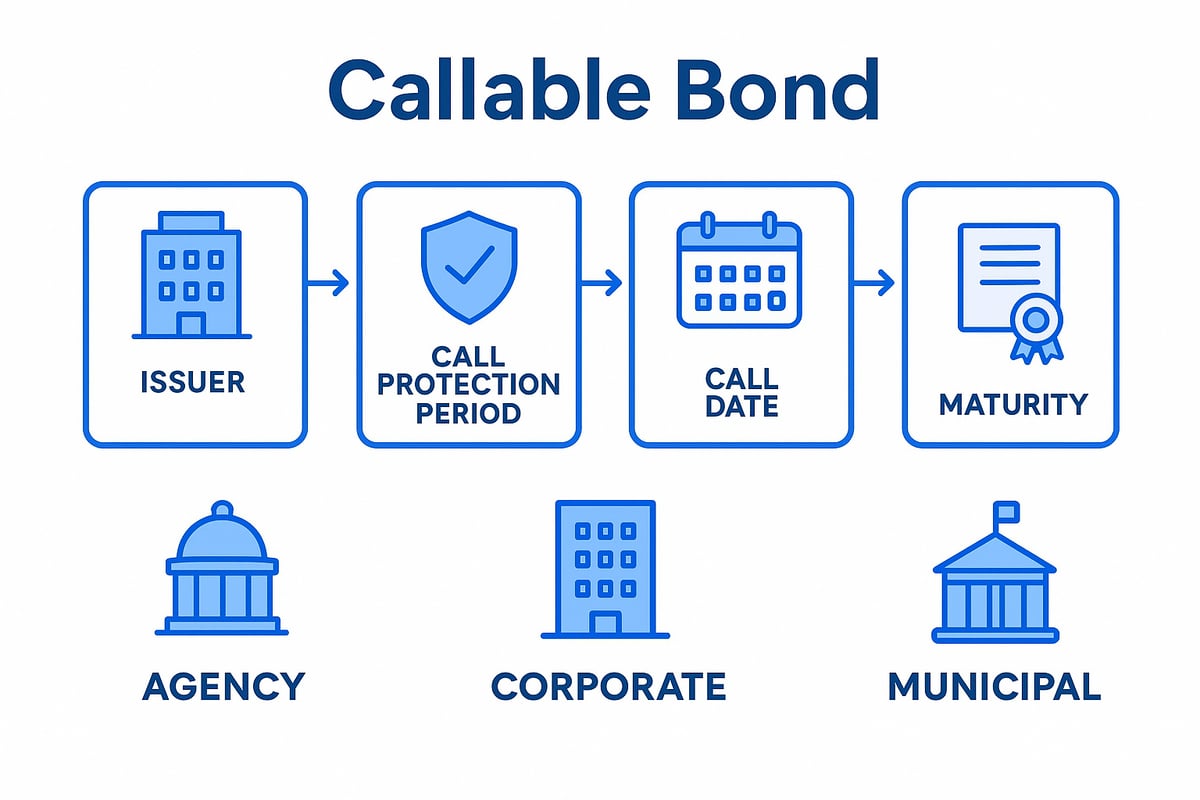
A callable bond is a fixed income security that allows the issuer to redeem the bond before its scheduled maturity at a pre-set price. Key terms include issuer (the entity borrowing funds), call date (when the bond can first be redeemed), call price (the amount paid to bondholders if called), and maturity (the final repayment date). Unlike bullet or non-callable bonds, callable bonds introduce a layer of uncertainty since the issuer controls the redemption timeline.
Examples of callable bonds span agency bonds, investment-grade corporate bonds, and municipal bonds. As of March 31, 2025, roughly 73% of agency bonds and 70% of investment-grade corporate bonds were callable (Schwab). Issuers favor this structure for interest rate flexibility, refinancing, and debt management. Understanding the relationship between call price and par value in bonds is essential, as the call price often equals or exceeds par.
Types of Call Provisions
Callable bond structures vary widely. Traditional calls feature fixed call dates and predetermined call prices, making the process straightforward. Make-whole calls, by contrast, peg the call price to prevailing market conditions, creating a premium for investors if called early. Call protection refers to the minimum period during which the callable bond cannot be redeemed, providing investors a window of stability.
Call frequency can be monthly, quarterly, semiannual, or continuous, impacting predictability. High-yield bonds often use call price schedules that step down over time. Most callable bonds offer at least three months of call protection, giving investors some security before the issuer can exercise their call rights.
How Callable Bonds Work in Practice
In a callable bond arrangement, the issuer has the right, but not the obligation, to call the bond. The typical timeline includes the issue date, a call protection period, one or more call dates, and the final maturity. Investors must be aware that cash flows can change if the bond is called early, potentially leading to reinvestment at lower yields.
For example, consider a corporate callable bond issued in 2021 that becomes callable in 2026. If interest rates fall, the issuer may redeem the bond at the first call date to refinance at better terms. Call features can also impact secondary market prices, often capping price appreciation as the call date approaches.
Key Yield Measures: Yield to Call, Yield to Maturity, Yield to Worst
Investors should evaluate several yield measures when analyzing a callable bond. Yield to Call (YTC) calculates the return if the bond is called at the earliest call date. Yield to Maturity (YTM) reflects the return if held to maturity without being called. Yield to Worst (YTW) is the lowest yield among all possible scenarios, typically the lower of YTC and YTM.
For instance, a callable bond purchased at a premium may have a lower YTC than YTM, signaling potential downside if called early. Understanding these yield metrics helps investors gauge the real return potential and make informed decisions about callable bond investments.
Pros and Cons of Callable Bonds
The callable bond offers both advantages and drawbacks for investors. On the plus side, these bonds usually provide higher yields to compensate for call risk. This can enhance portfolio income, especially in stable or rising rate environments.
However, disadvantages include reinvestment risk and capped price appreciation. If the issuer calls the bond during falling rates, investors may need to reinvest at lower yields. Callable bonds are also more complex than their non-callable counterparts. From the issuer’s perspective, callable bonds offer flexibility, while investors must weigh the risk of early redemption. Callable bonds may be preferable when higher yields are needed, but less attractive for those seeking predictable cash flows.
Callable Bond Market Trends and Outlook for 2026
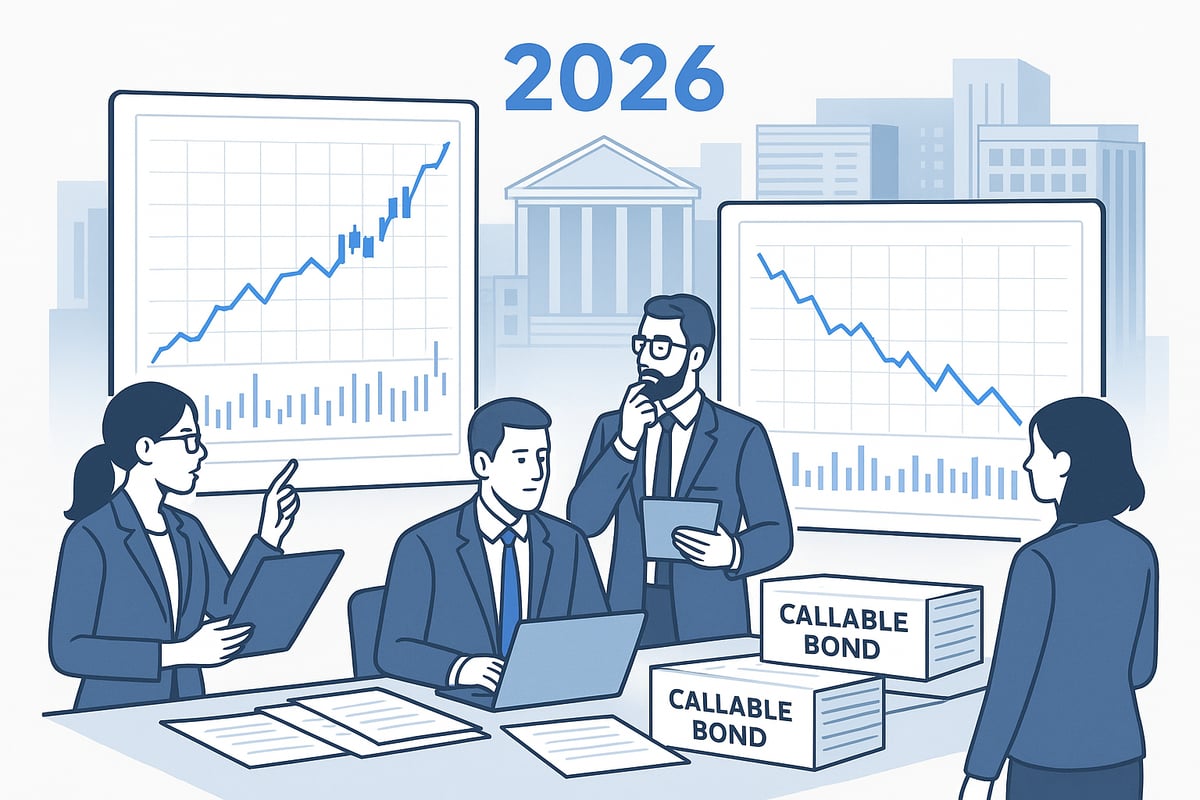
As 2026 approaches, the callable bond market is at a pivotal juncture. Shifting interest rates and evolving issuer strategies are shaping new dynamics, while regulatory updates and investor preferences are influencing market activity. Understanding these trends is essential for investors seeking to optimize their fixed income portfolios with callable bond exposure.
Market Share and Issuer Activity
Callable bond issuance remains robust as we head into 2026. Recent data shows that 73% of agency bonds and 70% of investment-grade corporate bonds are callable, highlighting their prevalence in the fixed income landscape. Financials and utilities are among the most active sectors, frequently leveraging callable structures for funding flexibility.
New issuance is driven by both refinancing needs and corporate strategies to manage debt efficiently. The Callable bond issuance trends report from Q2 2025 confirms a steady pace of new callable bond supply, with issuers responding to changing rate conditions and investor appetite.
Factors fueling this activity include the search for lower borrowing costs and the ability to retire debt early if market conditions become favorable. For investors, understanding which sectors are most active can help identify opportunities and risks in the callable bond market.
Interest Rate Environment and Its Impact
Interest rate movements are a primary driver of callable bond activity. Historically, periods of declining rates have led issuers to call bonds early and refinance at lower costs. As we approach 2026, consensus forecasts suggest rates may remain volatile, with some analysts predicting modest declines while others foresee stabilization.
This uncertainty impacts callable bond pricing and call likelihood. For example, if mortgage or corporate rates drop, issuers are more likely to exercise call options, potentially ending investor income streams sooner than anticipated. Monitoring rate forecasts is crucial for anticipating call activity and managing portfolio risk.
Understanding the interplay between rates and callable bond behavior enables investors to make informed decisions about when to enter or exit positions, especially as markets shift.
Investor Demand and Yield Spreads
Investor demand for callable bonds is shaped by the yield premium these instruments offer over non-callable alternatives. Typically, callable bonds provide higher yields to compensate for the risk that they may be redeemed early by the issuer. In 2025 and into 2026, spreads between callable and bullet bonds have remained attractive, reflecting both risk compensation and persistent investor appetite.
Institutional and retail investors alike are seeking income enhancement, especially in a low-yield environment. However, the added complexity means that careful analysis is essential. On average, spreads have ranged from 25 to 50 basis points, depending on sector and credit quality.
For those willing to accept the risks, callable bond investments can play a valuable role in portfolio yield enhancement, but require vigilance and ongoing assessment.
Regulatory and Structural Changes
Recent regulatory developments are influencing callable bond issuance and trading structures. Adjustments to call protection periods and the emergence of new call features have changed how issuers and investors approach these securities. For example, some new callable bonds include longer call protection, reducing immediate call risk for investors.
Market innovation is also evident, with hybrid structures combining traditional call options and make-whole provisions. These changes aim to balance issuer flexibility with investor protection. Regulatory clarity around disclosure and call schedules helps ensure transparent markets, allowing investors to better assess risk and return potential.
Staying informed about these regulatory shifts is essential for anyone active in the callable bond market, as they directly affect both pricing and investment strategy.
Risks and Opportunities Unique to 2026
The callable bond market in 2026 presents a mix of risks and opportunities. Key risks include the potential for early redemption, which can force investors to reinvest at lower yields, and price caps that may limit upside as rates fall. On the opportunity side, callable bonds may offer higher returns if interest rates stabilize or rise, as issuers are less likely to call bonds in such environments.
Macroeconomic factors, such as inflation trends and policy changes, will play a significant role in shaping callable bond performance. Corporate strategies are also adapting, with some issuers delaying calls in anticipation of rate shifts.
Investors must weigh these risks and opportunities carefully, using scenario analysis and ongoing monitoring to make informed decisions about callable bond allocations.
Valuing Callable Bonds: Pricing, Analysis, and Yield Calculations
Understanding how to value a callable bond is essential for investors seeking to optimize returns while managing risks. The unique call feature influences pricing, yield calculations, and risk assessment, making a disciplined approach to analysis critical as we approach 2026.
Pricing Callable Bonds: Key Drivers
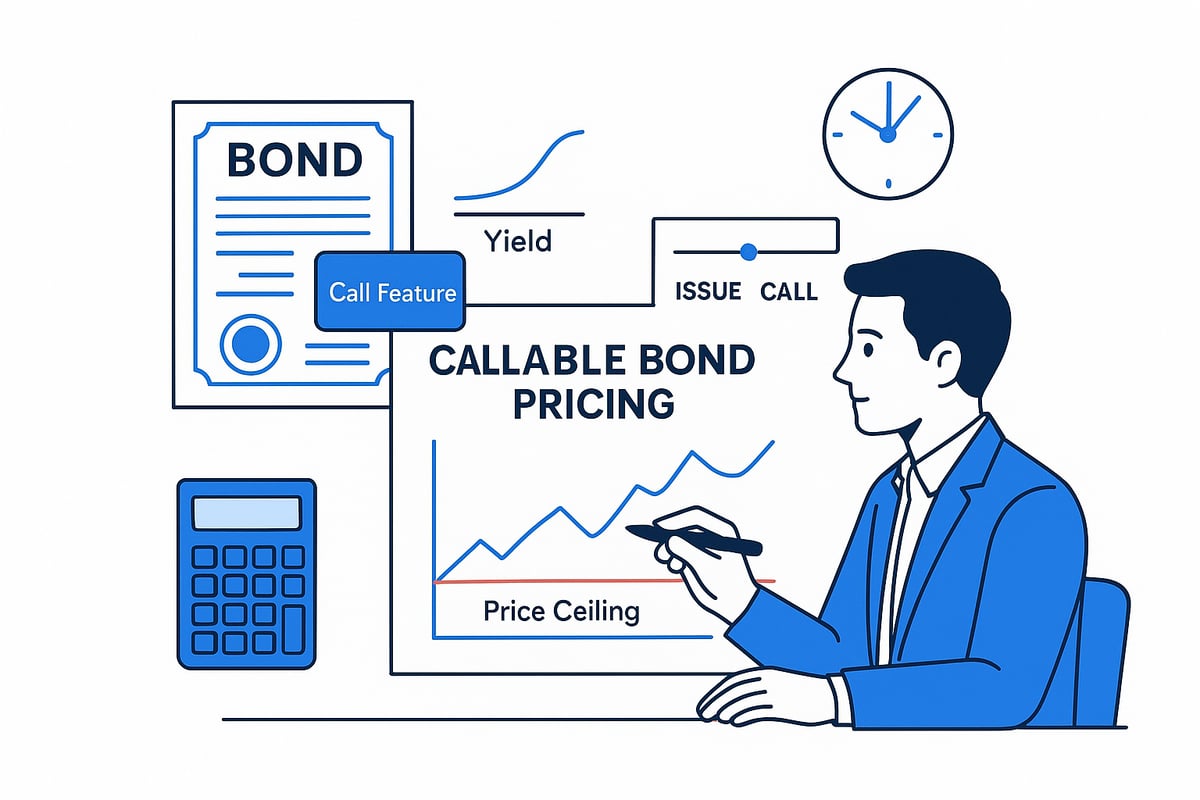
The pricing of a callable bond is shaped by several factors. Most notably, the call feature creates a price ceiling in bond markets, capping how much the bond can appreciate. This means prices rarely rise much above the call price, especially when interest rates fall.
Key drivers include:
- The call schedule and call price
- Interest rate volatility, which affects the likelihood of a call
- The issuer's credit quality and financial outlook
- Prevailing market interest rates
For example, in a declining rate environment, a premium-priced callable bond may see its price flatten near the call price. Understanding these dynamics is crucial for proper valuation.
Yield Calculations: YTC, YTM, Yield to Worst
Accurately assessing a callable bond's return potential involves several yield measures. Yield to call (YTC) estimates the return if the bond is called at the earliest opportunity, while yield to maturity (YTM) assumes the bond is held until its final maturity date. The yield to worst (YTW) is the lowest yield an investor can receive, factoring in all possible call dates.
Yield calculation steps:
- Identify cash flows up to the call and maturity dates
- Discount these cash flows to present value
- Solve for the yield using either the call or maturity date
For instance, a callable bond purchased at a premium might have a YTC notably lower than its YTM, making YTC a more realistic measure if a call is likely.
Scenario Analysis: Call vs. No-Call Outcomes
Scenario analysis helps investors visualize the range of possible outcomes with a callable bond. The best-case scenario is often holding the bond to maturity at a higher yield, while the worst case is an early call, leading to reinvestment at potentially lower rates.
Consider:
- Probability of a call in different interest rate climates
- Projected cash flows under each scenario
- The impact on portfolio income and duration
For example, if the callable bond is called at the first opportunity, the investor faces reinvestment risk. If not called, they enjoy higher yields for a longer period.
Tools and Resources for Callable Bond Analysis
Analyzing a callable bond requires specialized tools and resources. Investors often use:
- Online bond calculators for yield and price scenarios
- Bloomberg and similar financial data platforms for call schedules and market data
- Bond prospectuses to review detailed call provisions
Referencing robust data sources is essential for understanding the bond's risks and return profile. Tools that model interest rate and call scenarios can enhance decision-making.
Understanding Make-Whole Calls vs. Traditional Calls
Callable bond structures vary, with make-whole and traditional calls offering different implications for investors. Make-whole calls allow issuers to redeem at a price reflecting the present value of remaining payments, often deterring early calls unless absolutely necessary. Traditional calls, by contrast, typically occur at fixed prices and dates, making them more likely to be exercised.
For instance, a corporate callable bond with a make-whole provision may offer greater upside potential, since early calls are less probable. Understanding which call structure applies is key to assessing price appreciation and call risk.
Risks, Rewards, and Portfolio Strategies for Callable Bonds in 2026
As 2026 approaches, understanding the risks and rewards of a callable bond is essential for building a resilient fixed income portfolio. Investors must balance the potential for higher yields with the challenges of early redemption and reinvestment risk. This section outlines practical strategies and considerations to help you navigate the callable bond market and make informed decisions for the year ahead.
Managing Call and Reinvestment Risk
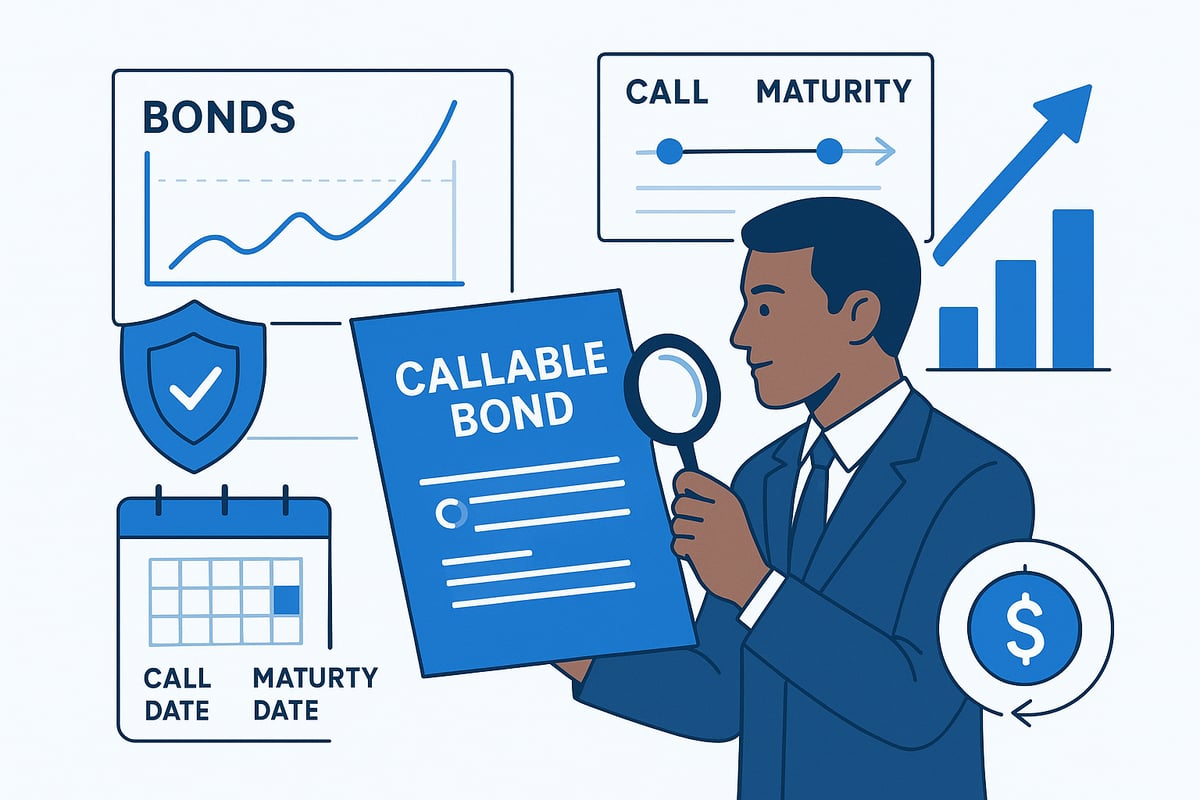
The primary risk with any callable bond is the possibility that the issuer will redeem the bond before maturity, often when interest rates decline. This creates reinvestment risk, as the investor may need to reinvest at lower yields. To manage these risks, investors should:
- Diversify across issuers and sectors.
- Construct bond ladders with staggered call dates.
- Focus on bonds with longer call protection periods.
- Use scenario analysis to estimate outcomes in different rate environments.
Understanding how interest rate changes impact callable bond pricing is crucial. For a deeper dive, see this resource on interest rate sensitivity of callable bonds. Careful risk assessment and proactive strategies can help preserve yield in volatile conditions.
Portfolio Role: When to Use Callable Bonds
A callable bond can play a strategic role in a portfolio by boosting income potential. These bonds are especially valuable when investors seek higher yields as compensation for call risk. However, they may not suit everyone.
Consider using callable bonds when:
- You aim to enhance portfolio income.
- You are comfortable with some uncertainty in redemption timing.
- You can tolerate periodic reinvestment.
Avoid callable bonds if you need predictable cash flows or have a low risk tolerance. For retirees or liability-driven investors, non-callable structures may be preferable. Assess your goals and risk profile before adding callable bonds to your strategy.
Comparing Callable Bonds to Non-Callable Alternatives
When choosing between a callable bond and a non-callable (bullet) bond, it is important to weigh the trade-offs. Callable bonds typically offer higher yields to compensate for the risk of early redemption, but their price appreciation is capped if rates fall.
| Feature | Callable Bond | Non-Callable Bond |
|---|---|---|
| Yield | Higher | Lower |
| Reinvestment Risk | Higher | Lower |
| Price Appreciation | Limited | Greater Potential |
| Complexity | More | Less |
Deciding between these options depends on your return objectives, risk appetite, and need for certainty. A callable bond shines in stable or rising rate environments, while non-callable bonds are better for those seeking predictability.
Tactical Strategies for 2026
In 2026, tactical approaches can help maximize the benefits of a callable bond. With interest rates and issuer behavior in flux, consider these strategies:
- Target sectors with favorable call structures or extended call protection.
- Monitor economic forecasts to anticipate issuer call activity.
- Use callable bonds for opportunistic yield enhancement in volatile markets.
- Balance callable and non-callable holdings for flexibility.
Staying agile and informed allows you to respond quickly to market shifts. Review bond structures and call schedules closely to identify the best opportunities for your portfolio.
Monitoring and Adjusting Callable Bond Positions
Active monitoring is vital for managing a callable bond portfolio. As interest rates change or call dates approach, reassess your holdings to maintain alignment with objectives.
Key signals that a bond may soon be called include:
- Trading at a premium to par.
- Yield to call significantly below yield to maturity.
- Issuer upgrades or positive financial news.
Rebalance your portfolio by replacing called bonds with new issues or adjusting sector exposure. Regular reviews ensure your callable bond allocation remains effective as market conditions evolve.
Tax Considerations
Tax treatment is another important factor when investing in a callable bond. Early redemption may trigger capital gains or losses, and call premiums can affect after-tax yield.
For municipal callable bonds, income may be tax-exempt, but early calls in tax-advantaged accounts can alter your tax planning. Always:
- Review the tax implications of call features.
- Consult a tax advisor for complex scenarios.
- Factor after-tax yield into your investment analysis.
By understanding these nuances, you can optimize your callable bond strategy for both income and tax efficiency.
Advanced Insights: Callable Bonds in a Changing Fixed Income Landscape
Callable bonds are more than just a yield-enhancing tool. As the fixed income world evolves, understanding callable bond behavior in different environments and structures is essential for making informed investment decisions in 2026. Let’s explore advanced aspects that can help you stay ahead.
Callable Bonds in Rising vs. Falling Rate Environments
The behavior of a callable bond shifts dramatically depending on the direction of interest rates. In a falling rate environment, issuers are more likely to call bonds early to refinance at lower costs, leaving investors to reinvest at lower yields. This call risk limits price appreciation, especially for bonds trading at a premium.
Conversely, in rising rate cycles, callable bonds with strong call protection may see improved price stability and potential appreciation. If rates rise above the bond’s coupon, the likelihood of a call declines, making the callable bond’s yield more attractive relative to new issues. The 2020–2025 cycle demonstrated these patterns, with many investors caught off guard by rapid rate changes.
Sector-Specific Insights: Corporate, Agency, and Municipal Callable Bonds
Each sector brings unique characteristics to the callable bond landscape. Corporate callable bonds often offer higher yields but may have more complex call schedules. Agency callable bonds are prevalent, comprising 73% of the agency market, and frequently feature step-up coupons or call protection periods. Municipal callable bonds commonly include longer call protection, appealing to tax-sensitive investors.
Here’s a quick sector comparison:
| Sector | Prevalence | Typical Features |
|---|---|---|
| Corporate | 70% | Varied calls, credit risk |
| Agency | 73% | Step-ups, frequent calls |
| Municipal | High | Longer call protection |
For 2026, bank bond supply forecasts suggest continued robust issuance, which may influence callable bond availability and pricing across sectors.
Callable Bonds and Bond Ladders
Many investors use bond ladders to manage maturity and reinvestment risk. Including a callable bond in a ladder can enhance yield, but it introduces uncertainty if bonds are called before their scheduled maturity. The stability of a ladder depends on call protection—without it, cash flows may be disrupted.
For ladder construction, experts often recommend using bullet or make-whole callable bonds, as these provide more predictable income streams. Callable bonds with short call protection can undermine the ladder’s effectiveness, especially if rates fall and calls accelerate.
Case Studies: Callable Bond Performance in Recent Markets
Examining real-world callable bond outcomes from 2020 to 2025 reveals key lessons. During periods of falling rates, many bonds were called at the first available date, limiting investor returns and forcing reinvestment at lower yields. For example, some investment-grade corporate callable bonds issued in 2021 were called in 2023, well before maturity.
Conversely, in stable or rising rate environments, callable bond holders benefited from higher coupons and saw minimal call activity. These outcomes underscore the importance of monitoring rate trends and understanding the callable bond’s structure in your portfolio.
Innovations and Hybrid Structures
The callable bond market continues to evolve with new structures designed to balance issuer and investor needs. Recent innovations include step-up coupons, which increase payouts over time, and hybrid bonds that combine callable and putable features. Some bonds now use make-whole call provisions, rarely exercised but offering more price stability.
Valuing these complex bonds requires sophisticated analysis. Investors increasingly rely on models that incorporate both interest rate and credit risks. For a deeper dive into advanced valuation methods, see callable bond valuation with stochastic credit.
Key Considerations for Institutional vs. Individual Investors
Institutional investors often use callable bonds for liability management, taking advantage of scale and analytical resources to optimize portfolios. They may target sectors or structures that align with their cash flow needs and risk appetite.
Individual investors typically focus on income and risk mitigation. For them, understanding the nuances of each callable bond—such as call schedules, credit quality, and after-tax yield—is crucial. Aligning the callable bond strategy with personal goals and risk tolerance ensures that both institutions and individuals can benefit from this versatile fixed income tool.
Step-by-Step Guide: How to Invest in Callable Bonds for 2026
Investing in a callable bond can be a strategic way to boost income, but it requires a disciplined approach. Follow this step-by-step guide to navigate the process with confidence and position your portfolio for the opportunities and risks of 2026.
Step 1: Define Your Investment Objectives
Start by clarifying your goals before adding a callable bond to your portfolio. Are you seeking higher yields, steady income, or capital preservation? Assess your risk tolerance and time horizon, keeping in mind that callable bonds can be redeemed early by the issuer, affecting your expected returns.
For example, retirees might focus on predictable income, while institutional investors may pursue enhanced yield. Matching a callable bond’s features to your objectives helps ensure the investment aligns with your financial plan. Take time to determine if this type of bond fits your overall strategy for 2026.
Step 2: Screen and Select Callable Bonds
Once your goals are clear, use brokerage platforms or bond screeners to filter for callable bond options that match your criteria. Focus on factors like call protection period, yield, credit quality, and sector exposure. Screening for agency callable bonds with five-year call protection can help reduce early call risk.
Compare callable bonds with other types, such as those with convertible bond features, to understand how embedded options may affect risk and return. Look for bonds with strong issuer ratings and call schedules that suit your investment timeline.
Step 3: Analyze Call Features and Yields
Carefully review each callable bond’s prospectus, paying close attention to the call schedule and any make-whole provisions. Compare key yield measures: yield to call (YTC), yield to maturity (YTM), and yield to worst. Remember, the maturity date is critical for understanding when your principal will be returned; learn more with this maturity date definition.
Avoid bonds where the yield to call is much lower than the yield to maturity, as this could signal a high likelihood of early redemption. By analyzing these features, you can make more informed decisions and avoid disappointing returns.
Step 4: Assess Risks and Diversify
Evaluate the primary risks of investing in a callable bond, including call risk, reinvestment risk, and credit risk. Diversify your holdings across issuers, sectors, and call dates to spread out potential impacts. Building a portfolio with staggered call dates can help manage cash flow unpredictability.
For example, combining callable bonds with non-callable alternatives or varying maturities can add resilience. This approach helps protect your portfolio if several bonds are called at once or if market conditions shift unexpectedly in 2026.
Step 5: Monitor Market Conditions and Issuer Behavior
Stay vigilant by tracking interest rate movements, economic indicators, and changes in issuer financial health. A callable bond trading at a significant premium or with a low yield to call may be at greater risk of early redemption.
Watch for market rumors or official announcements about potential calls, especially as rates change. Adjust your holdings as needed to maintain alignment with your objectives. Staying proactive can help you capture opportunities and avoid surprises.
Step 6: Rebalance and Adjust as Needed
Regularly review your callable bond positions, particularly as call dates approach or if market conditions shift. When a bond is called, promptly reinvest the proceeds into new opportunities that fit your criteria.
Maintain a disciplined approach to rebalancing, ensuring your portfolio remains diversified and aligned with your goals. By staying engaged and flexible, you can make the most of the callable bond market in 2026.
As we’ve explored, understanding callable bonds and their evolving strategies is key to making informed decisions as 2026 approaches. If you’re eager to deepen your insights and see how history shapes the markets, you’ll appreciate the power of looking back to move forward. Our platform is designed to help you connect the dots between past events and today’s opportunities, bringing context to every market move. Ready to turn knowledge into confidence as you navigate the fixed income landscape?
Stay ahead by looking back