
Balloon Payment Guide: What It Means and How It Works 2025
Imagine reaching the end of your loan term, only to discover a single, substantial payment is due. For many borrowers and investors, understanding how a balloon payment works can make all the difference in financial planning.
This Balloon Payment Guide for 2025 will demystify the concept, showing you exactly what a balloon payment is, how it operates, and why it matters in today’s lending environment. You will explore practical examples, the pros and cons, calculation techniques, refinancing strategies, and what to expect in 2025.
Ready to approach your next financial decision with confidence? This guide is designed to help you make informed choices every step of the way.
What Is a Balloon Payment?
Imagine making affordable monthly payments on a loan, only to face a much larger sum due at the end. This scenario describes the essence of a balloon payment, a unique financial structure that stands apart from traditional loans.

Definition and Core Concept
A balloon payment is a large, lump-sum amount due at the end of a loan's term after a series of smaller, regular payments. Unlike standard amortizing loans, where the principal is gradually paid down over the life of the loan, a balloon payment leaves a significant portion of the principal unpaid until maturity.
To understand this structure, consider the following key terms:
- Principal: The original amount borrowed.
- Interest: The cost paid to the lender for borrowing.
- Amortization: The process of spreading loan payments over time.
- Maturity: The date when the final payment is due.
Balloon payments are common in loans that do not fully amortize. For example, a business might secure a five-year loan with low monthly payments, knowing a substantial balloon payment will be required at the end. This approach allows for lower initial expenses but demands careful planning for the final obligation.
Historically, balloon payment loans have appeared in commercial real estate, auto loans, and some personal loans. According to CFI, these loans are particularly prevalent in commercial real estate and auto financing, as they provide flexibility for borrowers expecting increased cash flow or asset sales before the loan matures.
Common Scenarios and Industries
Balloon payment loans play a significant role in several industries. In commercial real estate, businesses often use them to finance property purchases, expecting to refinance or sell the property before the final payment comes due. Auto financing deals sometimes offer balloon payment options, allowing buyers to enjoy lower monthly costs with the expectation of a final lump sum or trade-in.
While less common, balloon payments can also appear in personal loans and certain mortgage products. Borrowers attracted to this structure typically include investors, business owners, and individuals seeking manageable early payments while anticipating future liquidity.
The regulatory environment for balloon payment loans has evolved significantly. For example, the Consumer Financial Protection Bureau (CFPB) has introduced stricter requirements for balloon payments in mortgage transactions, focusing on borrower protections and clearer disclosures. You can find more about these regulations in CFPB's Balloon Payment Regulations.
As we move into 2025, regulatory changes continue to shape the availability and structure of balloon payment loans, especially in residential lending. Understanding these changes is crucial for anyone considering this loan option.
How Balloon Payments Work: Step-by-Step Process
Understanding the balloon payment process is essential for any borrower or investor considering this loan structure. The process involves unique steps and responsibilities that differ significantly from traditional loans. Let’s break down how a balloon payment loan unfolds, from the initial agreement to the final, substantial payment.
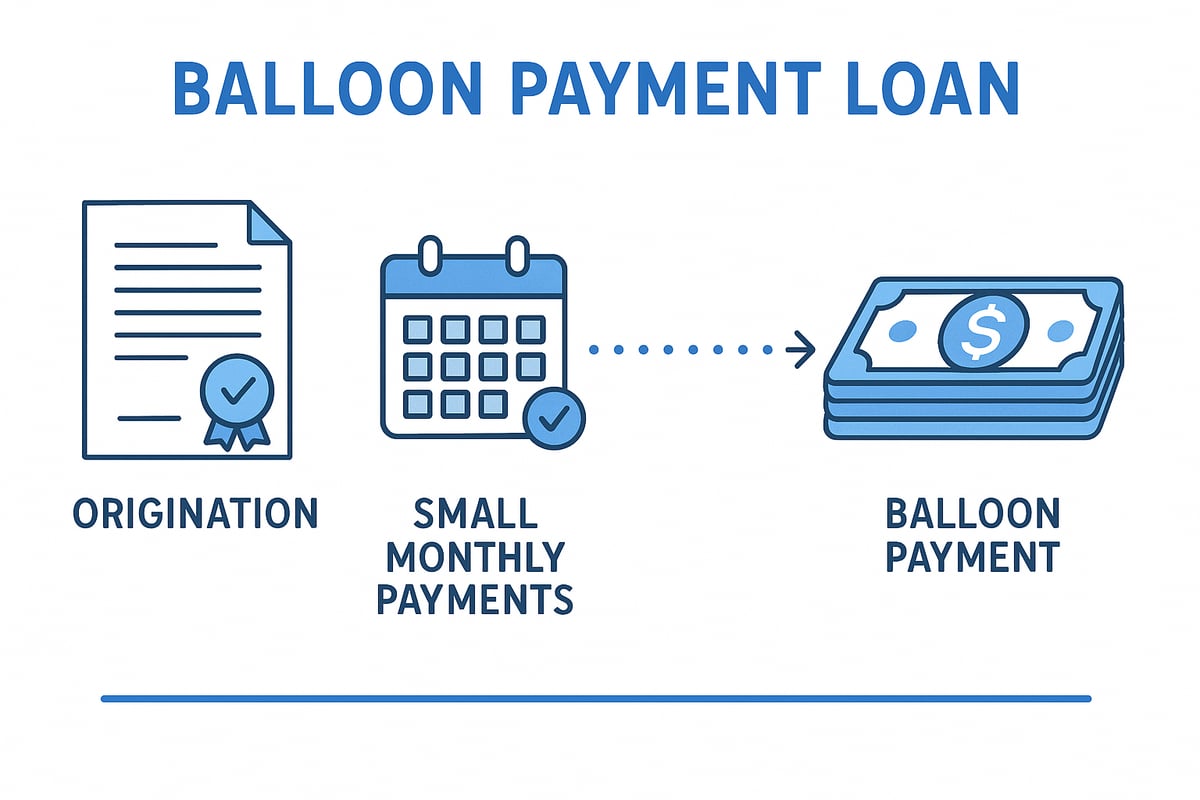
Loan Structure and Payment Schedule
A balloon payment loan is structured with a series of smaller, regular payments throughout the loan term, followed by a single large payment at maturity. Unlike traditional amortizing loans, where payments gradually reduce the principal, a balloon payment loan often leaves a significant portion of the principal unpaid until the end.
For example, imagine a $100,000 loan with a five-year term. The borrower might make low monthly payments covering primarily interest, and at the end of five years, owe a $10,000 balloon payment to fully satisfy the debt. This structure is common in commercial, auto, and some mortgage loans.
Here’s a simplified table comparing balloon and traditional loans:
| Aspect | Balloon Payment Loan | Traditional Amortizing Loan |
|---|---|---|
| Monthly Payments | Lower | Higher |
| Principal Reduction | Slow or minimal | Steady |
| Final Payment | Large lump sum (balloon) | None |
| Common Uses | Commercial, auto, select mortgages | Residential, auto |
Amortization schedules in balloon loans can be either partial or interest-only. In partial amortization, some principal is paid down, but a balance remains for the balloon payment. In interest-only structures, the entire principal is due at maturity. Knowing the loan’s maturity date is critical, as this is when the balloon payment must be made.
CFI data shows that balloon payments often account for 30 to 50 percent of the original loan amount, making preparation essential. Borrowers should review their payment schedules closely and plan for the final obligation.
Understanding these elements helps set the stage for a smooth loan experience.
Key Players and Documentation
Several key players are involved in a balloon payment loan: the lender, the borrower, and sometimes third-party advisors or guarantors. Each has distinct responsibilities. The lender structures the loan and outlines all terms, while the borrower commits to making regular payments and preparing for the final balloon payment.
The loan agreement is a critical document, clearly specifying the balloon payment amount, due date, interest rate, and any conditions for refinancing or early payoff. Borrowers should scrutinize this document, as it defines all rights and obligations.
Legal disclosures are required in many jurisdictions. In the US, the Truth in Lending Act mandates that lenders provide clear information about the balloon payment, including its size and timing. Regulators have strengthened these requirements over time to protect consumers. For more on regulatory changes and consumer protections, consult FDIC's Insights on Balloon Payments.
Creditworthiness plays a major role in balloon payment loan approval. Lenders assess credit scores, income, and collateral before extending such loans. Strong financial standing can lead to more favorable terms, while weaker profiles may face higher interest rates or stricter conditions.
Documentation and transparency are vital for both parties. Keeping clear records ensures everyone understands their commitments and rights throughout the loan’s life.
Real-World Example Walkthrough
Consider a commercial property mortgage with a balloon payment. The process typically unfolds as follows:
- Loan Origination: The borrower and lender agree on a five-year term with a balloon payment at maturity.
- Periodic Payments: The borrower makes regular monthly payments, primarily covering interest and a portion of the principal.
- Final Lump-Sum Payment: At the end of five years, the borrower faces the balloon payment, representing the remaining principal.
Suppose the borrower cannot make the balloon payment. In this scenario, they might seek to refinance, sell the property, or negotiate with the lender for an extension. Failure to address the balloon payment can result in default, potentially causing foreclosure or loss of the asset.
The balloon payment structure requires careful financial planning. Borrowers must anticipate their ability to meet the final obligation and explore alternatives well before maturity. This proactive approach can help avoid last-minute financial stress.
Pros and Cons of Balloon Payment Loans
Balloon payment loans offer unique advantages and challenges for both borrowers and lenders. Understanding these pros and cons is crucial before committing to this loan structure. With the balloon payment due at maturity, your financial strategy must be clear from the start.

Advantages for Borrowers and Lenders
One of the main benefits of a balloon payment loan is lower initial monthly payments. This can make large purchases, such as commercial properties or vehicles, more accessible for businesses and individuals. The structure allows borrowers to conserve cash flow in the early years of the loan.
Balloon payment loans also offer flexibility. If you expect a future cash influx, such as a business sale or investment return, the balloon payment structure lets you use your capital more efficiently during the loan term.
For lenders, balloon payment loans can be attractive due to shorter loan terms and the potential for higher returns. In commercial real estate, these loans are common because properties are often sold or refinanced before the balloon payment is due, aligning with investment strategies.
Borrowers can also invest the money saved from lower monthly payments elsewhere, potentially earning a higher return during the loan period. This flexibility is especially useful for businesses managing multiple financial priorities.
Risks and Drawbacks
Despite the benefits, balloon payment loans come with significant risks. The greatest concern is the large sum due at the end of the term. If you cannot make the balloon payment, you may face foreclosure or asset repossession.
Refinancing risk is another major factor. If interest rates rise or your credit profile weakens, securing a new loan to cover the balloon payment may become difficult. According to CMBS Balloon Payment Trends, less than 40% of commercial mortgage-backed securities borrowers are able to make their scheduled balloon payments, highlighting the real-world challenges.
In some cases, total interest costs can be higher compared to fully amortizing loans, especially if you refinance multiple times. The balloon payment structure requires careful long-term planning to avoid financial strain at maturity.
Suitability and Best-Use Scenarios
Balloon payment loans are best suited for borrowers with clear plans for future liquidity. Investors, businesses anticipating asset sales, and buyers expecting significant income growth may benefit from this structure.
However, these loans are not ideal for risk-averse individuals or those with unpredictable income. The uncertainty of making a large balloon payment at the end can create financial stress.
Since the 2008 financial crisis, stricter regulations have made balloon payment loans less common in residential mortgages. They remain popular in commercial real estate and certain auto loans, where borrowers are more likely to have exit strategies or refinancing options in place.
Before choosing a balloon payment loan, assess your financial stability, market conditions, and backup plans. This careful analysis will help ensure you are prepared for both the advantages and challenges associated with this loan type.
How to Calculate a Balloon Payment
Understanding how to calculate a balloon payment is crucial for anyone considering this type of loan. Whether you are evaluating a commercial real estate deal or an auto loan, knowing the exact amount you will owe at the end of your term empowers you to plan ahead and avoid surprises.
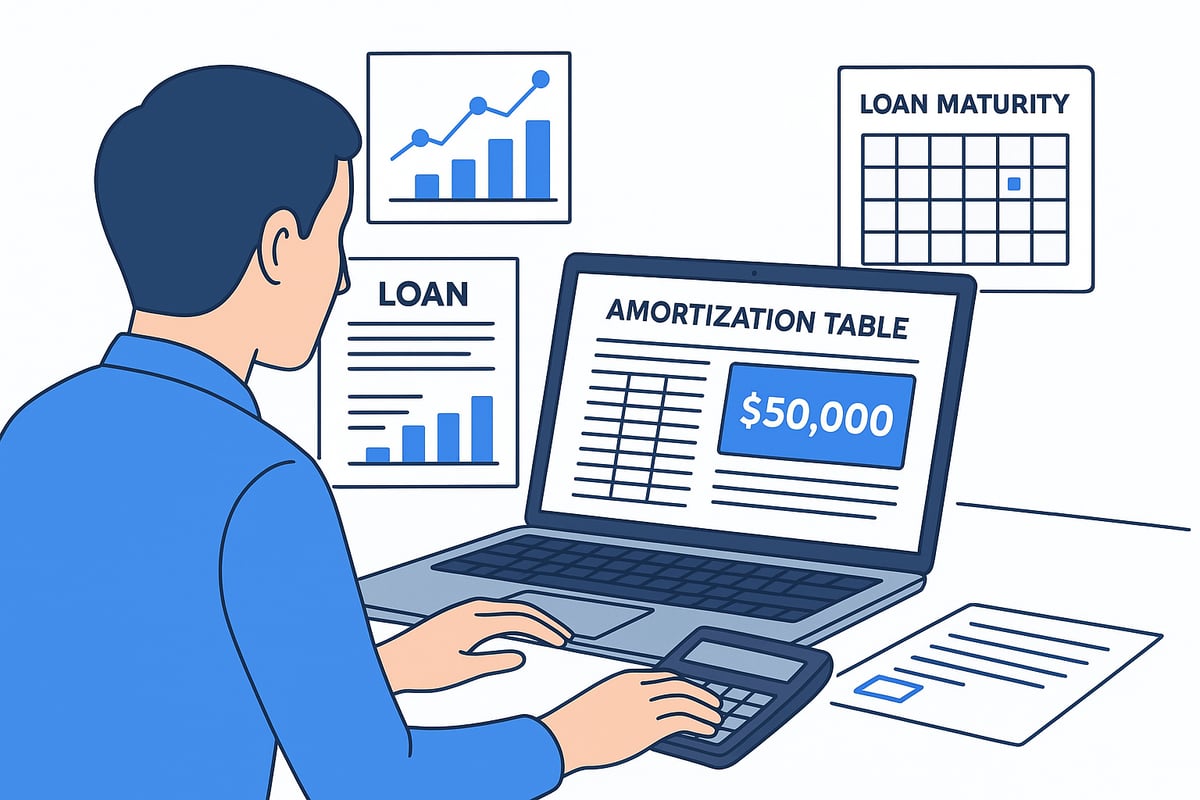
Balloon Payment Formula and Calculation Steps
A balloon payment is the lump sum due at the end of a loan after a series of smaller regular payments. Calculating this amount starts with understanding the loan's structure. Typically, the balloon payment equals the remaining principal after all scheduled payments.
Balloon Payment Formula:
Balloon Payment = Remaining Principal after Scheduled Payments
Suppose you have a $200,000 loan at 7% interest, a 5-year term, and payments based on a 30-year amortization. You make regular payments for 5 years, but the remaining balance is due as the balloon payment at maturity.
To manually calculate the balloon payment:
- Determine the monthly payment using an amortization formula.
- Multiply the monthly payment by the number of payments made.
- Calculate the remaining principal after these payments.
Amortization Table Example:
| Year | Payment Made | Principal Paid | Interest Paid | Remaining Principal |
|---|---|---|---|---|
| 1 | $12,000 | $2,500 | $9,500 | $197,500 |
| 2 | $12,000 | $2,700 | $9,300 | $194,800 |
| ... | ... | ... | ... | ... |
| 5 | $12,000 | $3,000 | $9,000 | $188,000 |
Online calculators can simplify this process, but it is vital to understand the numbers behind the scenes. For high-cost mortgages, be aware that certain rules restrict balloon payment structures. You can learn more about these regulations on the CFPB's High-Cost Mortgage Protections page.
Factors Affecting Balloon Payment Size
Several factors determine the size of a balloon payment. The original loan amount, interest rate, loan term, and amortization period all play significant roles. For example, a longer amortization period relative to the loan term results in a larger balloon payment.
Making extra payments or prepaying principal can reduce the final balloon payment. If your loan is interest-only, the entire principal becomes the balloon payment at maturity. In contrast, partially amortizing loans lower the outstanding balance through principal payments, which decreases the balloon payment.
Key Factors:
- Loan amount: Larger loans yield higher balloon payments.
- Interest rate: Higher rates mean slower principal reduction.
- Loan term: Shorter terms leave more principal unpaid.
- Amortization period: A 30-year schedule on a 5-year loan leaves a bigger remaining balance.
Understanding these variables helps you anticipate the balloon payment and factor it into your long-term financial strategy.
Real-World Calculation Example
Let’s walk through a practical scenario. Imagine a borrower takes a $100,000 commercial loan at 6% interest, structured as a 5-year term with payments based on a 25-year amortization.
- Monthly payment (using an online calculator): $644.
- Total payments over 5 years: $644 x 60 = $38,640.
- After 60 payments, check the amortization table: Remaining principal is about $93,000.
This $93,000 is your balloon payment, due at the end of year five.
Common Mistakes to Avoid:
- Overlooking the impact of extra payments.
- Assuming the balloon payment is the same as the original loan amount.
- Failing to update calculations when interest rates change.
By following these steps and double-checking your calculations, you can confidently plan for your balloon payment and avoid financial surprises.
Balloon Payments in 2025: Trends, Regulations, and Market Outlook
Balloon payment loans are evolving in 2025, shaped by new regulations, shifting market trends, and changing economic realities. Understanding these developments is essential for borrowers and investors seeking to navigate the lending landscape with confidence.
Regulatory Changes and Compliance
The regulatory environment for balloon payment loans has seen significant transformation leading into 2025. Following the financial crisis of 2008, the Dodd-Frank Act imposed stricter rules on residential balloon payment mortgages. These regulations continue to influence lending practices, especially in the residential sector.
New consumer protection measures are emerging, requiring lenders to provide clear disclosures and ensure that borrowers fully understand balloon payment obligations. The Truth in Lending Act (TILA) mandates that financial institutions outline the final lump-sum payment and the risks involved. This transparency is intended to prevent surprises at loan maturity.
In commercial lending, regulatory scrutiny is rising but remains less restrictive than in residential markets. Many states are introducing additional guidelines to prevent predatory lending practices. Borrowers should review the latest compliance requirements and verify that their lender meets all legal standards. For a comprehensive look at current regulations, the Consumer Financial Protection Bureau offers up-to-date resources.
As a result, balloon payment loans are less common in residential mortgages, while commercial real estate and auto loans continue to use them. The evolving regulatory landscape is likely to further limit balloon payment loans for consumers with limited financial experience.
Market Trends and Industry Insights
The balloon payment market is shifting as digital technology and changing borrower preferences reshape the industry. Commercial real estate remains the primary sector for balloon payment loans, supported by investors seeking flexible terms and lower initial costs.
Recent data indicates that balloon payment originations in commercial real estate have remained steady, while residential volumes have declined due to regulatory pressure. Digital lending platforms are playing a larger role, offering streamlined application processes and advanced risk assessment tools. These platforms help lenders evaluate borrower profiles more accurately, reducing default risk.
Interest rates are another critical factor. As rates fluctuate, the attractiveness of balloon payment loans can change rapidly. In periods of low rates, borrowers may prefer to refinance before the balloon payment is due. Conversely, rising rates can make refinancing more expensive and increase the risk for borrowers.
Below is a summary of key market trends for 2025:
| Trend | Commercial Market | Residential Market |
|---|---|---|
| Loan Origination Volume | Steady | Declining |
| Regulatory Pressure | Moderate | High |
| Digital Lending Adoption | Increasing | Moderate |
| Interest Rate Sensitivity | High | High |
These trends highlight the importance of staying informed and adaptable when considering a balloon payment loan.
Economic Factors and Borrower Considerations
Economic conditions in 2025 are influencing how borrowers approach balloon payment loans. Inflation and interest rate volatility can significantly impact repayment risk. When rates rise, borrowers may find it harder to refinance or sell assets to cover the balloon payment.
Borrowers should consider several strategies to mitigate risk:
- Build a financial cushion well before the balloon payment is due.
- Monitor market trends and interest rate forecasts regularly.
- Consult with financial advisors to assess refinancing options and exit strategies.
A case study in commercial real estate demonstrates the importance of preparation. In 2025, a property investor secured a balloon payment loan with a five-year term. By tracking market shifts and maintaining strong cash flow reserves, the investor successfully refinanced before maturity, avoiding potential default.
For those considering a balloon payment loan, understanding the broader economic climate is crucial. Planning ahead, exploring alternative financing options, and staying informed about market and regulatory changes can help safeguard your financial interests.
Refinancing and Alternatives to Balloon Payments
Navigating the end of a loan with a balloon payment requires careful financial planning. Many borrowers find themselves evaluating refinancing options or exploring loan alternatives to manage the final lump sum. Understanding your choices can help you avoid financial pitfalls and protect your credit.
Refinancing Options at Balloon Maturity
When a balloon payment approaches, many borrowers turn to refinancing as a solution. Refinancing replaces your existing loan with a new one, often with more manageable terms or a longer amortization schedule.
The refinancing process begins several months before your balloon payment is due. First, review your credit score and gather documentation such as income statements and property records. Next, shop for lenders who offer refinancing suited to your financial profile. Consider options like conventional loans, cash-out refinancing, or bridge loans, depending on your needs.
The main requirements for refinancing include a solid credit history, sufficient income, and sometimes additional collateral. Lenders evaluate your ability to repay and may ask for updated appraisals or business financials. The timeline for approval can range from a few weeks to several months, so starting early is critical.
Borrowers should carefully compare rates and fees. Using an online refinancing calculator can clarify your new payment schedule and total costs. Refinancing can help you avoid a large balloon payment, but always factor in closing costs and potential changes in interest rates.
Alternatives to Balloon Loans
If a balloon payment loan does not align with your financial strategy, several alternatives exist. Fully amortizing loans are a popular choice, spreading principal and interest evenly across the entire loan term. This approach eliminates the risk of a large final payment.
Adjustable-rate mortgages (ARMs) and other creative financing options, such as lease-to-own agreements, may also fit your needs. These alternatives offer different risk and reward profiles, so consider your long-term goals and cash flow stability.
Here's a comparison of balloon payment loans and common alternatives:
| Feature | Balloon Payment Loan | Fully Amortizing Loan | ARM/Other Alternatives |
|---|---|---|---|
| Final Lump Sum | Yes | No | Varies |
| Monthly Payment Amount | Lower | Higher | Variable |
| Risk Level | Higher | Lower | Moderate |
| Best For | Investors, Businesses | Homebuyers, Planners | Flexible Borrowers |
Choosing the right option depends on your financial outlook and risk tolerance. If you expect increased income or plan to sell the asset before maturity, a balloon payment may work. Otherwise, alternatives may provide more stability.
Consequences of Default and Borrower Protections
Failing to make a balloon payment can have serious consequences. Lenders may initiate foreclosure on property or repossess other financed assets. Your credit score could also drop significantly, making future borrowing more difficult.
However, borrowers are not without options. Many lenders are open to negotiation, offering possible extensions, restructuring, or payment plans. It is crucial to communicate early if you anticipate trouble meeting your balloon payment.
Legal protections vary by jurisdiction, but consumer laws often require lenders to provide clear disclosures and fair treatment. If you face default, consult a financial advisor or legal expert for guidance. Acting quickly can help you avoid the most severe outcomes.
Key Considerations Before Choosing a Balloon Payment Loan
Choosing a balloon payment loan can have a significant impact on your financial future. Before you sign any agreement, it is essential to weigh the pros and cons, understand your obligations, and plan for the final payment. Let’s break down what you should consider to make the best decision for your situation.
Assessing Personal and Business Financial Readiness
Before committing to a balloon payment loan, carefully evaluate your current and future financial position. Are your income streams stable, and do you anticipate any significant changes in the next few years?
Consider your business’s cash flow or your household budget. Make a realistic projection of your ability to cover the monthly installments and the large balloon payment when it comes due.
Using a loan calculator or consulting with a financial advisor can help you visualize the total cost and assess potential risks. This step is crucial for ensuring you are truly prepared for the balloon payment at maturity.
Questions to Ask Lenders
Open communication with your lender is vital when considering a balloon payment loan. Ask clear and direct questions to avoid surprises later.
- What are the exact terms and conditions of the balloon payment loan?
- Are there prepayment penalties or additional fees?
- What options are available if I cannot refinance or pay the balloon payment at maturity?
- How is the balloon payment amount calculated, and can I see an amortization schedule?
Answers to these questions will help you uncover any hidden costs and understand the full scope of your balloon payment obligations.
Red Flags and Warning Signs
Stay alert for warning signs when evaluating a balloon payment loan. Some lenders may offer unrealistically low monthly payments that mask a much larger final payment.
Be wary of predatory lending practices, such as unclear terms, aggressive sales tactics, or a lack of regulatory compliance. Always verify the lender’s reputation and check for proper licensing.
If something seems too good to be true, it is wise to seek a second opinion. Protect yourself by reading all disclosures and understanding your rights regarding the balloon payment.
Long-Term Financial Planning
A balloon payment loan should fit within your broader financial strategy. Consider how this obligation aligns with your long-term goals, such as business growth, homeownership, or investment returns.
Risk management is essential. Create a timeline for saving or arranging financing for the balloon payment well before it is due. Diversifying your assets and income sources can provide a safety net if circumstances change.
Taking these steps helps ensure you are prepared not only for the regular payments but also for the balloon payment itself, securing your financial health for years to come.
Now that you know what balloon payments are and how they can impact your financial plans in 2025, it’s clear that understanding the history behind these loans can give you a valuable edge. By learning from past market trends and seeing how regulations have shaped today’s lending landscape, you can make more informed decisions for your own borrowing or investing journey. If you’re curious about how history shapes the financial world or want to see how market patterns unfold over time, I invite you to Stay ahead by looking back.